Even if it was somewhat a mixed bag in terms of quality, the feature films at the Provincetown International Film Festival were overall worthwhile watches, blending many different genres from filmmakers and screenwriters with diverse and unique perspectives—and worth keeping an eye on as they play the festival circuit.
It drew a more modest crowd than other screenings and was one of the less buzzy pictures, but writer-director Alexi Wasser’s debut Messy—a blunt, deliriously funny comedy—emerged as my favorite from the festival.
The movie is set in the present day, though in wish-fulfilling, old Hollywood fashion, Stella Fox (Wasser) has moved from Los Angeles after a breakup to a Tudor City apartment in Manhattan, with an unknown source of income, harboring 1990s/early 2000s-dated dreams of working in magazines. A well-known, prickly editor, Leo Fontaine (Mario Cantone, no doubt cast as a knowing nod to Sex and the City) is skeptical but gives Stella a chance to write a piece on dating in New York.
The film follows the amusing sexual escapades and follies of Stella as she hooks up with an array of guys. The men are mostly terrible, goofy, and incompatible, including a churlish bar owner dubbed The Mayor (Adam Goldberg) and a younger man who shoplifts from Whole Foods and whose mom (coincidentally?) looks like Stella.
Like Woody Allen, Stella is neurotic and talks… a lot, often going into winding monologues. Wasser’s writing and acting are completely zany and engaging. Her screen presence, with her wide eyes, long dark hair and bangs, and amusing, unbridled dithering, is a mix of Illeana Douglas and Diane Keaton (especially in Allen’s Annie Hall and Nancy Meyers’s Something’s Gotta Give). The film is refreshingly frank, with explicit sex scenes and casual drug use.
It’s a great New York film, keenly shot by Barton Cortright. (I love the simple but effective composition of an unnerving toe-sucking bathtub scene in particular.) It’s hard not to think of Paul Mazursky’s indelible An Unmarried Woman (1978) as Fox talks about men to her two girlfriends (played by Merlot and Ruby McCollister) as they all casually sit on a bed. A shot of Stella from behind entering a bar is reminiscent of Richard Brooks’s Keaton–starrer Looking for Mr. Goodbar, a much more mournful tale of Manhattan trysts. Ione Skye, of romcom classic Say Anything, figures in a small but affecting scene in a bar.
Because it’s so rare these days to find a breezy comedy with rich cinematic influences that clicks in place so solidly throughout, I left the screening feeling buoyant. I look forward to seeing it again, picking up on more details, and going into a deeper dive into why the film works so well. (Hopefully, it will find distribution.)
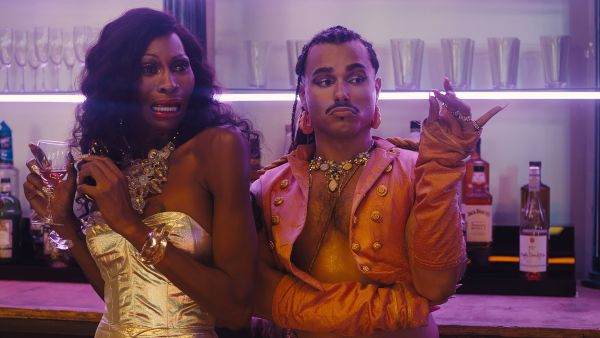
A flashy, raucous comedy about drag queens and zombies was a perfect fit for a late-night screening. However, Tina Romero’s debut Queens of the Dead is doing so much at once that it becomes a bit of a wearying mess. While a zombie outbreak suddenly starts to fester in New York City, a ragtag group of queens, bar workers, and party promoters hole up in a Brooklyn club.
Romero, the daughter of zombie auteur George A. Romero, lovingly references his work while trying to deliver a good time with ostentatious comedy—Dawn of the Dead satirized brain-dead mall culture, while Queens skewers social media and phone addiction, with zombies stalking about with their faces stuck in smartphone screens.
Romero wrangles an appealing, mostly queer cast. Katy O’Brian (so great recently as the sapphic bodybuilder in Love Lies Bleeding) is a hardened party promoter, Dre. Comedic standout Jack Haven (I Saw the TV Glow) plays Dre’s ditzy party promo intern. In a creaky side plot, Dre’s benevolent, dweeby wife, Lizzy (Riki Lindhome), a nurse, and a patient flee a zombie-overrun hospital to reunite with Dre as the plague rages. Meanwhile, Sam (Jaquel Spivey, the Tony-nominated lead actor from A Strange Loop) is a retired queen (once known as Samoncé) and now a nurse, who is lured to the club in Dre’s hopes to revive his old persona as a fill-in for another, more popular queen, Yasmine (Dominique Jackson), who has dropped out last minute for a more lucrative gig.
All these plot machinations are a bit tedious for what should just be an uncomplicated, campy horror amusement park ride. Still, it’s hard to knock down what seems to be a spirited, joyous collaboration, especially in these times that are so difficult for queer lives. A new horror hero emerges through Spivey’s intricate, lived-in performance.
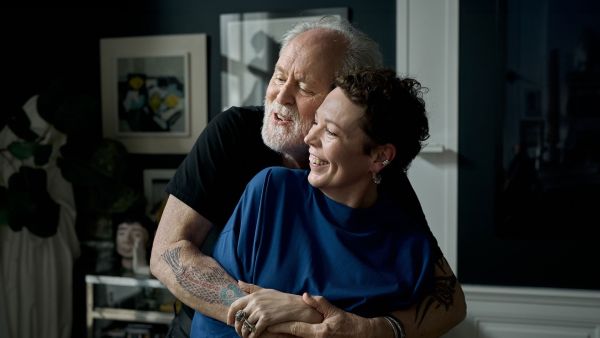
Generational rifts simmer in Sophie Hyde’s (Good Luck to You, Leo Grande) sensitive, well-meaning Jimpa. In the midst of working on a semi-autobiographical film about her parents, Adelaide filmmaker Hannah (Olivia Colman) and her husband (Daniel Henshall) take their non-binary child Frances (Aud Mason-Hyde, Sophie Hyde’s child) to Amsterdam to visit Hannah’s gay father (John Lithgow), a university professor lovingly referred to as Jimpa (a nickname he chose in favor of the elderly-sounding “Grandpa”).
Initially, 16-year-old Frances wants to leave Adelaide to live with the larger-than-life, joie de vivre Jimpa, but becomes more uncertain as tensions blossom between them. Jimpa is a complicated character: He is loving toward Hannah and Frances, was an activist during the AIDS crisis, but seems out of step with queer (a word that Jimpa’s café clan of gay friends despise) concerns. He can also be passive-aggressive and dismissive of Frances’s transness. There are some cracks showing too—the family has concerns about Jimpa’s health.
Like Leo Grande, Hyde’s film features strong performances and dialogue, though overall it’s dramatically inert. The film is visually striking compared to the static look of Leo Grande, with rich cinematography by Matthew Chuang highlighting the crisp blacks and grays of Jimpa’s sprawling, enviable flat. Its best moments are ones of quiet intimacy, such as a matter-of-fact shared bathtub between Frances and Hannah. But the film also sings when inward conflicts finally boil over. A terrific Kate Box appears toward the end as Hannah’s sister, Emily. Hannah withholds her emotions, seemingly actualizing her feelings in her film work, whereas the brash Emily is an open book, letting everything out. The always compelling Colman usually doesn’t play withdrawn characters, so it’s unusual to see her in this lane—even if the film undermines her and others through its character-overexplaining flashbacks.



Leave A Comment