Presented by Film at Lincoln Center and Unifrance, four titles at this year’s Rendez-Vous with French Cinema approach life and its central labors with a certain intense monomania. Power, its pursuit, and its loss are obsessions; obsession itself is an obsession. Characters are dogged, scheming, or deluded in pursuit of their goals. The implied outcome is less important than the journey, but the journeys in these movies can take men (and the lead characters are all men) through some unhappy states of mind.
The Wizard of the Kremlin
Can a movie be sweeping yet claustrophobic? The newest film by the prodigious Olivier Assayas somehow manages this confusing feat. Assayas serves up the hair-raising events of recent Russian history at dizzying speed, with bold chapter headings and hot, pushy edits propelling the timeline. But nonstop commentary from the figures in the tableau fogs up a ruthless, sweeping tale like vapors floating off wet dry ice.
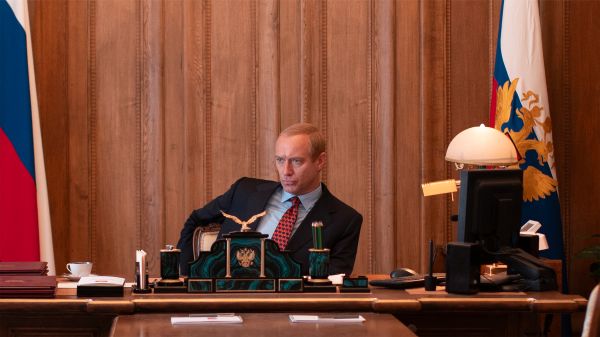
We are introduced to a once-powerful, now sidelined Russian PR mastermind, Vadim Baranov (Paul Dano), as he recalls his rise and fall to a visiting American author (Jeffrey Wright) in his snow-dusted villa. (Apparently, Baranov is based on real-life éminence grise Vladislav Surkov.) Based on Giuliano da Empoli’s 2022 novel, Baranov’s narrative propels us through the fall of communism and the wild 1990s party scene that emerged from its ashes, the collapse of leader Boris Yeltsin, the backroom rise of enigmatic slimeball Vladimir Putin, the sinking of the submarine Kursk, the rout of Russia’s oligarchs, and a pell-mell rush of many more cataclysmic events. The spectacle is visually rich and exciting.
Still, claustrophobia closes in as Dano’s character and interlocutors embellish Russia’s madness with endless dialogue and monologues. Long speeches lay corruption bare and reflect on the evils of power. It is like being lectured by Machiavelli on manipulation technique during a high-stakes ball game in the bottom of the ninth. Dano’s character is supposed to be a metal fist in a velvet glove, but it is hard to find much steel in a wan and monotone performance—maybe Quentin Tarantino was onto something when he recently put Dano on blast.
Supporting performances add a touch of spark. Jude Law sulks and pouts playing Vladimir Putin, a canny thug who instinctively counts on his cruelty and coarseness to win over the masses. In addition, Alicia Vikander pops up as a tough, fashion-forward femme fatale. As our antihero loses influence, increasingly macabre events (and talk) grind on. Wizard is a smart and unusual film, an achievement even, but in its excesses, it seems to have outsmarted itself.
The Great Arch
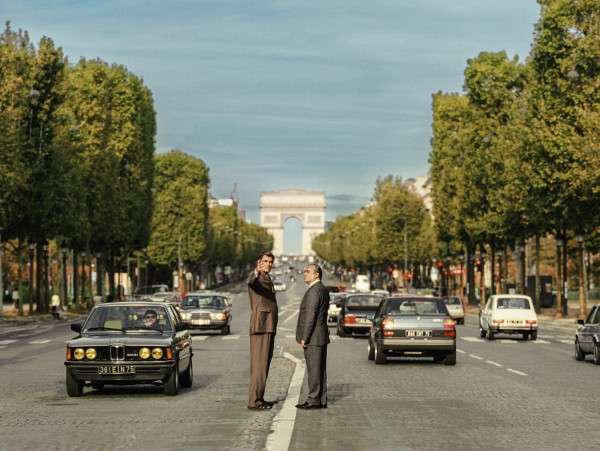
Here we have a clever, dry tragicomedy with similar themes to The Brutalist, directed by Stéphane Demoustier and based on the true story of the architect who designed the Grande Arche de la Défense, a still-controversial Parisian landmark built during the go-go modernizing 1980s. Claes Bang stars as the naive Danish visionary Johan Otto von Spreckelsen, who rose from obscurity to briefly win the patronage of French President François Mitterrand before falling from favor. Bang does a great job acting in English, French, and Danish, making us feel the wind being let out of von Spreckelsen’s sails as his vision is undermined by French bureaucracy, shifts in political power, and—not least—his own impractical expectations.
Although it is focused on an obsessive quest, Arch makes time for tightly choreographed satires of sycophancy and groupthink. It revels in inside jokes about architecture, with pokes at the Louvre Pyramid and the now widely reviled Charles de Gaulle Airport. President Mitterrand comes in for a light drubbing as part whimsical Yoda, part imperial pharaoh. Wit keeps the action moving, a relief when the film centers on a life’s work being thwarted at every turn. Crisp period detail and in-the-know observations cannot mask the sadness at the heart of this story—ultimately a somber look at a man who desperately wants to create something bigger than himself but cannot get out of his own way.
Maigret and the Dead Lover
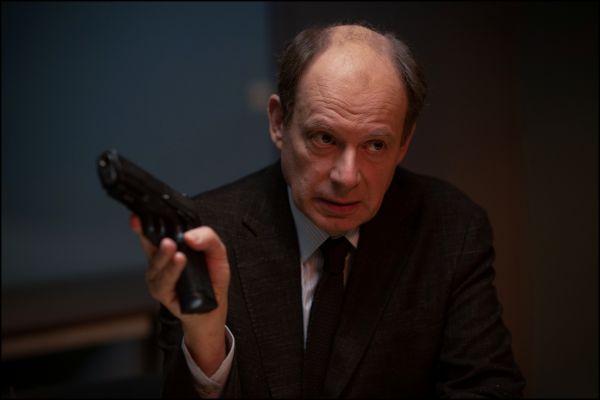
Countless stars from Jean Gabin to Gérard Depardieu have played Georges Simenon’s common-sense detective, and now there is a new Inspector Jules Maigret on the scene. Veteran actor Denis Podalydès serves up the patient, philosophical policier with an abrasive edge. Grumpily marching around modern Paris with his retro look unchanged since the 1950s, Maigret is on a mission to solve a murder at the center of an epistolary love triangle. He butts heads with the diplomatic establishment, intrudes on the city’s elderly, snobbish elite, and confronts a longtime maid and possible murderess (a stellar, sullen Irène Jacob) who answers every question with a question of her own. Maigret snaps at suspects and colleagues alike, fixing them with a pitiless stare as he subjects them to uncomfortable grillings.
We get to know the cop’s bon vivant side over classic French cuisine and wine, and the script offers a few sharp bons mots (apparently search warrants and the concept of mental cruelty are purely American inventions). From director Pascal Bonitzer, whose recent Auction had a little more verve and sparkle, this skillfully styled film set in a repressed milieu seems to have allowed some of the upper-class repression to permeate its cell structure. An abrupt whodunit ending appears out of nowhere—apologies to smarter human beings, but I totally didn’t get it.
Two Pianos
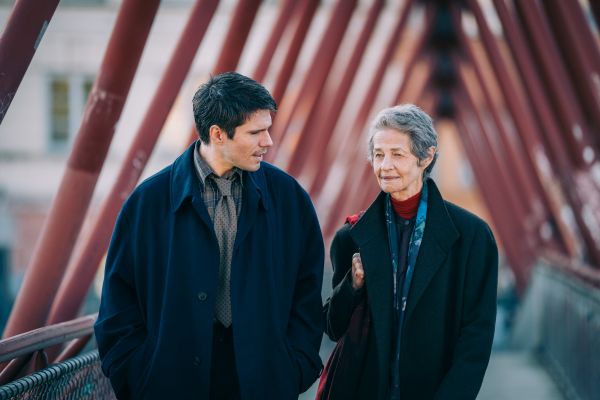
A woebegone melodrama bites off more sodden baguette than it can chew in the latest work from Arnaud Desplechin. Handsome young concert pianist Mathias (François Civil) returns from Japan to reunite in his hometown of Lyon with a formidable mentor, played by Charlotte Rampling, whose arch stares can turn you into stone or at least a pile of garbage. She has got a secret. He has got a secret. Mon Dieu, everyone in this movie has got a secret! Like the windy apparatchiks of the Kremlin, they never stop talking about supposedly guarded secrets.
A reunion with a former love sends Mathias into a fainting spell, a night in the drunk tank, and a hungover flop in an important rehearsal. He stalks a young boy with what appear to be Hitchcockian motives, but they are revealed as something more pedestrian. A glossed-over death and erotic encounters with a long-lost Gallic pixie dream girl (Nadia Tereszkiewicz, once again cast as a tease and enfant terrible) complicate the picture… that is, until our hero decides to deliberately destroy what is left of his career. Beautiful gold-toned photography and a vibrant classical score cannot elevate an overwrought story above self-absorbed misery, or beyond the emotional filigrees and furbelows that lead people to complain that French cinema is annoying.


Leave A Comment