
In the words of a 1950s pop hit, “If I’d known you were coming, I’d have baked a cake.” Whipping up a sweet delight and whisking it out of the oven should be a pleasure—a simple gesture of love. But in Iraqi writer-director Hasan Hadi’s debut feature, a cake becomes a symbol of bullying and autocracy, as well as a crushing burden to prepare in straitened Gulf War–era Iraq. Winner of the audience award in Cannes’ Directors’ Fortnight section, along with the festival’s Caméra d’Or for first-time filmmakers, the film finds Hadi making a political statement about life under a dictatorship, but its real power lies in the way it reveals small, telling details of life in a society under the gun.
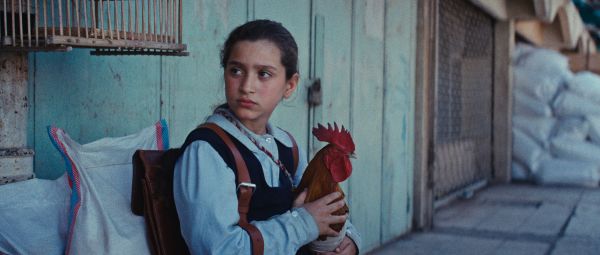
Nine-year-old Lamia (sad-eyed Baneen Ahmed Nayyef) lives in the rural marshes of Iraq with her elderly grandmother (Waheed Thabet Khreibat). Settled in a modest reed-woven home, the two inhabit a landscape that is calm, even beautiful; graceful handmade boats glide by on water, taking the locals to school and work. But Hadi quickly hints that all is not well in paradise. The newly unemployed grandmother haggles over spoiled vegetables she can’t afford. On a car ride, the two meet a bandaged man trying to make light of having been blinded by explosives. This is early 1990s Iraq under Saddam Hussein, hemmed in by painful sanctions and menaced by flyover bombers. The outward vibe may be workaday, but lives are being quietly ravaged day by day.
Pressure mounts for Lamia as the sneering teacher in her one-room schoolhouse doles out a job customarily offloaded on an unfortunate scapegoat: baking a birthday cake for the nation’s dictator. (Saddam Hussein himself is shown preening and receiving homage in TV broadcasts.) This year, it’s Lamia’s turn. She now faces the task of obtaining and paying for ingredients at a time when black-market eggs cost a fortune—if you can even find them. Lamia is off on a perilous journey to bake the president’s cake at a frightening cost, traveling with her grandmother to town and a rather resigned-looking rooster in tow.
The camera follows Lamia in an unhurried, natural amble through bazaars, hospitals, and city streets in search of the elusive components of the cake. She enters a nightclub heavy with an all-male vibe where she stares spellbound at the female performer—masculine desires turn more dangerous in a dark back alley. Officials and police are indifferent or worse to suffering and lawbreaking. Her frenemy and accomplice Saeed (Sajad Mohamad Qasem), the son of the town beggar, flits in and out of the story as they bicker, part ways, reunite, and stumble into a business decision with a less-than-positive outcome.
Lamia’s episodic adventures begin to play out with a certain sameness in their relaxed timing and wistful feel. Non-actors in the cast don’t always hit high notes. Yet one unforeseen betrayal cuts to the gut, and the sheer massiveness of the obstacles piled up in Lamia and Saeed’s path lends pathos to the story. We have sympathy for the two kids trying to beat the odds, and we also struggle with uneasy pity for their adult tormentors. After all, the impossible conditions of the environment they inhabit have pitted every person against every other. On the surface, The President’s Cake is a tale of two kids on a capricious wild goose chase, but it is also something bigger: a carefully observed portrait of a people in slow-motion torment.

Leave A Comment