
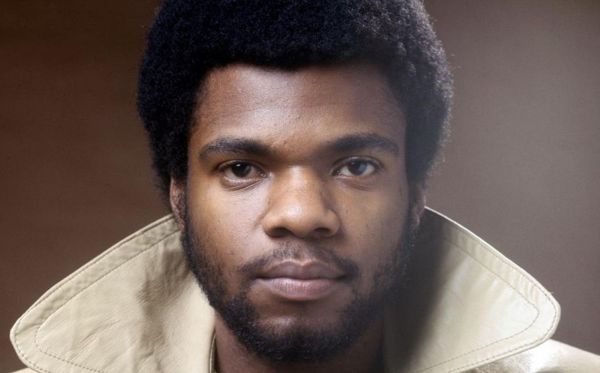
As anyone who’s seen the Beatles documentary Get Back can attest, in early 1969 the Fab Four were in a musical funk, trying to work through new songs, when keyboard player Billy Preston showed up (he was invited by George Harrison) and started laying down infectious electric piano and organ grooves on “Don’t Let Me Down” and “Get Back.” The group began firing on all cylinders again, leading to the fabled rooftop concert that Preston also participated in.
So it’s not surprising that in Paris Barclay’s illuminating documentary, the sequences of John, Paul, George, Ringo, and Billy’s joyful music-making—which led to a half-joking Lennon saying that Preston should join the group—are front and center, along with his rapturous performances with other top names in rock, pop, and soul, like Sly Stone, Aretha Franklin, and the Rolling Stones. As Barclay makes clear, Preston was one of that era’s most exciting and original musicians, either as an invaluable sideman or as a hitmaker himself in the early 1970s, when “Outa-Space,” “Will It Go Round in Circles,” and “Nothing from Nothing” shot to the top of the charts. (He performed the latter as the first musical guest on the debut episode of Saturday Night Live in 1975.)
Preston’s musical talent was apparent early on. After his family moved from Houston to Los Angeles when he was a toddler, he began singing and playing keyboard at his church, and over the next several years, he performed with Mahalia Jackson, Ray Charles, and Little Richard. It was while touring Germany with Richard at age 15 that Preston met the then-unknown Beatles, with whom he struck up a friendship that allowed them to feel comfortable enough to have him play on the group’s final albums, Abbey Road and Let It Be.
But—there’s always a “but”—Preston was also scarred. He was abused as a youngster, and he struggled throughout his life with his sexuality. As a deeply religious person, not only was the secular rock-and-roll lifestyle difficult for him to square, but he was also conflicted about his homosexuality. That Preston’s mother was a huge influence in his life—he wrote “You Are So Beautiful,” which became a huge hit for Joe Cocker, for her—may also have led him to remain in the closet.
Then there was the drug and alcohol abuse which, in those days, was seemingly rampant in the music industry. Even Eric Clapton—who had been able to kick alcohol and drugs—is interviewed by Barclay, and he remembers trying to help Preston when he was in Clapton’s touring band. Choking back tears, Clapton admits that he knows he failed to help, but Preston was someone who, at the time, didn’t want to be helped.
When it’s mentioned that in 1991, while on probation for a DWI conviction, Preston was arrested for sexually abusing a 16-year-old male, the lack of focus on this incident comes off as surprising. However, Barclay obviously sees it as a direct result of what happened to Preston when he was a child and doesn’t want to “pile on,” so to speak. Yet the arrests and convictions for drug possession and even insurance fraud led to a sentence of four years in prison. (He served 18 months before being released.)
Barclay’s biggest coup is getting the first interview with the magistrate who sent Preston to prison. Retired judge Bernard J. Kamins speaks about Preston appearing in his courtroom and says he believed that releasing him without a jail sentence was not an option by that point. Kamins even reads from a letter Preston sent him from Avenal State Prison in 1998, in which Preston admitted, “Strange as it sounds, being in prison may have saved my life.”
Preston never regained the popularity or musical acclaim of his early career, dying at age 59 in 2006 as his body broke down from kidney and respiratory failure. Despite such a sad end, Barclay closes with one of his greatest musical moments over the credits: Preston steals the show singing “My Sweet Lord” at a 2002 memorial concert for George Harrison, who died the previous year. Preston’s soulful singing and superb keyboard playing are as joyful as ever, and the clip provides a lovely benediction to the singer’s checkered legacy and Barclay’s poignant portrait.



Leave A Comment