At the 31st annual edition of Rendez-Vous with French Cinema, several films in the program already have U.S. distributors, but others—including the three reviewed here—do not, so this may be the only chance for those in New York to see the likes of Vicky Krieps give her usual master class in acting. This trio also garnered international awards recognition: the Critics Award for Love Me Tender at the 2025 American French Film Festival, a César nomination for Meteors (Idir Azougli’s nomination for Best Promising Actor), and a best screenplay win for At Work in Venice.
Love Me Tender
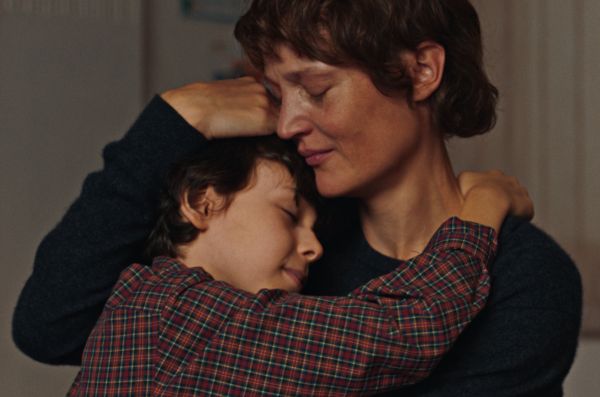
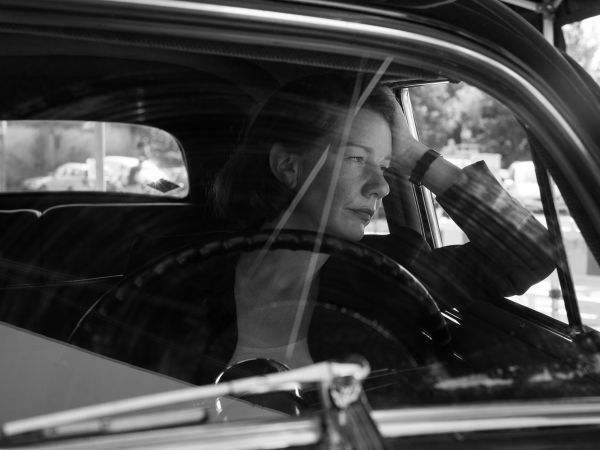
In Anna Cazenave Cambet’s murky drama based on Constance Debré’s 2020 semi-autobiographical novel, Vicky Krieps gives another in a series of searing performances as Clémence, who has been recently divorced from Laurent (Antoine Reinartz), with whom she shares custody of their eight-year-old son, Paul (Viggo Ferreira-Redier). When she confides in Laurent about her exploring another side of her sexuality and her ongoing affairs with women, he immediately disallows Paul from seeing her. She takes him to court, resulting in a multi-year saga of false hopes, frustrations, and an unspoken court system bias against women who are not living “normal” lives—whatever that means.
As usual, Krieps is so honest and unaffected that at times it feels like we are watching a documentary or reality series, whether she is having intimate encounters at a local public pool, trying to see her son amid the legal hurdles, or beginning what might be a long-term relationship with Sarah (Monia Chokri), the one woman she brings to meet her parents. Even when Cambet strangely foregrounds Clémence’s sexual relationships instead of her emotional connection with Paul and later Sarah—which has the unfortunate effect of underscoring Laurent’s objection—Krieps is never less than authentic, letting us see the deep wounds Clémence nurses while belatedly realizing that she may never enjoy a true mother-son relationship with her beloved but distant son.
Meteors
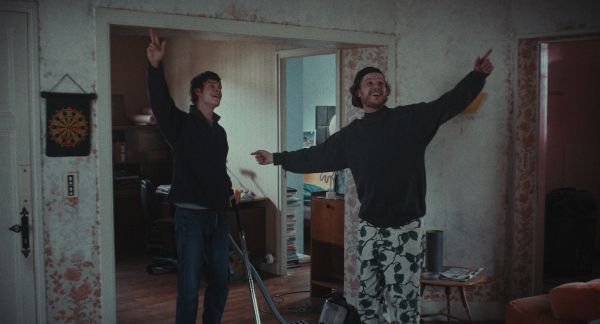
The emptiness of small-town existence in the Haute-Marne region of eastern France is vividly displayed in Hubert Charuel’s quietly eloquent drama about three longtime friends—Mika (Paul Kircher), Tony (Salif Cissé), and Dan (Idir Azougli). Mika hopes to help his roommate, the unpredictable and alcoholic Dan, as well as try to get some kind of sturdy employment after the pair is arrested for stealing a valuable feline to sell on the black market (a plan that ends disastrously). Mika asks Tony (who is financially better off) to get him and Dan waste removal jobs at the local nuclear plant, a quite dangerous profession to say the least. Although the plant’s forbidding concrete walls and invisible radiation are obvious but potent metaphors for Mika and Dan’s inability to find a way out of their stifling local environment, Charuel illuminates a small light at the end of the tunnel, as the close but fraying bond between the twentysomething Mika and 30-year-old Dan becomes the film’s poignant human center. Kircher and especially Azougli are quite impressive as two working-class men fighting a seemingly losing battle to maintain their self-esteem when the odds appear to be stacked against them.
At Work
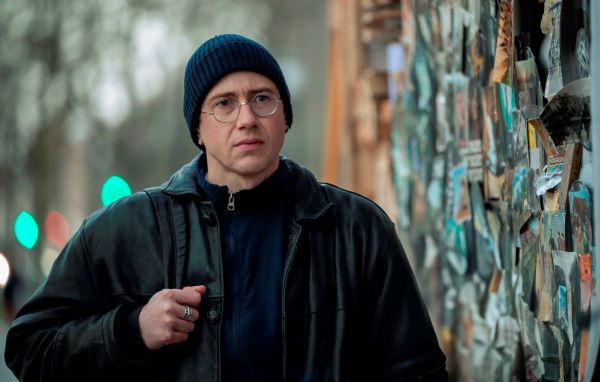
Valérie Donzelli, whose rather routine thriller Just the Two of Us screened at Rendez-Vous two years ago, returns with this low-key character study centered on Paul (Bastien Bouillon), a successful photographer who’s now a writer. To scrape out a barely palatable lifestyle while working on his latest book, the 42-year-old becomes part of the gig economy, doing odd jobs like cutting lawns, cleaning windows, and driving for a ride-sharing app. Donzelli’s camera clinically records Paul as he works for positive ratings on the (fictional) Jobber app, but after a while, Paul’s precarious financial and personal situations are only superficially explored. Sequences of him on video calls with his perplexed children and ex-wife (played by Donzelli herself) or when he visits his equally confused parents are less insightful than simply dutiful, as are the scenes of Paul meeting his nameless editor (a wasted Virginie Ledoyen). Bouillon’s understated portrayal of an artist retaining his dignity in an undignified world is the best thing about this low-stakes drama.




Leave A Comment