In Paris, beginning in late 2018, a populist movement of gilets jaunes (Yellow Vests) conducted weekly demonstrations against a proposed fuel tax. Named for the fluorescent safety vests carried in French vehicles, the group’s topic of protest grew to include the high cost of living and at times descended into violence and vandalism. The police responded with tear gas and riot weapons. Strikingly multifaceted, the occurrence from overseas years ago fittingly illustrates the questions of police ethics that are current across the Atlantic here and now.
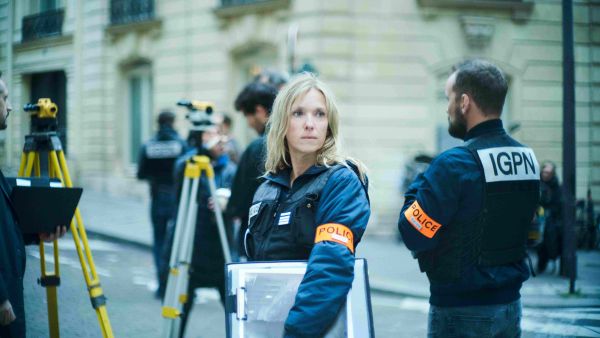
In Case 137 (Dossier 137), a thoughtful fictional procedural from German-French director Dominik Moll (With a Friend Like Harry…), a dogged cop working for L’inspection générale de la police nationale, known as IGPN (French internal affairs), pursues justice for a young man severely harmed during the protests.
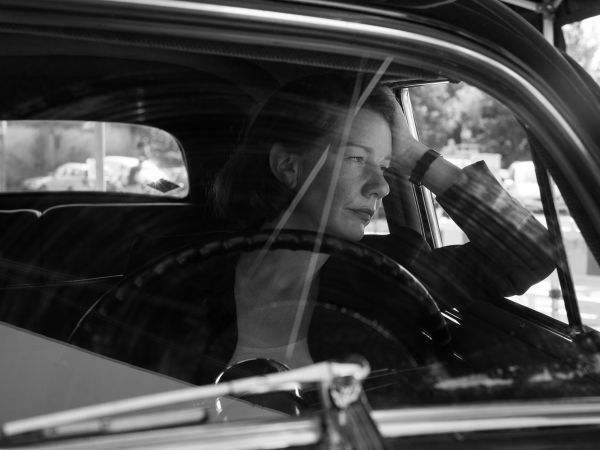
Léa Drucker (Last Summer) plays Stéphanie, a middle-aged investigator, attractive but weathered from the deluge of cases filed for the wrongdoings of law enforcement. The one that captures her interest involves the critically injured Guillaume, whose family, like her own, is from the working-class town of Saint-Dizier. (Presumably there were 136 such cases before this one, with many more to come.)
After pleas by his mother, Joëlle (Sandra Colombo), who reports that her son is in the hospital and will never fully recover from his brain injuries, Stéphanie is on a mission to expose exactly what happened when two members of a SWAT team fired in the direction of Guillaume and his friend, who were running away from a mêlée. Drucker plays the role with tough determination as she searches for answers and plays hardball with colleagues and witnesses alike.
Written with his regular collaborator Gilles Marchand (The Night of the 12th), Moll plunges into the details of the investigation, down to rote administrative tasks, including researching the sale of specific police helmets and enlarging screen shots of the incident. Scattered throughout is documentary footage that reveals angry protesters and severe police reactions, against the backdrop of trees strung with red Christmas lights on the Champs-Élysées.
During IGPN interrogations, the cops have ready excuses for every charge. It’s a lesson on how to avoid accountability: The fault was with the gun, the ammunition, the angle of the images taken. It was self-defense. It wasn’t a sadistic kick to Guillaume who was laying on the ground wounded, because he was trying to grab a cop’s leg, according to the cocky officer. The government deemed the chaos in the streets an emergency, so standard procedures were out the window, they claim.
But there’s a reason some cops see every protester as hostile—all day long they hear insults and dodge hurled projectiles. On the flip side, well-meaning demonstrators may enter the fray naïvely, as is evident in the video of Guillaume’s family singing gleefully as they drive toward Paris for the protest.
Guslagie Malanda (Saint Omer) is riveting as Alicia, a hotel maid who witnessed the event but is unwilling to step forward despite boundary-pushing badgering by Stéphanie. “It will change nothing,” Alicia says in a heart-stopping soliloquy that points up the difference in how the police treat people of color so no one in her community dares to oppose them.
Cats add a lighthearted, recurring motif to the otherwise sober, albeit engaging, film. Early on, Stéphanie adopts a stray she finds trapped in a garage. Later, during a visit to Saint-Dizier, her mother watches cat videos to relax. However, maman annoys her daughter by assuming that the police may cover up the attack on the local boy. This hometown visit reinforces a conflict of interest for Stéphanie that introduces personal complications that add to the political and legal obstacles. After a surprising conclusion to Guillaume’s case, Joëlle says to Stéphanie, “You did your job well, but what use is your job?” provoking a deeper questioning into the elusive nature of truth and justice.


Leave A Comment