
On July 14, 2025, the poet Andrea Gibson died at age 49 after a four-year battle with ovarian cancer. They were not the only poet to die this calendar year (Alice Notley and Fanny Howe, both major voices), but they were easily the one with the most popular appeal. (They were a Goodreads Choice Awards finalist three times, and their friends included Tig Notaro and Ani DiFranco.) The obituaries rolled out accordingly. Gibson was a spoken word poet who became the Poet Laureate of Colorado and actually supported themselves, so it seems, through their work: a manager, mostly of musicians, offered to take them as a client. Their work explored queerness, struggling with suicidal ideation, love itself, and much else, all in very direct language with an open appeal to the heart. Gibson stated that they wanted their work to be “the kind you didn’t need a degree” to appreciate. Many of the tributes I came across in the following weeks—on social media, as well as in print—gave the sense that Gibson’s fans felt they had been taken into their confidence through their relationship to their work.
Ryan White’s documentary Come See Me in the Good Light takes the feeling of intimacy one step further. Beginning two and a half years after Gibson’s cancer diagnosis, it captures their relationship with their long-time partner, writer Megan Falley, as the two of them brace themselves to meet the unlucky hand they were dealt. If that sounds like doom and gloom, the impression is the opposite, and that is intentional. Gibson and Falley both state a dedication to meet this end with as much love, gratitude, and humor as possible, and this comes across amply to the viewer. Consequently, the overall impression is a testament to what makes both love and life special.
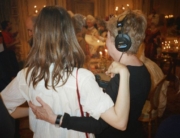
The film interweaves footage of Gibson and Falley in their home, at and between doctor visits as Gibson’s cancer fluctuates between aggression and remission, with photos and videos from (mostly) Gibson’s past, gatherings with friends, and interviews with both. The emphasis is on Gibson and Falley’s relationship, the ways they support one another, their determination to see the brightest and best, and the depth of their connection. Much of it is moving, especially in the minute ways it chronicles the couple’s oscillation between hope and despair (and in the details of their meeting). Plenty of it is also funny and sad at once. It must be said, though, that I couldn’t shake the impression that we were getting a partial picture. Given that the two mention that they were struggling as a couple before Gibson’s diagnosis, it is hard to imagine any two people, no matter who they are, being able to meet such a situation with the constant grace and humor that they project. I don’t think we were entitled, per se, to the other half of the equation (if indeed it is there), yet the viewer can’t help but wonder.
Additionally, both poets broadcast a genuine honesty and gratitude above all else—Gibson tears up discussing how honored they were to give the commencement address at their high school. Viewers will feel that they have been invited, indeed welcomed, into an intimate place. Because of this, Gibson’s fans will be well served by it.


Leave A Comment