
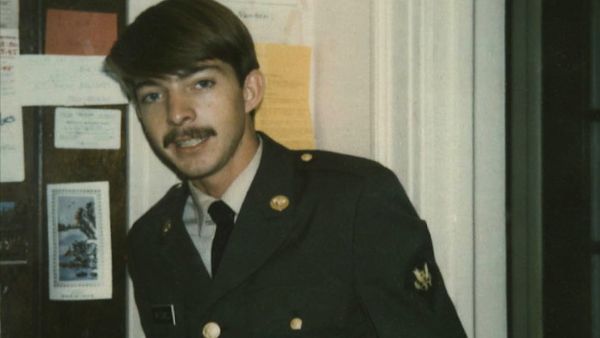
Peter McDowell’s oldest brother, Jimmy, died in 1972 in Saigon. Peter was five at the time; Jimmy was only 24. Peter had always been led to believe that Jimmy died during the Vietnam War, but there was such silence and secrecy surrounding his brother’s death that, for a long time, he had no reason to question it. Later, he discovered that this wasn’t true.
Jimmy had, in fact, died a civilian. In spite of the anti-establishment fervor central to his temperament—he had dropped out of college and wanted to become a conscientious objector before he was drafted—he ultimately remained in Vietnam for many years by choice. He worked as an overseas journalist and, though he wrote letters, he rarely came home. This discovery opened up more questions for Peter than it answered. Only a limited amount of information about Jimmy had made its way overseas, and much of it was contradictory. Did his death involve a drug overdose? Was he gay? Was the Vietnamese woman with whom Jimmy was living his girlfriend? Or was her brother, Dung—pictured with Jimmy in one of the rare photos that reached the States—the real romantic interest?
This documentary is the result of Peter’s search to discover the truth. The reality of what happened to his older brother, whom he barely knew, is important to him in two ways. On one hand, he hopes to heal a wound that has festered in his family for decades, fueled by their refusal to confront the death of the firstborn child. On the other hand, being gay himself—and having caught whispers that his eldest brother may have been as well—Peter is searching for the role model he might have had.
Alongside interviews with the McDowell family and others who knew Jimmy, Peter’s quest takes him not only to Vietnam but also to Paris. Interspersed throughout are stills of old photographs, historical footage, and frequent first-person reflections to the camera. Remarkably, much of the truth is uncovered. Saddeningly, many questions remain, and more missed connections are unearthed.
The film will satisfy many viewers. Much of it is moving, and McDowell creates a space in which interviewees respond emotionally and without inhibition. To an extent, it paints a compelling portrait of Jimmy, both through the selection of his surviving letters and in the recollections of those who knew him. It’s hard to watch without feeling, at some point or another, just how much vanishes when one person dies.
Yet it’s worth noting that the documentary raises many questions it touches on but doesn’t fully explore regarding the lives of civilian Americans in Vietnam, the queer history of Vietnam, and the role of drugs during the war. In short, the world Jimmy escaped into and the context he lived in. A broader focus might have brought Jimmy more fully to life and more richly illuminated the vanished world in which he lived, even though much of the film is engaging.


Leave A Comment