I recently participated in an awards ballot, along with roughly 30 other critics, to select the best in film in 16 categories: best picture, best director, and so forth. Notably, ten categories needed a tiebreaker vote. Looking through rose-colored glasses, one could conclude that there was a diversity of notable work, and admiration was spread across the board—that there were more than enough options.
If you know where to look, there were plenty of good films in 2025. (Maybe you’ll find new discoveries below.) In fact, a “10 best” list could have easily been expanded. Honorable mentions should include: the effortlessly entertaining dark comedy No Other Choice; the engrossing and discomforting It Was Just an Accident; the decades-in-the-making, small-scale epic Caught by the Tides; and Little Amélie or the Character of Rain, a singular coming-of-age story in pastel colors. Kent Turner
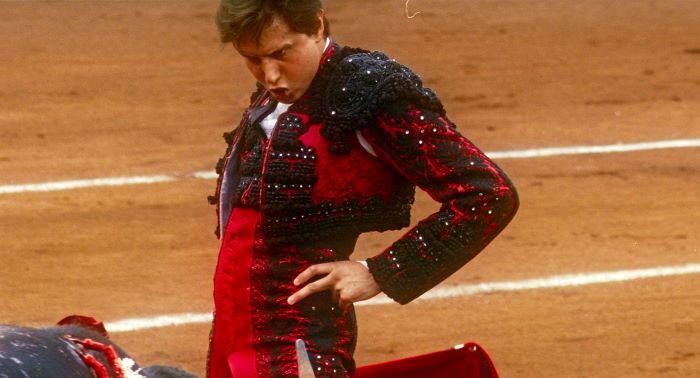
Neither a moral tract nor a glamorizing celebration, Albert Serra’s absorbing documentary lets bullfighting speak for itself as it follows famed Peruvian matador Andrés Roca Rey at work. With visceral attention to the action of the fights—and to the preparation and aftermath of each performance—Serra captures the supreme brutality of the sport and the rapt belief of those who practice it and live for it. It’s an uncomfortable experience, and probably intentional. The gore is neither avoided nor celebrated; the toll on Rey’s own body, and the way he flirts with death, are all too easy to see. A brief, haunting prologue, observing bulls alone at night, and a darker turn in the music at the end, are the closest Serra comes to outright questioning Spain’s notoriously violent pastime. This absence of authorial opinion leaves the door open for viewers to come to their own conclusions.
Equally striking are the scenes where Rey is either getting ready for the fight or resting, especially when he is being driven home with his entourage. They chirp praise at odd intervals, reassure him of his greatness and how much the public loves him, and relive the details of the fight. Yet often they fall silent and look out the window. There’s an awkwardness at odds with the ceremonial splendor inherent to the sport. Often, the team sounds like it is trying to reassure or perhaps even to convince themselves of the worthiness of their endeavor. Andrew Plimpton (Streaming on multiple platforms, including MUBI)
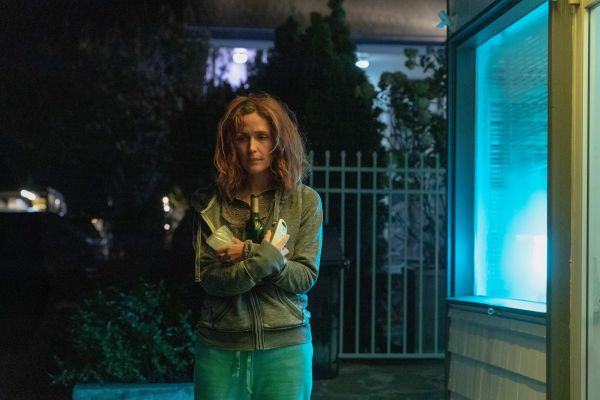
Mary Bronstein’s acrid film portrays an outer and inner gauntlet of agony for a single mother so scathing it’s funny—almost. This daring piece of work is an uncompromising watch that derives staying power through sheer guts and singularity of (tormented) vision.
Within its first few minutes, Linda (Rose Byrne, giving her all) sees water gathering in her bathroom. Then screams as her apartment ceiling collapses in a miasma of dust and excrement. The gaping hole: just one of the tormentors that dog Linda through the movie. Other unrelenting scares won’t let go: Linda’s mysteriously ill child attached to a feeding tube (whom we don’t see until the end); her disembodied voice nagging and whining. Another disembodied voice, this one of an absentee husband, a tool, who issues orders and accuses Linda of malingering. A distressed client with a missing baby girl. (The movie reveals in a comedic way that Linda is a therapist, probably the worst possible person to help others with their troubles.) Other bêtes noires stalk, troll, and mock Linda at every turn. Linda responds with as ill grace as she can in a world where everyone presents their worst self. Overbearing yet skillful sound design and dark cinematography pump up the overall sense of churning interior dread.
It’s tempting to see If I Had Legs as a satire of therapy, a screed against motherhood, or more simply a broad denunciation of the human race. But Linda’s plight becomes both more particular and relatable as the film goes on. “I’m one of those people who isn’t supposed to be a mom… This isn’t supposed to be what it’s like. This can’t be it,” she weeps in a rare moment of introspection. Her realization could hold up a mirror to the moments all of us have—when we feel betrayed by destiny and do not understand our lives. For all its proud and overblown misanthropy, If I Had Legs I’d Kick You hits certain human nails on the head. Caroline Ely (Streaming on multiple platforms)
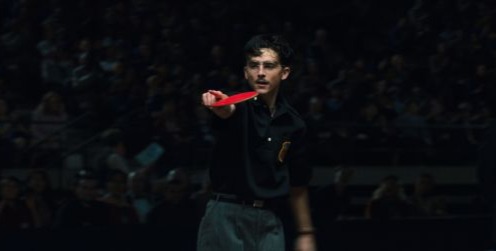
Marty Supreme
Josh Safdie’s first solo feature delivers fully on the promise of hyperkinetic, deranged cinema, in line with the manic New York stories he previously crafted with his brother Ben on more modest budgets (Good Time, Uncut Gems). Unlike Ben’s comparatively restrained and, to a degree, conventional solo outing (The Smashing Machine), Marty Supreme feels like the oversized, offbeat, big-budget evolution we expected as the next step from the Safdies: a sports movie that locates drama, terror, and genuine peril in one of the dullest sports imaginable, table tennis. Its secret sauce lies in its loose, freely fictionalized reconstruction of the real-life trajectory of a ping-pong player in the 1950s, a Jewish New Yorker named Marty Reisman, chasing greatness in a sport no one in America cared about.
In one of the standout performances of 2025, Timothée Chalamet becomes Marty Mauser. We have never seen the actor inhabit a character this openly despicable, channeling all his charisma and charm into the embodiment of a black hole of insatiable ambition and unchecked ego. Marty Supreme is a character study of excess and radical individual exceptionalism pushed to its breaking point—a cultural X-ray of a country that breeds monsters with voracious appetites, where the boundaries between talent and fraud are deliberately erased. Guillermo López Meza (In theaters December 25)
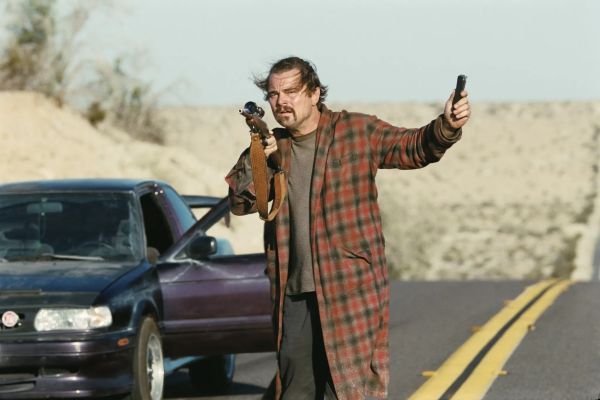
Relentlessly engaging and nimble, Paul Thomas Anderson’s sweeping Californian opus follows the entangled lives of two revolutionaries, Perfidia Beverly Hills (a striking and memorable Teyana Taylor) and Bob Ferguson (Leonardo DiCaprio, in one of his loosest, most charismatic performances); their daughter, Willa (Chase Infiniti, in an impressive feature debut); and the sadistic Colonel Steven J. Lockjaw (Sean Penn).
Like Anderson’s 1997 Boogie Nights, Battle is full of California characters of a unique, tribalistic, unapologetic milieu. It’s a bulky story, yet it unfolds with remarkable agility and economy (the nearly three-hour runtime flies by). Andy Jurgensen delivers a standout achievement in editing. The action sequences are spectacular, perhaps because they are rooted in a sense of visual simplicity. A rolling-hills three-car chase is a stunner, its tension and wooziness incredibly palpable. Jonny Greenwood’s dazzling orchestral score of driving pianos and pattering percussion complements the film’s kineticism.
A mashup of neo-Western and Hero’s Journey pictures, Battle is simultaneously modern and classical, utilizing the Old Hollywood format of VistaVision to great effect. Anderson draws from an array of cinematic allusions, from John Ford’s The Searchers to Jonathan Demme’s The Silence of the Lambs. In the end, the film ultimately reveals itself as both a moving story of a family, and a forward-looking tale of continued resistance. Jeffery Berg (In theaters)
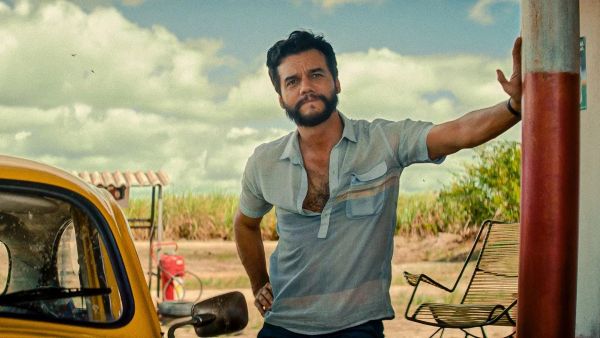
Brazilian director Kleber Mendonça Filho blends the personal and the political in ways that are unsettling, darkly humorous, and often simply exhilarating. Set during the last years of the Brazilian military dictatorship (which lasted from 1964 to 1985)—and intercut with sequences of two young researchers in the present day listening to audio tapes of those who resisted—Mendonça Filho’s expansive drama follows a university engineering professor under the alias Marcello. The widower is on the run while his young son, Fernando, is cared for by his maternal grandparents: Assassins have been hired by a vengeful corporate honcho to take him out.
Mendonça Filho’s thrilling rollercoaster ride of a movie links together several disparate threads into an absorbing whole, from the tense opening in a rural gas station, where a decomposing body (a would-be robber) lies not far off. Local cops pretty much ignore it while one of them harasses Marcello for a bribe. Even when the director turns to surrealism in a sequence where Fernando’s obsession with Steven Spielberg’s Jaws seems to take on a life of its own, it’s all part of a grandly orchestrated symphony that is a lacerating indictment of Brazil’s not-too-distant past and a dazzlingly shot homage to political thrillers like Elio Petri’s Investigation of a Citizen Above Suspicion or John Boorman’s Point Blank. As Marcello—and as his son Fernando as an adult—Wagner Moura gives a marvelously sensitive performance as an ordinary man caught up in extraordinary circumstances. Kevin Filipski (In theaters)
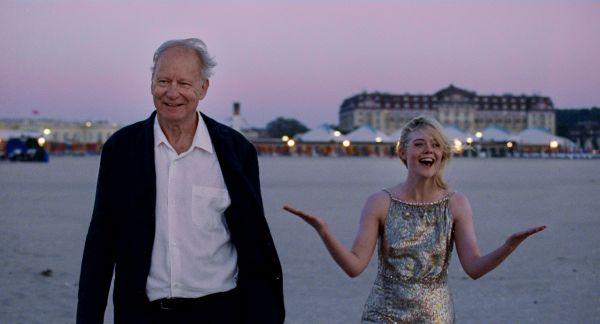
One of the main characters in Joachim Trier’s aching, multilayered drama is a roomy, rustic Oslo house, which holds the secrets and repressed traumas of two sisters, stage actress Nora (Renate Reinsve) and academic historian Agnes (Inga Ibsdotter Lilleaas), and their noted filmmaker father, Gustav (Stellan Skarsgård). Beautifully restrained, in some ways it’s Trier’s most formally ambitious work, traversing through decades of family history with flashback scenes, including Gustav’s mother’s involvement in the resistance against the Nazi occupation of Norway during World War II, as well as being elegantly staged and acted.
Gustav hasn’t made a film in 15 years, but he has written a script loosely based upon his mother and wants Nora to play the part. Nora, hurt by his years of desertion and his insensitivity, rejects him. The role goes instead to famed American actress Rachel Kemp (Elle Fanning), who is emboldened by her sincere admiration for his earlier work, adding another wedge within the family dynamics.
As in Trier’s other films, characters are revealed slowly through behavior and unearthed details—from a humorous array of inappropriate DVDs Gustav gives to his young grandson as a birthday present, to a wrenching historical file that Agnes reviews of her grandmother’s imprisonment. The depiction of Nora’s anxiety and depression is intelligent and sensitive. It’s not interested in a clear reason why someone becomes depressed, but suggests the strength of familial bonds as a potential salve. When Agnes comes to help Nora in a pivotal, intimate scene, it’s one of the most moving of the year, stunningly acted by Reinsve and Lilleaas, in her breakout role. JB (In theaters)
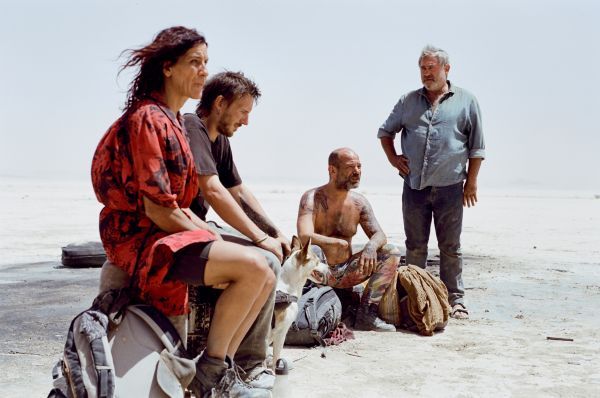
The year’s most sensational film, in the literal sense. Mauro Herce’s breathtaking cinematography of the Moroccan desert, combined with the pounding, pulsating techno score by Kangding Ray, lulls you into complacency until a shock comes around the corner. In some ways, this could be described as an art-house disaster movie. It’s definitely a bumpy road trip as a coterie of ravers travel to the next dance party in southern Morocco, with a father (the great Sergi López) in tow, searching for his estranged daughter.
Director Oliver Laxe’s new film is not at all spoiler-proof; the less you know, the better. Yet even having heard some of the movie’s revelations early on, thanks to IndieWire’s gabby podcast Screen Talk, the meandering storyline still has the power to shock. Suspense even builds during repeat viewings: the viewer knows the disaster ahead confronting the ragtag travelers. Perhaps the biggest surprise here is that this is such a departure for the director, whose previous films (the meditative Mimosas and the slow-burner Fire Will Come) did not elicit such emotion. If you’re not on the edge of your seat at certain moments, then you are somehow asleep. KT (In theaters winter 2026)

Souleymane, an immigrant from Guinea, is at the center of Boris Lojkine’s achingly intimate character study of a desperate young man on the margins. He navigates the streets of Paris for very little money delivering food (using the account of a fellow immigrant, who takes half his earnings each day). Lojkine (who co-wrote the elegant script with Delphine Agut) nods to cinéma vérité with his naturalistic exploration of the travails of Souleymane, who tries to keep afloat financially in a merciless gig economy that has little room for error, like a traffic accident.
Unsentimental and humane, Lojkine’s film works on two levels at once: as a probing psychological portrait of a young man who’s all but invisible to everyone around, as well as a larger canvas revealing how so many African immigrants can be exploited by employers, and by fellow émigrés, who act as friends and confidantes but are often anything but. Lojkine smartly cast Abou Sangaré, a Guinean émigré and auto mechanic in northern France making his acting debut. He gives Souleymane the kind of lived-in authenticity that lets us deeply feel his urgency and dignity in the face of indifference. KF (Steaming on multiple platforms)

Macedonian director Tamara Kotevska beguiled moviegoers with 2019’s Honeyland, a documentary about a woman beekeeper whose harmony with nature is disturbed by marauding outside forces. She’s back with another ode to the earth and the humans who respect its laws. This follow-up, The Tale of Silyan, arouses warmth and wonder, detailing the growing rapport between a doughty rural farmer and an affectionate stork. Beautifully photographed and gently paced, the film is a heartfelt testament to the power of unlikely connections to help recover from hard times.
Middle-aged Nikola and his wife farm their land and share a tender yet joshing rapport. They live in a remote Macedonian village that houses one of the biggest stork colonies in Europe, if not the world. However, times are abruptly changing: Produce prices drop, Nikola can’t sell his crops, and he has to put his land up for sale. He’s forced to work in a landfill, where storks eat garbage and fall dead.
Alone, numbly unhappy, and not consoled by Zoom calls to his family now living in Germany, Nikola reaches outside himself and rescues an injured stork. Nursing the regal yet slightly goofy creature back to health in the empty house and finding a renewed footing in life will now form twin missions for the proud farmer. Silyan’s story is a wholesome and gorgeously lensed tale of hope and redemption, goosed here and there with a little wry humor. Viewers will soar with this one. CE (In theaters and coming soon to Disney+ and Hulu)

Dennis (James Sweeney) and Roman (Dylan O’Brien)—the former gay, the latter straight—form a friendship: two lonely young men who find affinity through shared grief. Both attend a support group for twins who have lost their identical siblings.
Occasionally dark, mostly bittersweet, Twinless breaks free from what is usually expected in American indie cinema, where an ostentatious moral clarity often feels like an unspoken, mandate. A good plot twist is designed to enrich a story and its characters; a great one is bolder, aimed squarely at jolting the viewer into becoming an active participant, a barometer of tension and release. Call it Hitchcockian if you want, but the entertainment factor here doesn’t negate the emotional blows, and writer/director James Sweeney has come up with a web of delayed truths and timely confessions compromising the fate of the men’s friendship. The film, directed by James Sweeney, is a breakthrough for everyone involved: for the director himself, who also stars, and for O’Brien in a dual role—the only literal twin of the title. It fearlessly explores, without anxiety over “getting it right,” the dichotomies between gay and straight men: the disparities in interests, romantic relationships, and heartbreaks, as well as the points of contact between two people who have lost the same object of love. Messy, complicated, fallible gays are back! It’s proof that non-sanitized queer representation—placed in the service of telling a strong story above all—is ultimately essential and engrossing. GLM (Streaming on multiple platforms)









Leave A Comment