
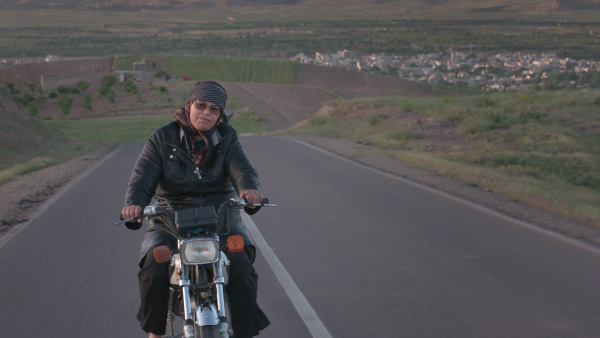
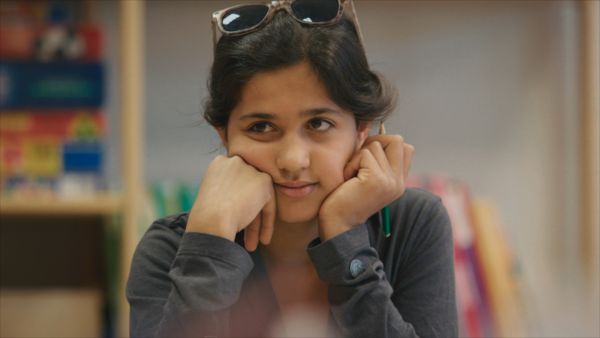
“You all have the power to do anything,” says a beaming woman mayor-elect to a classroom full of schoolgirls. The girls look delighted. But in a small town in rural northwestern Iran, do they? Cutting Through Rocks is a slow-burn, slice-of-life documentary that takes the measure of one woman’s attempt to make that bold declaration true. In a massively patriarchal society where most rights accrue to men by default, it doesn’t take much to set the effort awry.
Sara Shahverdi would probably stand out anywhere, and in small-town Azeri, she positively leaps out. Sara has been divorced. Raising her as a boy, her father taught her to ride a motorcycle, a symbol of freedom she rides astride to barnstorm the countryside. Sara’s power becomes apparent for viewers as she returns to her family’s home to confront a brother for forcing her sisters to sign away their inheritance. She insists that the property be restored to the women and rips up the document with their signatures—filmmakers Sara Khaki and Mohammadreza Ayni are introducing us to a formidable individual.
A figure of grudging respect in the village, Sara decides to run for town council. The woman with the shy grin moves with purpose to nail down votes and celebrates victory on election night. Soon, she plans to cut red tape in order to lay fuel lines to all the town’s houses. She speaks out for women’s property rights and against child marriage. She designs a park. But in no time, she runs into opposition from the town’s men.
Cutting’s cinema verité style is low-key, but some scenes carry the power to shock. When a teenage village girl married off at 12 to a 35-year-old man asks the court for a divorce, an official curtly responds, “It is what it is,” and orders her to make the best of her wretched situation. Sara teaches a group of tween girls to ride motorcycles and urges them to cut loose and enjoy the open road. But the buoyant scene is interrupted when they cruise into town and a male relative recognizes one of the teens, doling out a humiliating public slapping. It’s easy to see why Sara has trouble making legislative headway in a place where women’s dignity is undercut so casually, reflexively, and consistently. “Give girls shoes,” murmurs one man, “but not paths.”
Some of the village disputes bear the mark of petty small-town life, but when it sinks in that she aims for real change, Sara is upgraded in local estimation from a local eccentric to a threat. The town, her brothers included, finally turns on her, and a judge threatens her with a sentence that, although common in Iran, is devastating to her sense of self (and will seem outlandish to American viewers). After a limited reprieve, she emerges philosophical. “I may have wanted big changes, but now I know it demands more patience. Sometimes a small step is enough.” We wonder if this courageous but now chastened activist will try her hand again in spite of the odds. The filmmakers make us hope she will, but now we know the daunting scale of the obstacles.




Leave A Comment