
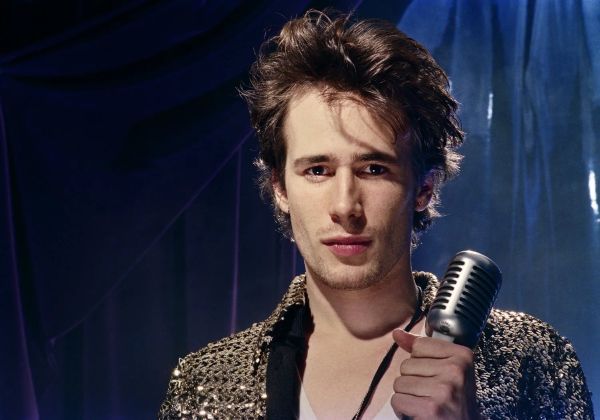
In her intimate portrait, accomplished documentary filmmaker Amy Berg (Janis: Little Girl Blue, West of Memphis, Deliver Us from Evil) follows the too-short life of musician Jeff Buckley. The documentary isn’t hagiography but a warm, empathetic rendering of a complicated soul—drawing light from both Buckley’s talents and his tragedy.
Berg’s film traces how Buckley’s life was shaped by women, three of whom are prominently featured as interviewees: his mother, Mary Guibert; musician and singer-songwriter Joan Wasser (also known as Joan as Police Woman); and musician-artist Rebecca Moore, both former romantic partners.
Guibert raised Jeff in Anaheim, California, after his father, singer Tim Buckley, left the family when Jeff was a young child. (Tim, who enjoyed a notable though brief career in music, died of a heroin overdose at 28 in 1975.) Hurt and angered by his father’s abandonment, Jeff kept his distance from him for the rest of his life.
From an early age, Jeff had an uncanny ability to riff and match pitch with high-voiced singers. His eclectic musical influences included Diana Ross, Nina Simone, Pakistani vocalist Nusrat Fateh Ali Khan, Judy Garland (particularly “The Man That Got Away”), and Led Zeppelin.
The film recounts two pivotal moments in Buckley’s early 1990s New York years: his reluctant participation in a tribute concert for his father and his first performance at the East Village coffeehouse Sin-é, where he also worked. His haunting, otherworldly vocals quickly drew the attention of music luminaries and record executives, leading to a deal with Columbia Records.
His first—and only—full-length studio album, Grace, would become a landmark, critically acclaimed work. The film’s energy peaks when covering its creation and release. The album sold well overseas but faltered commercially in the United States, perhaps because Buckley’s music and image didn’t fit neatly into the tribal fashion or genre boundaries of the era. His look and chanteuse-like voice defied gender norms. Record executives fretted that the glittery jacket he chose for the album cover appeared too effeminate. His sound was too soft for grunge and too edgy for mainstream pop.
Despite his growing reputation, Buckley could be his own worst enemy, wrestling with bouts of depression and retreating to a modest Memphis house with an overgrown lawn in search of a quieter life. In 1997, at the age of 30, he accidentally drowned in the Wolf River in Memphis. Berg emphasizes the accidental nature of his death, which is still assumed by many to have been the result of an overdose.
The look and sound of the film are striking. Animation by Sara Gunnarsdóttir overlays a watery, dreamlike texture onto Buckley’s drawings, journals, and song lyrics. Water, Berg suggests, is emblematic of Buckley’s life, as well as the curving, tidal qualities of his multi-octave voice. Singer Aimee Mann, whom Buckley pined for, notes this same fluid quality—that he was emotional, wildly creative, and in constant motion, always trying to stay afloat.
For fans, Berg unearths a trove of concert footage, diaries, answering machine messages, and recordings that will be a revelation. For those who know him only superficially or solely for his sterling, enduring cover of Leonard Cohen’s “Hallelujah,” It’s Never Over, Jeff Buckley offers a compelling overview and a potent reminder of his enormous talent.
Leave A Comment