Ross McElwee has carried a camera around filming his own life—and by extension those of his loved ones—in several documentaries, the most famous of which, 1986’s Sherman’s March, has been restored and rereleased for its 40th anniversary. Ostensibly about McElwee following the path of Union General Sherman’s infamous Civil War March to the Sea, where his forces pillaged and burned everything in their path, it’s actually a fascinating and often hilarious examination of the then-single McElwee’s relationships with several young women. (The film’s memorably lengthy subtitle is A Meditation on the Possibility of Romantic Love in the South During an Era of Nuclear Weapons Proliferation.)
For nearly a half-century, McElwee has made a series of insightful, self-reflective, and self-lacerating self-portraits, which included his family after his marriage to Marilyn, the birth of his son, Adrian, and the adoption of his infant daughter, Mariah, from Paraguay. His latest film may be his most personal exploration yet, chronicling the grief he has felt since 27-year-old Adrian died of a fentanyl overdose on Christmas Eve, 2016.
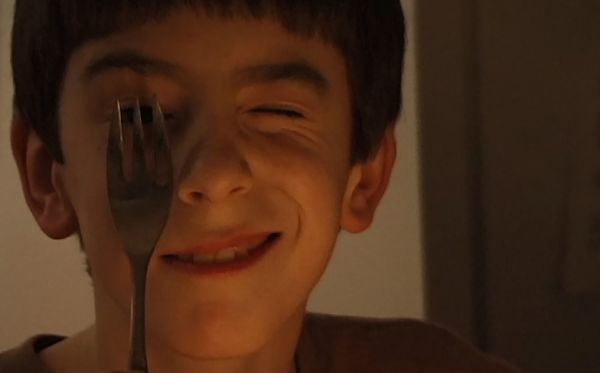
Although McElwee states in Remake that Marilyn and the children became tired of always being filmed—admitting it led to the end of the marriage—McElwee has continued filming and was delighted to find that Adrian, as he got older, was also recording events in his own life. McElwee uses the voluminous footage shot by himself and Adrian to try and keep the reality that his son is gone at bay. Much of this footage is simultaneously painful and soothing—for McElwee, no doubt, but most likely for many viewers as well—to see this intelligent young man so vibrantly alive onscreen. It’s as if McElwee is remaking his own life, and his son’s as well, through creating this documentary.
Its title has another meaning, as McElwee recounts how Hollywood came calling in the form of director Steve Carr, who wants to turn Sherman’s March into a feature film. Although he’s skeptical about it, McElwee sells the rights and signs on as director of the making-of documentary about the remake. Soon, however, he hears that the adaptation is no longer viable, but it will now be made into a drama series. Later, he hears it’s being turned into a sitcom. Unsurprisingly, none of those come to fruition, and the rights lapse. But the renewed interest in Sherman’s March prods McElwee to revisit some of the people who were in that film, including his good friend Charleen Swansea, whom McElwee is heartbroken to realize is starting to lose her memory. (Swansea died while McElwee was filming Remake, and he dedicates the film to her and Adrian’s memory.)
The heart of Remake reveals the 78-year-old McElwee working out his grief over his son’s death through new footage and clips from his earlier films, where we see both of his children as naturals in front of the camera. McElwee also includes footage Adrian filmed of his addictions and mental health struggles. He feels he could have done more to help his grown son battle his demons, but the very existence of Remake underlines his realization that Adrian’s brief life touched many people.
Both Remake and Sherman’s March compassionately demonstrate Ross McElwee’s ability to channel his own preoccupations into works that are often very funny and also angry, unsentimental but still emotionally charged, and personal but universal.
Leave A Comment