
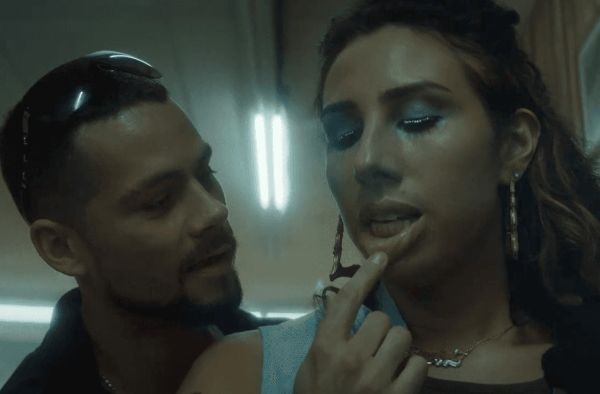
Set in an unspecified, grimy urban area of New Jersey on Valentine’s Day sometime in the early 2000s (Motorola flip phones abound, and a radio broadcast mentions Jim McGreevey as governor), Ponyboi is an immersive—if occasionally brutal—neo-noir escapade, directed by Esteban Arango and written by its lead, River Gallo.
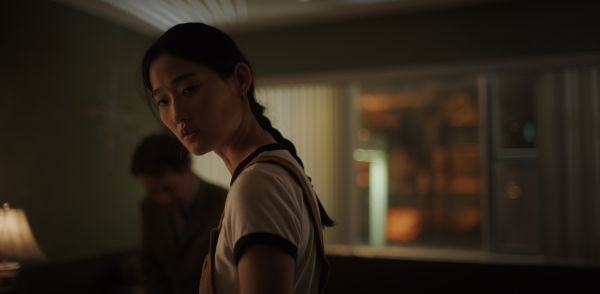
Ponyboi (Gallo, in a riveting turn) has long been estranged from his parents, who rejected him for being intersex. He lives in the back of a dingy, fogged-windowed laundromat, coyly named Fluff n’ Stuff, where he works alongside his best friend, Angel (Victoria Pedretti), who is pregnant by her macho, buffoonish drug-dealer boyfriend Vinny (Dylan O’Brien). Unbeknownst to Angel, Vinny has also been sleeping with Ponyboi, who helps him with drug deals. After finally answering a string of missed calls from his mother, Ponyboi learns that his father is sick and dying.
Meanwhile, a mysterious man named Bruce (Murray Bartlett) appears at the laundromat like a desert mirage—backed by a lilting, vintage country & western soundtrack—in an old Mustang. With his grayish beard, handsome eyes, cowboy hat, and brown sheepskin coat, Bruce might just be the cowboy Ponyboi has been waiting for to whisk him away from the doldrums. But when one of Vinny’s meth deals goes fatally awry, Ponyboi goes on the run, gun in hand and Vinny’s suitcase of cash in tow.
O’Brien delivers a wily and electric performance that showcases both his comic and dramatic range. Alongside his stellar work in the forthcoming Twinless, which premiered at Sundance earlier this year, his portrayals stretch the emotional and psychological elasticity of masculine identity.
Reminiscent of some of Sean Baker’s work, Arango’s film is raw and sweeping—a tense drug thriller with a magnetic character at its core. Cristobal Tapia de Veer’s score, full of atonal percussion and synths, evokes gritty retro films from the 1980s. The moody soundtrack is also infused with Goodfellas– or Casino–style girl-group tracks like the Tonettes’ “My Heart Can Feel the Pain,” which sets the tone. An opening credits sequence—so rare and welcome these days—features slow-motion shots of Ponyboi wandering shadowy city streets, paired with neon-tinged titles, establishing the film’s blend of dreaminess, grit, and glamor with bursts of whimsy.
That dreamy/gritty/glam mix continues when Ponyboi detours to a nightclub to meet Charlie (a magnetic Indya Moore), an old friend turned foe due to Ponyboi’s ties with Vinny’s crew. (Decked out in a glittery blue dress and eyeshadow, giving a sideways stare while smoking a long cigarette, Charlie resembles a 21st-century Veronica Lake—and is one of the film’s most electric supporting characters.) Their reunion takes some surprising turns. Ponyboi hopes to score some testosterone. Charlie obliges, but also offers a box of estrogen, encouraging him with advice that suggests his journey may still be unfolding. There’s immense pressure on Ponyboi from others who want him to conform to their desires—Vinny, for instance, wants him to transition, offering estrogen and breast implants. To Gallo’s credit as a screenwriter, the film doesn’t overexplain or neatly resolve where Ponyboi wants—or needs—to go next.
The tone ramps up in intensity and violence toward its conclusion as Ponyboi and Vinny finally go toe-to-toe. Still, the final beats unfold a bit slowly, and the coda feels somewhat predictable. Yet the low-budget Ponyboi is a remarkable achievement. Gallo’s heartfelt writing and performance are nothing short of revelatory.

Leave A Comment