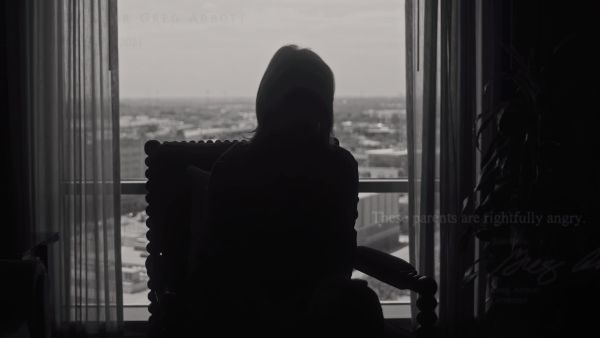
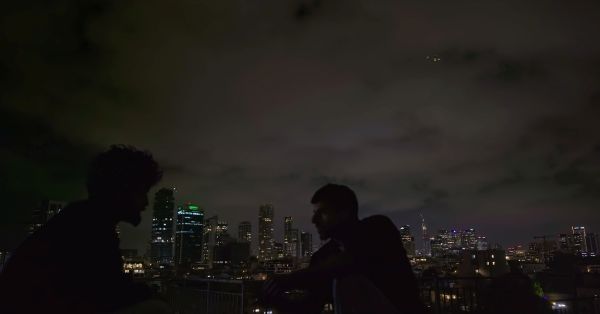
The trouble began in 2021 when Matt Krause, a member of the Texas House of Representatives, released a list of 850 books he wanted school libraries to remove because of their supposedly LGBTQIA+ and race-related content. A letter from Texas Governor Greg Abbott calling for the removal of “pornography” further alarmed the state’s school librarians. “That was the moment I realized school librarians could be criminalized for selecting books and making them available on the shelves,” says an anonymous librarian, shot in a dramatic, shadowy silhouette. Her account is featured in Peabody Award-winning filmmaker Kim A. Snyder’s (Us Kids) timely and well-meaning, if bland, portrait of the librarians (all middle-aged, White women) on the front lines of the culture wars.
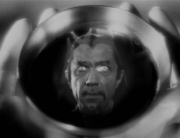
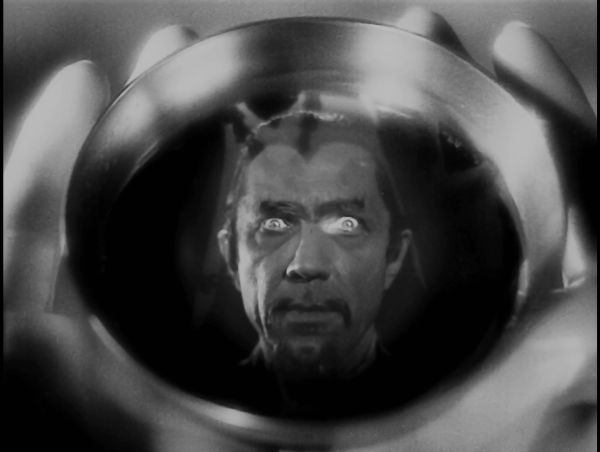
Snyder follows the tribulations of librarians in Texas, Florida, and Louisiana as they come under fire from right-wing politicians and a mysteriously well-funded parents’ group called Moms for Liberty. She mixes vintage film and television clips (The Human Comedy, Storm Warning, The Twilight Zone’s dystopian episode, “The Obsolete Man”) with archival and contemporary footage, talking-head interviews, and animated excerpts from banned books (Toni Morrison’s The Bluest Eye, James Joyce’s Ulysses, and Ray Bradbury’s Fahrenheit 451).
While some librarians in Texas acquiesced to the book cull, others resisted. (“To me as a librarian, seeing the offices full of withdrawn books was trauma,” comments one anonymous woman.) Army veteran and head librarian Suzette Baker was fired in 2022 from the Llano County Library System after refusing to remove titles like Ibram X. Kendi’s How to Be an Anti-Racist and Ta-Nehisi Coates’s Between the World and Me. “They asked us to put them behind the counter,” explains Baker, as she browses through her old library’s shelves. She notes that the LGBTQ books have now been segregated where they were once integrated into the collection. But in the children’s section (“where we keep our pornography,” Baker jokes), she gleefully finds one title that has escaped the censors: a picture book about the happy marriage of two male rabbits, A Day in the Life of Marlon Bunny.
Loss of employment was not the only threat faced by library professionals fighting book bans. They also experienced doxxing and isolation from their local community. In Clay County, Florida, librarian Julie Miller was verbally attacked by Moms for Liberty advocate Bruce Friedman, who threatened to run over his opponents “like a dead body.”
“Who runs over dead bodies?” wonders a puzzled Miller. In Louisiana, award-winning librarian Amanda Jones, who filed a defamation suit (dismissed in 2022 but revived in late 2024) against two men who accused her of pushing pornography, grows estranged from her Christian nationalist father.
Snyder also highlights ordinary citizens speaking out at school board meetings. Among the most moving and powerful is Pastor Jeffrey Dove, an ally of Julie Miller, who states that “to attempt to take Black history, to take a lot of our stories away from children is one of the most evil things I think a person can do.” Moms for Liberty is represented by Monica Brown, a mother of nine in Granbury, Texas, who advocates arresting librarians for distributing pornography to minors: “They are out to destroy the heterosexual relationship.” (As her adult gay son, Weston, who was banished from the family because of his sexuality, speaks to the Granbury board, Brown is shown filming the proceedings on her phone, amplifying the distance between mother and child.)
Viewers who don’t follow the news or who still think of libraries as antiquated, dusty bookshelves will find this documentary illuminating and disturbing. But one wishes the film had been a bit angrier and harder-hitting, especially in its probe of Moms for Liberty. While it lightly touches on the group’s aims, it doesn’t dig deeply into the organization’s methods (such as taking over school boards and blindsiding librarians) or dark money funding sources. The librarians profiled here can be admired for their steadfast courage, but the footage of board meetings and polite waiting around, accompanied by Nico Muhly’s gentle, tinkling score, doesn’t always make for compelling drama.
The Librarians ends in 2023 on a somewhat optimistic note. (Baker successfully advocates for keeping the Llano library open, and Jones attends the American Library Association conference to promote her memoir.) However, recent events have already significantly dated this film. In May 2025, the Fifth Court of Appeals ruled that the patrons of the Llano County Library had no First Amendment right to receive information in the form of library books. This devastating judgment enables the government to withdraw library books for any reason. The eventual losers will be young people. “When they go after the books,” one librarian points out, “they are really going after the kids who come to the library as a safe space.”




Leave A Comment