The Tribeca Festival shifted into darker territory with haunting character studies that explored painful material. Two heavy-hitting dramas stood out, both powered by immersive performances. One employed realist, bare-bones storytelling; the other, based on true events, dug deeper than any headline might suggest. These hard-to-watch yet impossible-to-dismiss films showcased remarkable talent from underrecognized character actors, guided by filmmakers committed to telling stories that lingered more through delicacy than fanfare.
Dragonfly grabs your attention immediately, chronicling a tender, uneasy friendship between two lonely women living side by side in a modest suburb outside London. British director Paul Andrew Williams enlists two of today’s most brilliant actresses to play characters whose unspoken emotions rise gently to the surface. They aren’t quite outcasts, but are clearly marginalized by age, gender, and class—living lives stripped of grandeur, ambition, or even expectation.
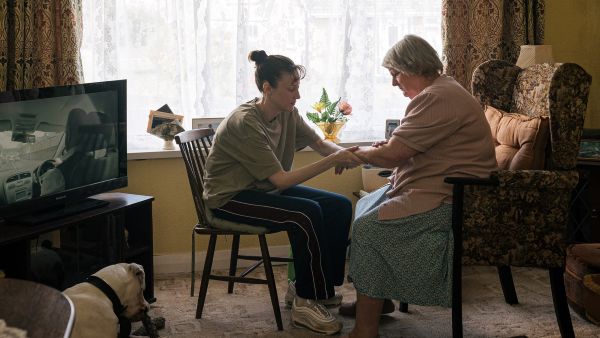
Brenda Blethyn plays Elsie, 84 and still mostly self-sufficient despite her rheumatism. Her only son lives far away, and her main human contact comes from a rotating cast of nurses who help her with daily tasks, including the showers she dreads but must undergo for bureaucratic reports. Next door lives Colleen (Andrea Riseborough), a woman in her late thirties (or so she says), who watches makeup tutorials while anxiously tracking signs of aging in her face. Raised in the foster care system and now living off government benefits, her only companion is a large American pit bull, Saber. Their lives intertwine when Saber wrecks Elsie’s garden. Colleen offers to fix the damage, even bringing new flowers, and a cautious bond begins to form.
Colleen soon becomes a regular visitor—bringing groceries, sharing tea and biscuits, and eventually earning Elsie’s trust despite early reservations about the dog. She later offers to be Elsie’s full-time caregiver—unpaid and out of the kindness of her heart. “My ticket to heaven,” she calls it. But tranquility, as in classic British kitchen sink dramas, proves short-lived. When Elsie’s son visits, he views Colleen’s sudden devotion with suspicion. What began as a story of companionship veers sharply into something more ambiguous—perhaps even sinister.
Blethyn radiates warmth and vulnerability. But it’s Riseborough who carries the more complex arc. With her usual chameleonic virtuosity, she layers Colleen with mystery and unpredictability. Is she hiding ulterior motives? Is the son simply overreacting? Even Saber becomes a source of tension, tied to fears and prejudices around the breed. Williams walks a fine line between empathy and unease.
Dragonfly begins as a touching slice-of-life story but ultimately builds to a third-act resolution that some will find shocking, even alienating. It may not land as gracefully as the best of Mike Leigh (a clear influence, given both actresses have worked with him), but it’s undeniably worth seeing for two phenomenal performances at the peak of their craft.
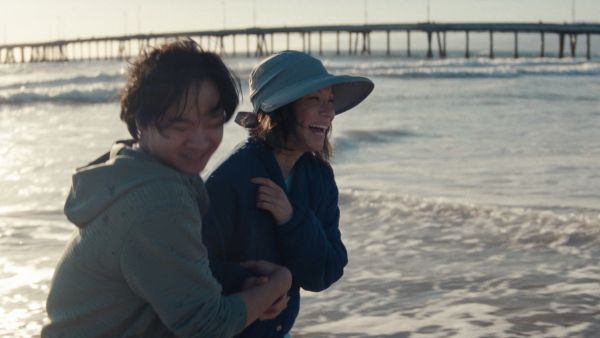
If Dragonfly surprises with its shift, Rosemead is a slow-motion heartbreak that you sense from the very beginning. The directorial debut of cinematographer Eric Lin, it’s a devastating film inspired by a true story detailed in the Los Angeles Times article “A Dying Mother’s Plan: Buy a Gun. Rent a Hotel Room. Kill Her Son.” Lucy Liu gives a career-best performance as Irene Chao, a widowed Chinese immigrant and mother to 17-year-old Joe. Recovering from cancer, Irene hides her condition. Joe (Lawrence Shou, also excellent) is battling an increasingly severe case of schizophrenia, though at first, he seems like a typical teen—into swimming and curious about girls. Later, he begins developing a disturbing obsession with school shootings and their assailants.
Set in a tight-knit immigrant community where emotional repression is the norm, Rosemead is as much about cultural silence as it is about mental illness. Despite its potentially sensational premise, Lin handles the material with delicacy and restraint. He isn’t after tragedy-for-tragedy’s sake, but after the deeper questions such situations raise—for the individuals, their families, and the social systems that repeatedly fail them. Liu, who also produced, brings compassion and nuance to every scene. It’s a remarkable, grounded performance.
Lin’s direction avoids the usual clichés of mental illness or cancer dramas. Instead, he focuses on the quiet, eroding reality that shapes Irene and Joe’s fate. This is not an easy film—nor should it be. But in its raw honesty and refusal to look away, it dignifies its subjects. Lin makes a strong debut, directing with empathy and focus. Liu and Shou humanize a story that could easily have been reduced to a tragic headline. Rosemead reminds us why we still need difficult films: because empathy rarely arises from comfort—it emerges from the willingness to face others’ pain with open eyes.
Leave A Comment