
Weddings are rarely the place to test out new songs. When you hire a band to perform for the bride and groom, you expect them to play nostalgic hits that make everyone feel warm and happy inside, yet singer Rick (Paul Rudd) can’t help but fall back on old habits. In Power Ballad’s opening scene, he gets lost in the heat of an original song, reenvisioning the dance floor as a crowded stadium with thousands of cheering onlookers, only to receive a muted response from attendees. Later on, Rick’s bandmates from the humorously titled Bride & Groove reprimand him for this impulse, preferring he tone it down and just play what the crowd wants.
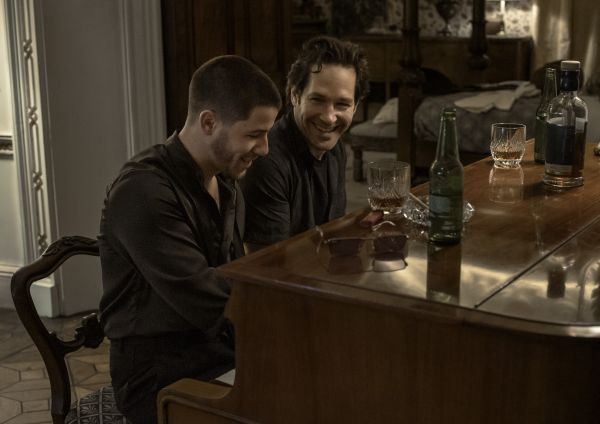
Once an aspiring rocker who never hit the big time, Rick is now a longtime resident of Ireland with a wife, a daughter, and more-or-less good relations with his band while playing gigs. One such job has them perform for a happy couple at an extravagant mansion whose guest list includes Danny (Nick Jonas), a pop musician and former boy-band singer trying to go solo without much success. Being played by a Jonas brother, Danny is naturally talented, and Rick is impressed by his voice when they perform an impromptu duet on stage. So much so that, after running into him later that night, Rick and Danny spend the evening working on music together.
It’s a sweet partnership, with Rick assisting Danny and Danny, in turn, praising an original tune, “How to Write a Song,” that Rick has been working on for years. Danny even gives Rick a classic guitar as thanks for the input. However, those lyrics stay with Danny when he returns to Los Angeles. Under pressure from his label to produce something new, Danny takes the song and passes it off as his own. It soon explodes into a massive hit, resuscitating Danny’s career and garnering him fame and a concert tour. Rick, meanwhile, is alarmed to hear his song everywhere, believing he deserves credit for the chorus alone. Unfortunately, with no existing recording or testimony to prove he wrote it, legal options are nonexistent, leaving him with no choice but to set off and secure credit for his work.
Don’t go into the movie expecting a Social Network–style court battle or even a petty prank war. Instead, director John Carney (known for musical dramas like Once) is far more interested in exploring the kind of fulfillment his leads hope to find through songwriting. Even though you completely understand Rick’s outrage, it’s hard to fully turn against Danny, with Carney tactfully framing him as a flawed individual desperate to break out of career limbo. The hit song is an emblem of both of the musicians’ accomplishments—the drama comes from what it means to them beyond charts and royalties.
Much of Power Ballad focuses on Rick’s mundane band and home life in Ireland, making the glitz and glamour of the music industry all the more striking. This boosts the tension and comedy of its final act, where Rick and his ride-or-die bandmate Sandy (Peter McDonald) confront Danny. But instead of becoming brutally violent, as the film’s posters might imply, Carney finds an unexpected humanity in his protagonists’ conversations and revelations. It’s just a shame that the supporting cast, Sandy and Danny’s team aside, lack much to do across this musical feud, with Rick’s wife, Rachel (Marcella Plunkett), and daughter, Aja (Beth Fallon), feeling closer to extras than major parts of the story. Even more frustrating is how little screen time Havana Rose Liu receives, with the script teasing a subplot before unceremoniously dropping it altogether.
This lean drama makes use of the actors’ chemistry to push Danny’s comeback and Rick’s outbursts toward something emotionally raw. The conclusion in particular paints our characters in a completely new light, showing a flicker of regret and resigned disappointment beneath the surface. It helps that the central track is a genuine earworm, possibly worthy of a future Oscar win like Once’s “Falling Slowly.” This song’s lyrics mean something different to both parties, but like Power Ballad’s probe of the relationship between music, fame, and talent, there’s far more beneath the surface than just a catchy jingle.



Leave A Comment