
Like a fresh spring breeze while the city still struggles to leave winter behind, it’s time for the next edition of New Directors/New Films, a must-attend event for film lovers in New York. In partnership with the Museum of Modern Art and Film at Lincoln Center, the festival remains a reliable space for debuting and emerging filmmakers with singular talents willing to challenge themselves (and audiences) to expand the language of cinema, even when everything seems to have already been said and done. In that regard, we can highlight some standouts from the 2026 selection—works that deserve attention and, ideally, subsequent commercial distribution.
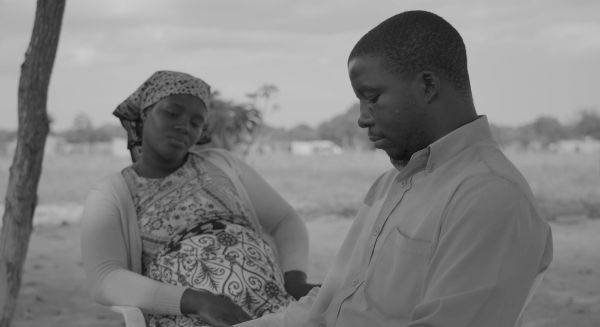
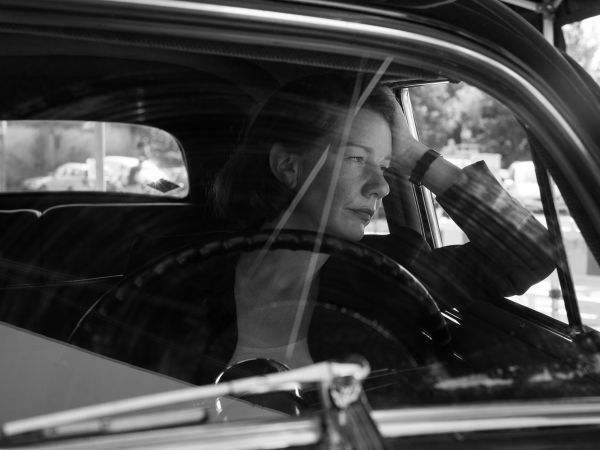
One defining quality of ND/NF is that it allows us to engage with a variety of movies from different parts of the world, which sometimes includes countries whose films don’t frequently cross international borders. In that sense, African cinema often ends up being underrepresented in festival programming, which is why it’s a pleasure to see The Prophet, the feature-length debut by director Ique Langa, from Mozambique. Shot in an alluring black and white, this is a film of physical and spiritual battles, rich in symbolism that is gradually revealed to the viewer.
At the center of a remote village—about which little information is given beyond its rugged rural geography, the absence of technology, and the predominance of elderly inhabitants—an evangelical pastor tries to serve his congregation as best he can, while his own relationship with faith seems to be in crisis. In his 30s, Pastor Hélder (Admiro De Laura Munguambe) stutters as he reads psalms, while the few older women still seated in the outdoor courtyard where he preaches barely pay attention. In his domestic life, he prioritizes his pastoral duties, refusing, for example, to accompany his wife to her next prenatal appointment because he must visit parishioners in need of his prayers. Among them is a desperate son whose perpetually ill father, his face covered in sores and almost always concealed, needs a bit of extra divine help to ease his suffering.
Let’s say the burden is too heavy for Hélder’s shoulders, and the pastor ultimately comes to believe that to become a respected and powerful spiritual leader, he must reconnect with the old ways: witchcraft and the pagan rites of his ancestors. The transformation from pastor to prophet is staged by Langa through a nocturnal immersion into a forest and direct contact with primitive, dark forces.
A scene in which the pastor—who has previously confessed he cannot swim—submerges himself in a river while fully dressed in a suit is mesmerizing and strange, as it does not attempt to offer direct explanations for what is happening but instead invites allegorical connections. (Is this a form of baptism?) In short, the transformation from pastor to prophet becomes a costly burden that, while granting the protagonist some immediate rewards, ultimately confronts him with the price of his transgression. Although the narrative’s opacity may initially prove frustrating, its overwhelming visual imprint introduces us to a director who still trusts in cinema’s ability to gaze toward the transcendent without hesitation.
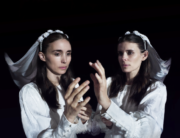
In the impossible marriage between mystical impulses and political certainties that pursue social revolution, another first-time filmmaker partially picks up the baton where the most anarchic Godard left off, somewhere between La Chinoise and the experiments of the Dziga Vertov collective. With Aro Berria, Irati Gorostidi Agirretxe delivers a unique piece of Basque cinema about revolutionary disillusionment.
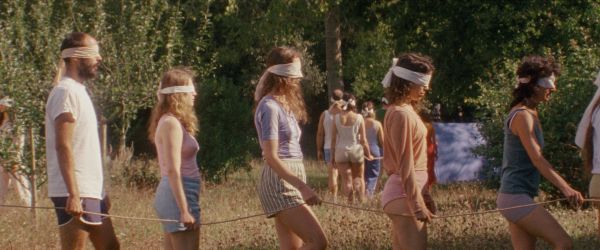
Her film (its title means “New Era” in Basque) plunges us into the seductive choreography of activism: Workers in a metallurgical industry on strike form a human chain that marches—almost like a dance—around the scabs who continue working as if nothing were happening. When some agreements are finally reached, the most revolutionary members of the union remain dissatisfied. Much of this group ends up taking part in a remote commune where revolutionary living coexists with spiritual practices imported from the Far East (Hinduism, Buddhism, Shintoism).
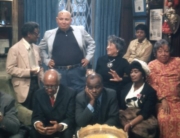
Aro Berria places Eme (Maite Mugerza Ronse) as its narrative anchor and critical gaze, as she immerses herself in this community without fully surrendering to the required delusions. Previously part of the group of protesting workers, she visits her former revolutionary comrades, who now subsist within this communal lifestyle where everyone helps one another and the main source of income comes from workshops and spiritual “experiences” open to tourists. Many of these practices incorporate the use of tantric sex and clearly provide an opportunity to create extended, consensual, and responsible orgies—you know, in the name of the revolution.
These lengthy scenes feature sweaty, fully naked bodies and blindfolded faces, as men and women howl incessantly while touching and brushing against one another, not always directly. If penetration is occasional in these encounters, it occurs enough for pregnancies and babies to be on the way after a few months. In this regard, it’s hard not to think about how patriarchal imbalances and hidden intentions persist and how heteronormative the sexual dynamics still are (no men on men here, regardless of the blindfolds). Men clearly exert control over women’s bodies at will, wrapped in an ideological packaging that claims to advocate emancipation. (Any conversation that brings up abortion quickly escalates into dissent and the promotion of raising these babies communally as the best available alternative.)
In a Hollywood film, the cult depicted in Aro Berria would likely turn into a horror movie about the heroine’s struggle to escape the group as everything becomes increasingly violent. Here, however, the portrayal is filled with humor and a critical gaze that doesn’t need to take shelter behind any specific genre to dismantle contradictions and hypocrisies. With a colorful palette, the Basque director invites us into an adult circus of revolutionary rhetoric eager to find its own self-sustained tenets, not so different from those of organized religions. As a bonus, director Oliver Laxe makes a cameo here as the cult’s guru and spiritual leader.
For its part, if there is a debut at the festival that immediately feels like the arrival of an auteur (or, in this case, auteurs) from whom bigger things might be expected, it would be the unusual minimalist science-fiction piece Chronovisor. Considering that ND/NF once hosted the early works of directors like Christopher Nolan and Denis Villeneuve, it wouldn’t be surprising if the duo Kevin Walker and Jack Auen were to become future promises for Hollywood. Whether or not that proves to be the case, the New York–based American directors have crafted a singular conspiracy thriller that functions as a labyrinthine game, combining cinema, academic research, and literature in a way—and with a patience—that has not been explored before in a film that also includes acknowledgments to Jorge Luis Borges and Umberto Eco.
Only academics can truly understand and share what the thrill of research means, beyond how productive or disappointing the results may be. For them, there is now a film that captures that quiet adrenaline and roller coaster of emotions invested in intellectual pursuits, finally allowing the world to understand how exciting a life in the “ivory tower” can be.
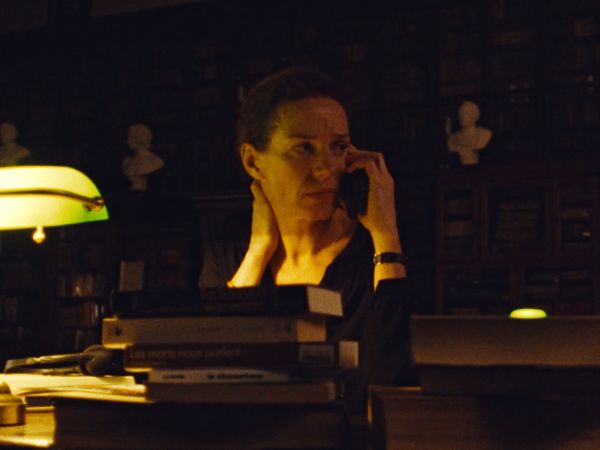
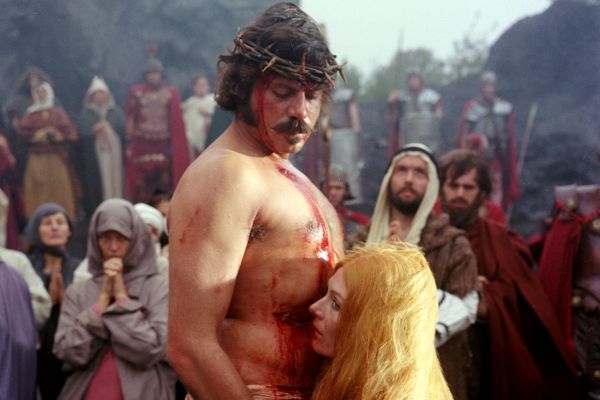
Chronovisor is the name of a device that, according to its noted creators—the Benedictine monk Father Pellegrino Ernetti, physicist Enrico Fermi, and aerospace engineer Wernher von Braun—was capable of transmitting images and sounds from the past through a sort of television, including the crucifixion of Christ. (As unbelievable as it may sound, this is based on real figures and statements.) Although the evidence presented was considered forgery and the whole thing was widely disputed, the idea persists that the Vatican may have been involved in suppressing any information about it. In any case, Walker and Auen explore the possibility that there might be truth behind this curious historical footnote by closely following a Columbia scholar (acting debut of real-life professor Anne-Laure Sellier) obsessed with the amount of archival material surrounding the device.
Chronovisor mainly unfolds within the enclosed spaces of libraries and studies, as books, newspaper articles, and manuscripts are underlined onscreen to the rhythm of the enveloping music of Gustav Holst, as if, for a moment, the familiar forms of silent cinema were revived to gently reinvigorate genres like science fiction and the thriller. In any case, the viewer is rewarded with a revelation and a trippy visual sequence that aspires to the heights of 2001: A Space Odyssey without collapsing under the weight of its own ambitions. Not to be missed, this special film builds a bridge between what is old and what can be new in cinema in a revelatory way.



Leave A Comment