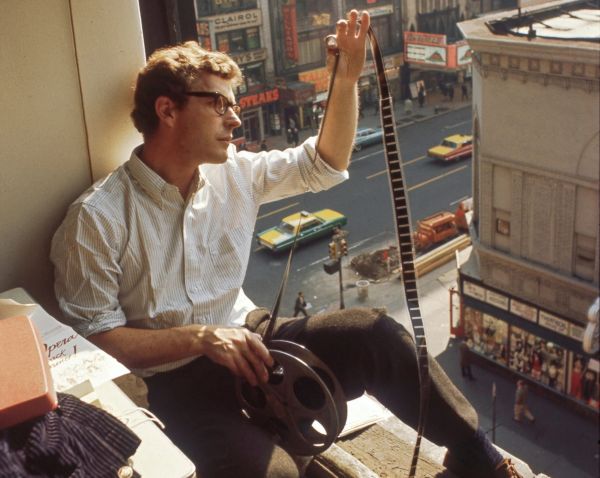
When Bo Widerberg died in 1997 at age 66, the Swedish director left behind a formidable body of work, including three films nominated for the Best Foreign Film Oscar (now the Best International Feature) and another that won a Best Actress prize at Cannes. Though the Criterion Collection released a four-film set two years ago that included two of the aforementioned films, today Widerberg is barely spoken about, certainly not in the same breath as his illustrious compatriots Jan Troell (with whom he worked at the beginning of his career) and Ingmar Bergman. (His withering criticism of whom led to Widerberg getting the chance to make his first film.)
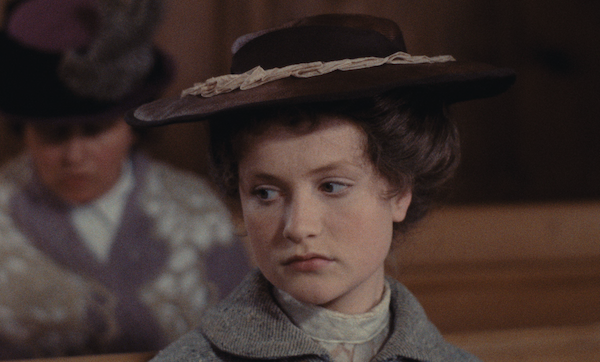
New York’s Film Forum is rectifying the situation somewhat with the series “Bo Widerberg’s New Swedish Cinema” (November 7–13), which will showcase many of the director’s idiosyncratic works, including his Oscar nominees Raven’s End (1963), Adalen 31 (1969), and his final feature, All Things Fair (1995), along with the Cannes prize-winning Elvira Madigan (1967). By far his most famous picture, the latter is a ravishing-looking romance propelled by Mozart’s Piano Concerto No. 21 on the soundtrack and the luminous performance of then-19-year-old Pia Degermark.
Centering the series is a brand-new documentary, Being Bo Widerberg, directed by Jon Asp and Mattias Nohrborg, and an excellent primer for those unfamiliar with the filmmaker. Even those who already appreciate his work will find much to enjoy in this honest study of an exceptional artist and flawed human being, whose admittedly messy personal life found its way into his films.
Asp and Nohrborg highlight Widerberg’s beginnings, growing up in the port city of Malmö and becoming a novelist and film critic, the latter jump-starting his film career when his affinity for the French nouvelle vague and his notoriously withering criticisms of Ingmar Bergman’s films led to him becoming a filmmaker himself. His debut feature, The Baby Carriage (1963), was a blueprint for his subsequent work: realistic dramas about intimate relationships set against a backdrop of political or social unrest.
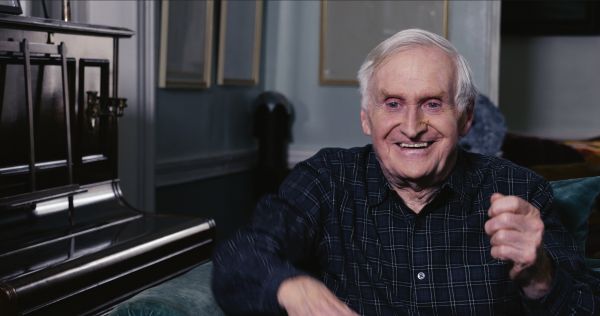
Another 1963 film, Raven’s End, about an aspiring writer in Malmö, and Love ‘65 (1965), centering on a director with a chaotic personal and professional life, followed. The documentary includes several vintage Widerberg interviews where he speaks candidly about the intersection of his art and his life along with new interviews with several collaborators (producers, actors, and even an engaging Troell, who’s now 94), his adult children, ex-wives, and partners, all of whom paint a complex but engagingly forthright portrait of Widerberg. He would often cast his children in his films and fall in love with his leading ladies, threatening to break up his family while creating compassionately observed dramas of flawed, ordinary men and women.
Widerberg was never bound to one genre. His most explicitly political films are Adalen 31 (1969), a grim but elegantly realized dramatization of the massacre of five people (including a young girl) during a 1931 Swedish labor dispute, and Joe Hill (1971), an absorbing biopic about the Swedish-American labor organizer and songwriter of the early 1900s who was unjustly charged by Utah officials with a murder he didn’t commit. Widerberg also made two exciting and propulsive police procedurals, 1976’s The Man on the Roof and 1984’s The Man from Majorca, both based on best-selling Swedish novels.
His rare foray into social satire, 1974’s Stubby, explored the ramifications when a seven-year-old soccer prodigy makes the Swedish national team. All Things Fair (1995), which starred Widerberg’s 20-year-old son Johan as a high school student in 1943 wartime Sweden who has a torrid affair with his teacher (played beautifully and sympathetically by Marika Lagercrantz), was as handsomely mounted as the justly celebrated Elvira Madigan, with precise editing by Widerberg, who was the accomplished editor on nearly all his features.
In a section of the documentary about 1986’s The Serpent’s Way, actress Stina Ekblad describes how the director simply walked off the set one day, unsure of his ability to make the film, even though he’d already been working in the business for a quarter-century. Perhaps the bleak subject matter of sexual abuse and exploitation made Widerberg unsure of himself, ironic because the result may be his greatest film.
Too bad that Film Forum’s series does not include The Serpent’s Way, which has never been released in the United States or available to stream or on disc. But its lineup nevertheless presents a compelling overview of an innovative director whose importance may have dimmed but who is ripe for rediscovery.

Leave A Comment