
Three new Italian movies show style, smarts, and heart—sometimes the darkest of hearts—in the annual showcase Open Roads: New Italian Cinema, presented by Film at Lincoln Center and Cinecittà. All three run a little long, but in the vein of recent strong Italian efforts like Vermiglio, La Chimera, and The Eight Mountains (all available on streaming), each film transports us into a distinctive point of view that becomes a world in itself.
Familia
Francesco Costabile’s heavy but stinging family drama focuses on a harsh patriarchal dynamic and hints at cruel fatherhood’s relationship to fascist movements. A working-class wife and mother (Barbara Ronchi) and her two adult sons are menaced by their father, who carves a brutal path in and out of their lives. Fresh out of jail for injuring his wife, Franco (Francesco Di Leva) repeats the pattern of abuse with savage beatings, entrapment of the vulnerable, and appeals to his loved ones’ loyalty through self-pity. The younger son (Marco Cicalese) shuts himself off from the havoc, but the eldest (Francesco Gheghi) lands on a dangerous path: fighting in the streets with a gang and training for violence in a fascist boot camp. A cycle of violence is being repeated.
Scenes of young men in dingy rooms chanting en masse and launching the fascist salute are dynamic and intense, but Familia only engages with political recruitment in a secondary way. The sinister family dynamic at the film’s heart is where the real fear lies. Director Costabile allows Di Leva’s terrifying performance to dominate lengthy, finely calibrated scenes with Ronchi that reveal multiple layers of manipulation and misery. A moody score and haunting sound design ratchet up the psychological tension. The film exerts an almost claustrophobic grip on the viewer—and an equally strong impulse to flee. As Familia’s desperate protagonists run scared, so do we.
Diamonds
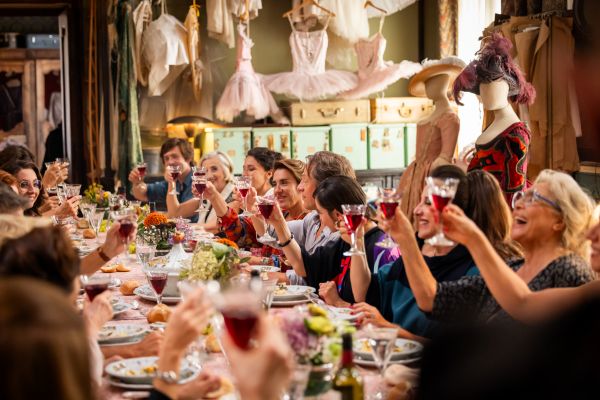
This charming Almodóvarian divafest by Italo-Turkish director Ferzan Özpetek won the audience award at the most recent David di Donatello Awards—and it’s a delight. Özpetek starts with a light film-within-a-film structure, in which the genial auteur basks at the center of a table filled with loud, volatile actresses. Then we switch to the main action: An imperious executive (statuesque Luisa Ranieri) and her more introverted sister (Özpetek regular Jasmine Trinca) rule over an elite dress design shop in 1970s Rome. They lead a team of seamstresses making elaborate period movie costumes for a demanding female designer. Over the course of the story, old loves reappear. Secrets emerge. And the feisty seamstress sisterhood sticks together through all the drama.
Over-the-top female turns, fabulous outfits, and lines like “You have the face of a courtier and the ass of a peasant!” make the movie gay-man-of-a-certain-age catnip. But Diamonds is so much more than that. An ensemble cast in tune with each other’s every move delivers a disarming message of love and redemption beneath the campy banter. Production values are rich, the lighting gorgeous. Come to think of it, Almodóvar hasn’t been this fun in a long time.
Sicilian Letters
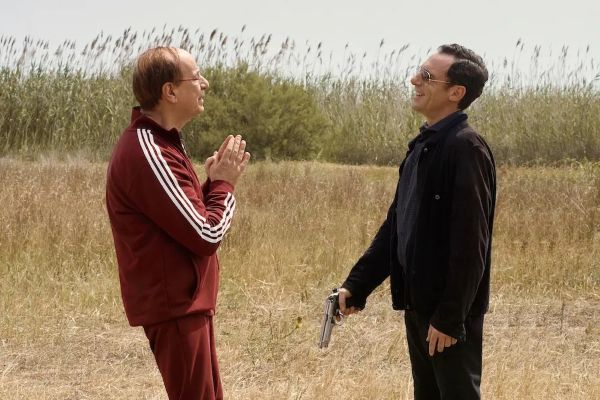
A black comedy neatly plays off a pitiless crime thriller in Antonio Piazza and Fabio Grassadonia’s film, with a stylish eeriness tying the two together. Blowhard former mayor and headmaster Catello (the always entertaining Toni Servillo) returns to his Sicilian village from a prison term. He’s laden with debt, sneered at by his wife, and indignantly feels he deserves better from the world. To restore his fortunes, Catello cooks up a crackpot scheme: he begins writing wheedling, elaborately delivered letters seeking help from a mafia don in hiding (Elio Germano). Problem is, the chieftain is a psychopath, and the corrupt local police force wants to muscle in on the plot too.
Double-crosses and shifting relationships play out against moments of magical realism and past trauma. (Evil fathers loom over this film as balefully as they do in Familia, though at more of a distance.) A bitter female police chief and an enigmatic factotum respond to events with blunt fatalism—in such a corrupt milieu, they have to be tougher than the men. The script lets a satire of the self-important small-town academic and politician go on a bit too long, as Catello bloviates and trots out endless hifalutin classical references. Refreshingly, the brazen murderousness of his criminal counterpart keeps the tone in check. Sicilian Letters can be a little uneven, but the way the filmmakers juggle its different elements is smart and delivers some uneasy surprises.
Open Roads: New Italian Cinema runs from May 29 through June 5.

Leave A Comment