

Like Charlotte Wells’s acclaimed 2022 Aftersun, director/writer Lilian T. Mehrel’s subdued debut feature revolves around a parent-child relationship and the nature of grief and memory set against the backdrop of an exotic resort. Opening with aerial footage of Portugal’s stunning Azores islands, the camera then closes in on June (Ayden Mayeri), a young Iranian-American woman, in a hotel room masturbating until she’s interrupted by her middle-aged mother, Lela (a stately Amira Casar), who has returned from the bathroom. The two women are not only sharing a room but also a single bed as part of a honeymoon package deal. It’s a little too much togetherness for June, who later unsuccessfully asks for separate beds.
It’s been a year since Lela’s husband (and June’s father) died from cancer, and the two have come to the Azores to honor his memory, as the islands had once been a place of solace for him in the wake of his own father’s death. As the duo explores their new surroundings, Lela has a present for June: an envelope of hair. “I have saved it from his last haircut,” she tells her daughter. “We can throw it in the water together.” June is slightly appalled by the somber suggestion: “Can’t we just enjoy being here right now?”
To escape the awkwardness of being surrounded by honeymooners, June hires a private tour guide. (The shot of mother and daughter uncomfortably lounging at the resort pool among canoodling couples is a gentle sight gag.) She warns Lela, who tends to overshare with strangers, not to mention her father, the anniversary of his death, or the protesting women being killed in Iran—Lela obsessively follows the online news about the “Woman, Life, Freedom” anti-government demonstrations in Iran.
Their guide turns out to be a charming dreamboat, João (José Condessa), who is almost too good to be true for the flirtatious June. Single, he cares for his ailing grandmother and speaks in a quasi-philosophical tone (“Every day is a new goodbye”; “[Happiness] comes in waves, but it’s not forever”). To June’s annoyance, he is also intrigued by her mother, especially because she is a therapist.
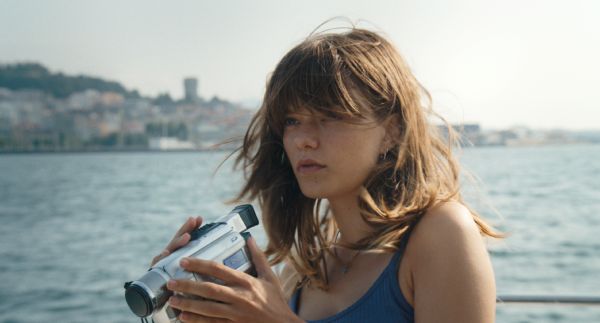
As the trio travels around the lush island (shot beautifully, sometimes as cell phone video, by cinematographer Inês Gowland), João—and the audience—observe the women’s differing approaches to grief and life. June just wants to go with the flow, have a good time, maybe have a fling, and escape the sadness that often overwhelms Lela. Her mother prefers to dive deep into her sorrow.
Kudos to costume designer Sylvia Grabowski for outfitting the actresses with the appropriate clothes that reflect their characters’ outlooks. Clothes, or the lack thereof, are a point of contention between mother and daughter. June’s itsy-bitsy pink bikini could become as iconic as Ursula Andress’s Bond girl white bikini. Meanwhile, Lela is weighed down by heavy jackets and mom pants, complete with a sensible fanny pack. Familial tensions finally explode over June’s skimpy wardrobe. At what point, the film asks, can the bereaved let go of grief and reclaim the pleasure of being alive?
Though it ends on a muted emotional note, there is still plenty to enjoy in the fine, detailed performances of Casar and Mayeri as they embody daily maternal-filial microaggressions, from Lela’s smothering criticisms and needy demands (“You never tell me about your love life”; “Can you help me wash my back?”) to June’s irritated corrections of Lela’s malapropisms (“Apple of his eye,” instead of “You were his Adam’s apple”).









Leave A Comment