Always a rollicking good time, the 2026 Provincetown International Film Festival swept through town with documentaries, international films, shorts, and splashy queer films like Adam Shankman’s Stop! That! Train! and Jane Schoenbrun’s much-anticipated Teenage Sex and Death at Camp Miasma. Kevin Bacon and Kyra Sedgwick’s family appeared for their comedy-horror flick Family Movie, the closing night film. The PIFF Audience Award for Narrative Feature went to Test, directed by Sam McConnell, and Kai Stänicke’s Trial of Hein. The PIFF Audience Award for Documentary went to Anne Packard: An Artist’s Resolve by Arthur Egeli and Liz Garbus and Elizabeth Wolff’s Give Me the Ball! From an array of eclectic films, here are three among the varied slate that may have been somewhat overlooked.
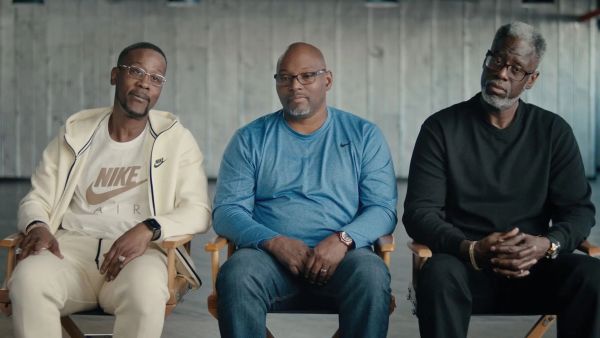
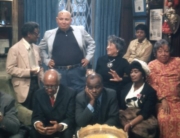
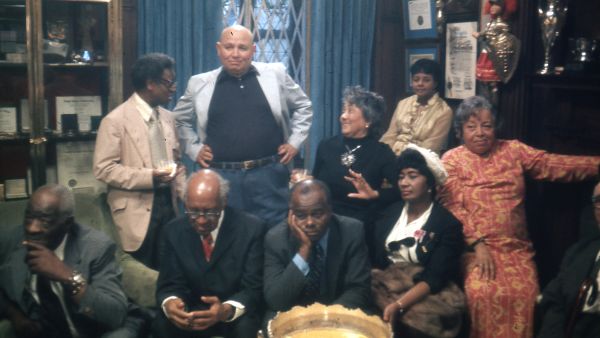
A standout documentary from the festival, When a Witness Recants follows the case and aftermath of three Baltimore 16-year-olds—Alfred Chestnut, Andrew Stewart, and Ransom Watkins, dubbed the “Harlem Park Three”—who were tried and wrongfully convicted of the 1983 shooting of ninth-grader DeWitt Duckett in a junior high school hallway. A student at the school, Ron Bishop, was coerced by lead investigator Donald Kincaid (whose indifference in later depositions is odious and maddening) into claiming he witnessed the three young men committing the crime. The three were ultimately sentenced to life in prison and served 36 years before their exoneration in 2019, after a police report was uncovered revealing that the state had withheld information.
Baltimore-born journalist and author Ta-Nehisi Coates, who is also one of the film’s talking heads and executive producers, has been haunted by this story since he was around eight years old when it happened, considering it to be the end of his carefree childhood.
Methodical and sobering, and echoing the story of the Central Park Five, Dawn Porter’s documentary is a gut punch—an elegy for the lost years of these three men and what they’ve missed, including seeing their families and raising families of their own. After they are freed by the state, Bishop, in a tense, solemn scene, attempts to apologize to the three men after being fearful for decades of ever coming forward, knowing that they were not at the scene of the crime. At first, the encounter feels like a potentially manipulative set-up, but it becomes far more complicated than that, as Chestnut, Stewart, and Watkins still wrestle with the pain of their past and the injustices against them.
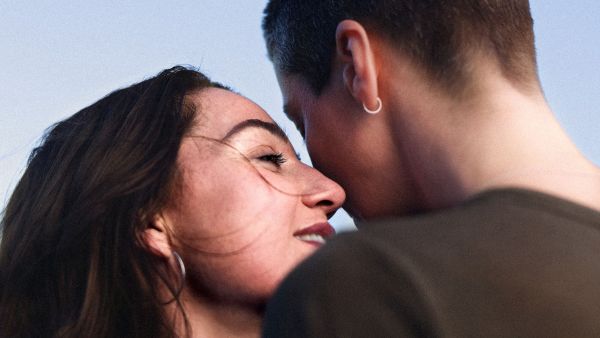
Cato Kusters’s elegant, shattering feature film Julian, based on a memoir of losing a loved one (by Belgian artist Fleur Pierets), became one of the festival’s hidden gems. In 2017, dubbing their initiative Project 22, Belgian-based Fleur (Nina Meurisse) and Julian (Laurence Roothooft) are a loving couple who decide to get married in all the 22 countries where same-sex marriage is legal. They wed in New York City, Amsterdam, Antwerp, and Paris, but their project is cut short by Julian’s tragic diagnosis of brain cancer.
Beautifully shot by Michel Rosendaal and edited by Lot Rossmark with the look of an exquisite Merchant-Ivory picture, the film jumps around in time, from the couple’s first meeting through their weddings, Julian’s illness, and the preparation for a lecture Fleur is about to give about their story after Julian’s death. In some ways, it’s in the tradition of an old-fashioned weepie (there weren’t many dry eyes after my screening). The relationship between Fleur and Julian is one of such lovely, sweet intimacy, and portrayed so wholly and gracefully, that it’s absolutely wrenching to see it end.
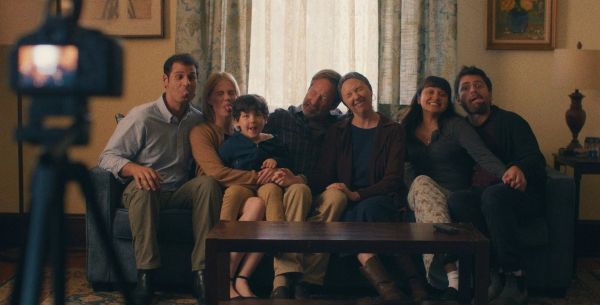
Jay Duplass’s See You When I See You is uneven, though earnest and occasionally moving, adapted from a memoir by Denver-based standup comedian Adam Cayton-Holland, who also wrote the script. Comedy writer Aaron (Cooper Raiff) begins to withdraw from his life after the recent suicide of his sister, Leah (Kaitlyn Dever), to whom he was very close. When Aaron’s mother, Paige (Hope Davis), finds out she has breast cancer, Aaron begins to spiral, drinking heavily and remembering his bond with Leah. Both Aaron and Paige share some similarities—having difficulty talking honestly about their feelings to their family and not admitting that they have a problem—Paige initially hides her diagnosis.
Aaron relives the moments of finding Leah’s body, and the film often delves into his PTSD (sometimes with unfortunate and unnecessary CGI effects of Leah being sucked out of a hole in the ceiling and into the sky) as he attempts to heal through the aid of a therapist, Dr. Anya (Poorna Jagannathan). He also tries to reestablish a relationship he had briefly with Camila (Ariela Barer), a hospital worker with whom he had a brief fling right before Leah’s death.
The usually charming, puppy-dog-eyed Raiff again reveals tremendous range between comedy and drama. (I was a fan of his heart-on-its-sleeve dramedy Cha Cha Real Smooth). However, the talented supporting cast playing the family—Davis, Dever, and David Duchovny as Aaron’s father—never really stand out, perhaps due to the script’s shortcomings, leaving their characters underwritten. Yet Lucy Boynton, in a small role as Aaron’s uptight sister Emily, is particularly affecting. When she breaks down or tries to be as funny as her late sister, these are among the most moving and authentic-feeling moments within this inconsistent film.
Leave A Comment