
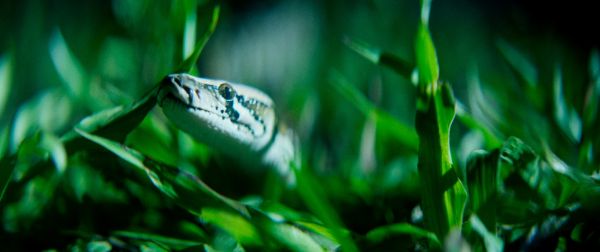
Why are there so many pythons in the Everglades? No, that is neither a joke nor a trick question, and there is also no established answer. Unlike the countless other creatures native to the region (alligators, crocodiles, panthers, and so many more), these enormous snakes are from elsewhere. Perhaps in the early 1990s, Hurricane Andrew helped scatter these imported pets into the wilderness; perhaps enough of them escaped on their own. Regardless, there are now thousands of Burmese pythons ranging through these famous swamps and, so it is said, destroying the native ecosystem.
This python problem, however, does not seem to be one that the authorities are keen to suppress. Multiple government agencies and Governor Ron DeSantis are behind the Python Challenge, a 10-day extravaganza inviting amateurs from all over the country to catch and kill as many pythons as they can. All of this, they are clear, is in the name of saving the rich ecosystem of the Everglades.
The Python Hunt follows a slew of these dreamers who showed up for the challenge in 2023, along with a few errant side figures. This includes Anne Stratton Hilts, a retiree in her 80s who has recently moved to Florida, and Toby Benoit, a writer and professional outdoorsman who agrees to help her knock off one last item on her bucket list: catching and killing a python. There’s Richard Perenyi, an elementary school science teacher from San Francisco with a love of nature and a taste for snake hunting, and Jimbo McCartney, who once hunted pythons for the state but was fired for failing to abide by the regulations. He is tempted back in when he hears about a more community-based challenge that caters to those with a real investment in the ecological issue rather than the thrill-seeking amateurs he despises.
Not once in this documentary does the subject itself cease to be intriguing: the conundrum of what to do with an invasive species, the politics behind it, and the colorful personalities of those who are drawn to the hunt. Viewers will certainly learn plenty about trapping and handling pythons—and perhaps more than they wanted to about the specifics of killing them (we, once, see this happen on screen). Though in no way does this film embrace strangeness to the extent of Mark Lewis’s cult documentary Cane Toads: An Unnatural History, there are plenty of little moments of human oddity to sustain it. Anne Stratton Hilts, when she finally gets to the python she longs to kill, remarks, “it’s beautiful.”
Yet by the end, few critically minded viewers can conclude that the subject was fully explored. There is a certain dissonance in hearing so many of these participants claim that they are “nature lovers” while they are so keenly bloodthirsty for the deaths of these snakes. Hilts remarks that they can’t send the pythons back to Burma; otherwise, they would bring American diseases with them. And yet, while I can’t claim to be an expert in the removal of invasive species, alternative possibilities for what to do with them are never floated, and the filmmaker does not interview anyone who brings up the subject.
Similarly, the possibility that the government might be placing undue blame on the pythons—knowing that they can get the populace riled up while the state continues to dump pesticides into the water—comes up a few times, once from a nature enthusiast to Jimbo McCartney. McCartney essentially blinks, considers that the issue might be more complex than he ever bothered to consider, then goes back to python hunting. You have the sense that the filmmaker simply blinked and moved on as well. Any sense of doubt like this is treated in passing. The film ends on a sunny note, which seems to celebrate the festivities more than anything else.
I admire the lack of judgment filmmaker Xander Robin brings to the snake-obsessed subjects of his film. This virtue, however, would be easier to celebrate if he had sufficiently widened his gaze.









Leave A Comment