Amy Goodman, anchor of the news program Democracy Now!, occupies a unique place in American media and culture. This consummate journalist may be little known to most of the country, yet she has been a defining face of independent, progressive media for decades. Still, even to devoted followers, her life remains largely unknown, thus Steal This Story, Please! will be a treat. Part biopic, part Democracy Now!–produced media analysis, and part history of the last 30 years of major progressive news stories, it all comes together remarkably well.
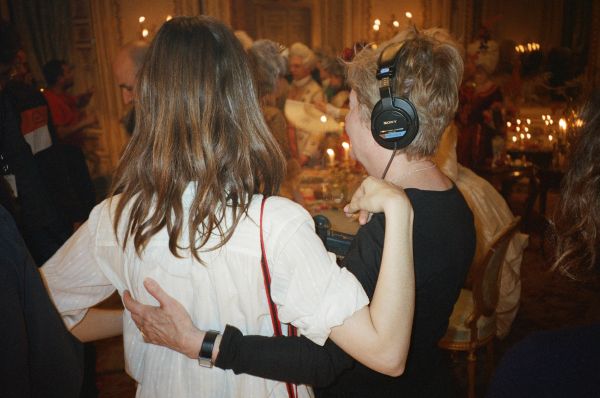
Longtime viewers of Democracy Now! finally get a glimpse of Amy outside of the show. You see her walking her beloved dog, Zuzu, around New York and visiting her 106-year-old grandmother, whom she proudly calls “a woman of three centuries.” Her grandmother has trouble hearing, so Amy sets her up with headphones and calls her—right in front of her—so she can hear better. It becomes an impromptu interview of her own grandmother.
Democracy Now! began as a radio show in 1996. In 2001, the show moved to an old firehouse in Lower Manhattan (like in Ghostbusters) and began to be produced as a television show. The timing of moving to Lower Manhattan shortly before 9/11 is emblematic of how Goodman often ends up in danger because of the stories she covers. This started in 1991 when she traveled to East Timor with fellow journalist Allan Nairn, where they were attacked in a massacre that killed hundreds of people. In the aftermath of 9/11, Goodman and her team kept producing the show near Ground Zero. To this day she has a cough, likely from the toxic fumes that officials claimed were not actually harmful. Democracy Now!, as was so often the case, was an early leader in pushing the story that harmful fumes were being released at Ground Zero with long-term effects, including cancer. This reporting is one reason why that story eventually gained acceptance.
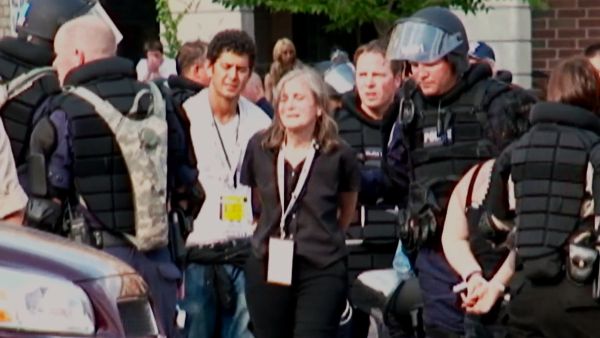
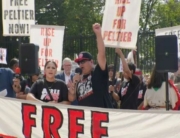
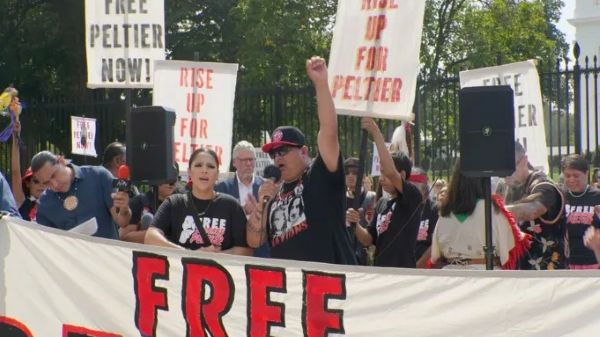
In addition to serving as a biopic of Goodman, the documentary acts as a sleek but jam-packed history of the major progressive flashpoints of the last three decades. It captures Goodman being arrested for her dogged pursuit of the truth several times, including in 2008 at the Republican National Convention and at the Standing Rock water protests in 2016.
The 2008 incident is especially noteworthy as Goodman interviews Katie Couric, asking if she is aware that reporters are being arrested right outside. Couric, a contemporary of Goodman’s who for years was the face of mainstream media, gives very safe thoughts on the matter, acknowledging that she is aware of the arrests but appearing seemingly unbothered by them. This face-to-face contrast between the two really makes Goodman’s uniqueness and importance all the clearer.
The documentary at times becomes a kind of thesis statement for Goodman and Democracy Now! Goodman mentions, when discussing how climate change is covered by mainstream media, that there is an aversion to “connecting the dots”—for example, the link between climate change and the rise in wildfires. Her program does not hesitate to do so, and that is what sets it apart—along with a dogged determination to get in the faces of powerful people and ask questions that might be viewed as “hostile” or “combative.” (This is how Bill Clinton, who was making the rounds calling radio stations on Election Day 2000, described Goodman’s questions, an exchange featured memorably here).
For much of the film you are transported back to a largely pre-Trump world, yet you can see the seeds of it brewing. The documentary points out that Trump’s rise in 2015 was largely enabled by the mainstream media: They knew he would bring big ratings, and he knew that was all they cared about, so they fed off each other. If the news media had been more like the probing Democracy Now!, then Trump’s rise would have been more difficult. This is what the title means—Steal This Story, Please!—Goodman wants other media outlets to cover the stories she covers rather than just chasing ratings.
A long-overdue tribute to an independent media trailblazer and a timely reminder of what journalism ought to be, Steal This Story, Please! is highly recommended.


Leave A Comment