
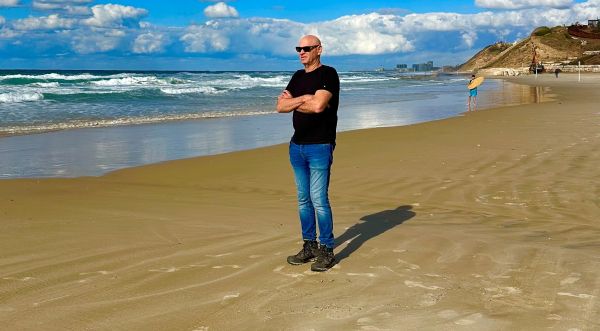
On October 7, 2023, when Hamas terrorists invaded the kibbutz of Nahal Oz near the Gaza border as part of widespread attacks against Israel, Amir Tibon texted his father, Noam, a retired general in the Israel Defense Forces (IDF). Amir, his wife, Miri, and their two young daughters lived in Nahal Oz, and the gunshots and explosions in the distance were something they had never heard in their peaceful neighborhood. Indeed, Miri says they were never worried about their safety and security where they made their home—until October 7.
Within minutes, Noam and his wife, Gali, hopped into their car to drive for hours from Tel Aviv to the kibbutz, hoping to get their family out safely. This dangerous mission is the focus of Barry Avrich’s intense documentary, which is structured like a thrilling action flick, a real-life version of revenge movies like John Ford’s The Searchers and Liam Neeson’s “Taken” series. That this true story occurs during one of the most horrific terrorist attacks in the country’s history gives it a special urgency.
Avrich uses interviews with the key figures, video clips from security and dashboard cameras, as well as bodycam footage that the terrorists livestreamed during the attack. The filmmaker focuses on Noam retracing his steps on the way to Amir’s home, stopping and explaining—and, in some instances, reliving—what happened as Noam and Gali, against all odds, kept going on a road trip that began in confusion and became more like a journey into an actual war zone by the time they arrived at the kibbutz.
The action takes place in a compressed timeframe—over several hours in a single day—and Avrich creates unbearable tension with an onscreen clock that ticks away the minutes, along with WhatsApp messages between Amir and Noam that are pulse-racing in their urgency. Time is literally of the essence.
At the center of the film is a real-life action hero, Noam Tibon. Even Gali relates that Noam’s family nickname is “911,” since he has always been available to help and will drop anything if someone needs assistance. Attempting to free his son, daughter-in-law, and young granddaughters is the ultimate 911 call for Noam. (Gali is just as heroic as her husband, and their detours on the way to the kibbutz save other lives.)
Avrich also brings up other horrors of that day, as Hamas terrorists viciously attacked several targets, including the Nova music festival where dozens of young concertgoers were brutally murdered and kidnapped. Noam and Gali, on their speedy drive to the kibbutz, come across a couple who survived both the festival attack and the loss of their car—it was riddled with bullets, and they luckily escaped. The Tibons stop and put the dazed pair into their car, another example of their selflessness in the face of horrifying danger.
That day’s terrible events left families bereft and grieving. Avrich gives strong voice to Sharon Robinson, widow of Ilan Robinson, security chief of the kibbutz, who died defending the area from the Hamas attackers. Sharon is remarkably composed discussing the day’s events, saying she wasn’t initially worried that Ilan didn’t contact her because he was busy—until she realized what his extended silence meant. When their nine-year-old daughter, one of three surviving Robinson children, sits next to her during the interview, the human cost of October 7 becomes frighteningly real.
Avrich has been criticized for treating Noam’s rescue of his family in a vacuum, so to speak. The film’s narrow view is accentuated by the director treating his subject as an audience-pleasing, edge-of-your-seat thriller with obvious good guys and villains. Although the tragic October 7 events and their reverberations throughout Israel are certainly present—both Amir and Miri voice tough criticism of their government, questioning why the superior Israeli military was caught surprisingly flatfooted—Avrich centers on one success in a day filled with failures. The Road Between Us: The Ultimate Rescue is a gripping account of that success.






[…] 115 minutes, Canadian director Barry Avrich (The Road Between Us: The Ultimate Rescue) overstuffs his profile with the praises of Love’s onscreen fan club, including Bruce […]