
If high school is synonymous with hell for so many people, the high school teacher who transforms teenage doldrums into a time of self-discovery and self-empowerment is another archetype. For students of Middletown High School in the 1990s, Fred Isseks was just that teacher. In this town in upstate New York, where residents attest, “you were always heading somewhere else,” Isseks—a high school English teacher with a classic hippie vibe—started a class called Electronic English. The premise was simple: He gave kids video cameras. Some of them goofed off and made music videos with their friends. Others, when Isseks pitched the possibility of investigative journalism to them in language that rebellious teens could understand, took him up.
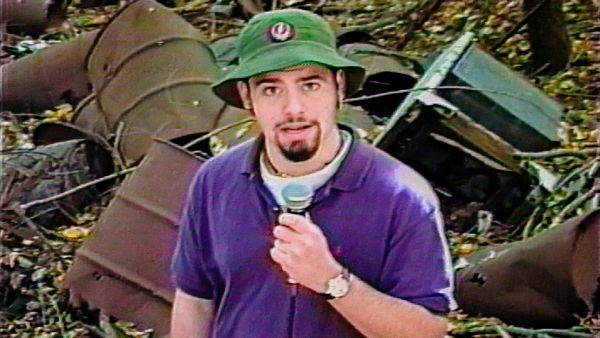
Isseks had a friend who was convinced that the nearby landfill was leaking toxic waste onto his property. The teacher brought students to interview him and document what they saw. This one loose thread ended up leading them into much more complex territory. Their efforts to bring to the town’s attention a poisoned water source and marsh pools that were actually green and crusted with waste were surprisingly met with resistance from every town official. Suspecting that something was being covered up, Isseks and his students pressed further. Their investigation ended up lasting years, attracting the attention of a state assemblyman, New York state’s one wildlife pathologist, whistleblowers, much of the town’s concerned populace, and resulted in a documentary short: “Garbage, Gangsters, and Greed.” Middletown, it is noted toward the end, has unusually high levels of cancer.
Teenage Wasteland tells this unlikely story using interviews with a selection of the former high schoolers, Isseks, and copious footage from the students’ work and from casual recording. These articulate high school kids, based on their own testimony years later, were otherwise not very interested in school. Their work included questioning officials in interviews and in town meetings, as well as trespassing on private property to conduct their investigations.
It should be said, bluntly, that the story is absolutely bonkers, and it’s hard not to be impressed both with the dedication of the kids and with Isseks’s fearless guidance. Title credits toward the end describe some of the concrete changes that actually have occurred (partially) because of this investigation. The documentary illuminates with ease the scale of the operation, which is all the more striking when you consider how it started.
Yet what really makes the film stand out are the students. It is eminently clear, from their interviews and from the footage that has been culled, exactly how important this endeavor was in their teenage lives. Isseks was a teacher who could make his students feel like they mattered, and it’s this emotional reality that viewers experience most palpably throughout. Doing so is a great gift in and of itself, but as we see, it is crucial to making students feel that their voices matter too.







Leave A Comment