
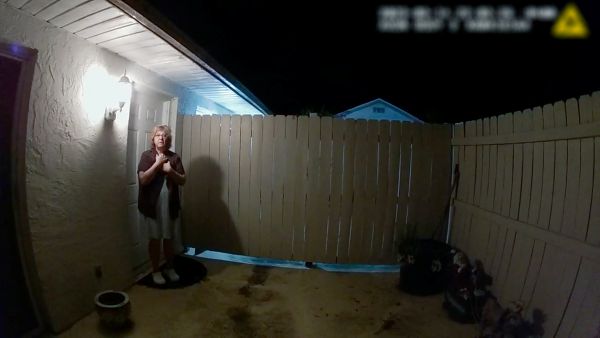
On June 2, 2023, in Ocala County, Florida, Ajike Owens, a Black single mother of four, was shot and killed by her White neighbor, Susan Lorincz, after knocking on Lorincz’s door. Owens was responding to an altercation that had occurred between her children and Lorincz, in which Lorincz had thrown a pair of roller skates at one son and then grabbed his tablet, which had fallen on the lawn, taking it back to her house. Owens’s children, and many others on the street, were all outside when the shooting took place. Lorincz claimed she was convinced that Owens was trying to kill her.
This was the climax of what had been happening for months. The children on this street, those of color in particular, were no strangers to acts of hostility from this older White woman. Most of the incidents, in some way, involved Lorincz’s claim that the children were trespassing on her property. They often played on a lawn adjacent to hers, owned by a nearby landlord who allowed them to, and frequently liked to play in the street. Yet the police, who were frequently called to attend to a complaint from Lorincz, realized she was the only neighbor who ever had any problems with the kids. Her stories were also often wildly different from the ones told by others. For instance, she claimed that one kid tried to put a dog in her pickup truck. When a neighboring parent found this out, he burst out laughing. The kid did have a dog, but it was a poodle twice his size, so there was no way he could lift it.
The Perfect Neighbor follows these confrontations more or less as they occurred, almost entirely using the body-cams of police who were called to the scene. As the killing occurred and the court case progresses, additional footage is included from interrogation rooms, courtrooms, and, briefly, the protests demanding justice that flourished before Lorincz’s conviction. Consequently, a few things become clear very quickly. First, Lorincz stood alone against the children (her racist language was reported much more than once). Second, if there were any mischievous acts toward her, they were reactions to her aggression. Third, there is something troubling about Lorincz. Racism is just one part of the picture; there may be some kind of mental illness in the mix. (To be clear, that is intended as an observation, not at all as an exoneration of her actions.) This subject, however, is not explored. We are left simply to observe her responses.
Florida’s Stand Your Ground laws, which protect those who shoot in self-defense from prosecution, came into question, since they kept Lorincz from being immediately arrested. A caption at the end informs us that these laws have led to an increase in homicides and that White people are generally let off easier when they claim self-defense, especially in shootings involving people of color.
Suffice it to say, this documentary is indeed horrifying and heartbreaking, and it exposes the hideousness of a crime that robbed four children of their mother. I am, however, of two minds as to whether or not the chosen approach, using largely police footage and not much else, actually serves the subject well. We watch events unfold and feel the simmering tension in the neighborhood as Lorincz’s reactions become wilder. However, there is undoubtedly a sensationalizing aspect to this—the pulsing music that sometimes enters the background and the way real-life scenes of horror sometimes come off as though played for suspense. Yet this footage, with so little commentary, never lets the viewer forget, or cease to feel, the real individuals involved, which has a multifaceted effect.
I will say that this documentary is much more about exposure than it is about inquiry, and that would be fine if it did not raise so many questions about the Stand Your Ground laws (how did they come to be?) and about Lorincz’s disquieting presence. Nevertheless, The Perfect Neighbor makes these questions urgent.






Leave A Comment