
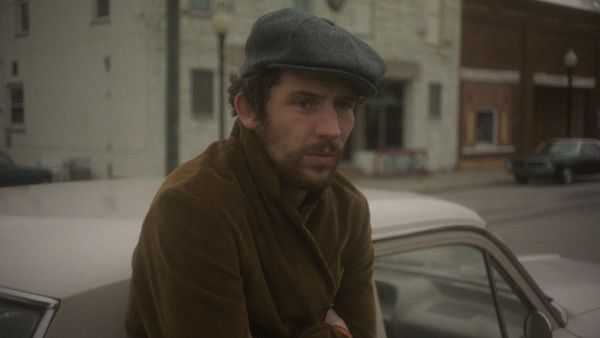
For a director known for patient, subdued character studies, it’s a pleasure to see Kelly Reichardt take on an action sequence in the 1970-set The Mastermind. This tense section occurs early on: James Blaine Mooney (Josh O’Connor), an aimless, unemployed woodworker and former art school student, orchestrates the stealing of four Arthur Dove modernist paintings alongside two bumbling sidekicks, Guy (Eli Gelb) and Ronnie (Javion Allen). The pair don laughable makeshift pantyhose masks, stealing from a sleepy museum in Framingham, Massachusetts.
J.B., as he’s called—the youthful name perhaps symbolic of his dreamy, foolhardy behavior—is tethered to his family: his young boys, Carl (Sterling Thompson) and Tommy (Jasper Thompson, funny and natural), and his wife, Terri (Alana Haim), who is mostly quiet and aloof, as if she has long adapted to J.B.’s listlessness and eccentricities. J.B. is the son of Bill (Bill Camp), an influential judge, and Sarah (Hope Davis), both of whom are disapproving of his lack of drive. Behind her husband’s back, Sarah secretly and unknowingly loans James money for his new scheme.
The heist is predictably sloppy, a series of errors from its setup to its execution. The story then centers on the aftermath. From here on out, the narrative becomes more contemplative and introspective, and the initial peppy pace slows considerably. Before hiding the artworks, J.B. briefly hangs one of the Dove paintings on his living room wall, perhaps admiring less the piece of art itself and more what he’s accomplished by stealing it.
The heist becomes a quirky local news story, featured on the television news along with Vietnam War frontline footage. Thus, J.B. goes on the run, abandoning his family. He attempts to hide out with old college friends Fred (John Magaro) and Maude (Gaby Hoffmann, a highlight in a small but pivotal role). It’s Maude who most bitterly expresses her utter disappointment with him—one of J.B.’s saddest and deepest moments of friction with another.
The enjoyable, snappy opening credits may seem to promise something slick and exciting, but J.B. never ends up accomplishing anything that feels thoroughly satisfying. O’Connor continues his string of strong performances that somehow communicate the inner ticking of a simmering but calm character. One memorable, protracted scene finds J.B. trying to hide the paintings in a remote barn. We watch him as he brings each work up on a ladder, only to watch the ladder fall in the end. This push and pull of fleeting gratification and trivial mishaps is constant—another in Reichardt’s canon of deceptively modest stories of ordinary people set within a specific place and time.
Rob Mazurek’s excellent, percussive jazz score riffs on the plucky and melancholy moments. Its languid trumpet melodies are reminiscent of John Williams’s score for The Long Goodbye and Marvin Hamlisch’s for Save the Tiger. Both of those films were also from the early ‘70s and feature wandering, jaded men at their center, echoing The Mastermind’s sensibility.
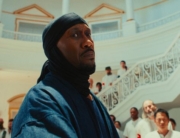
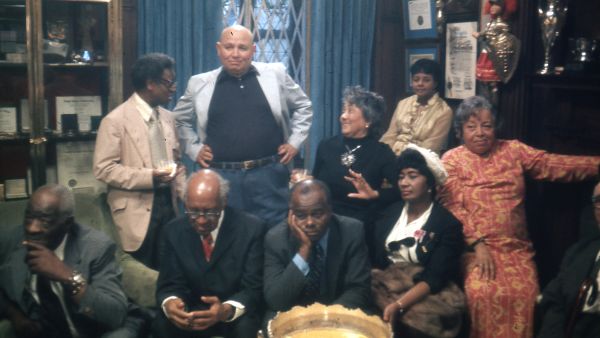
Christopher Blauvelt’s cinematography brings out the grainy, earthy tones of the ‘70s period costumes and settings and the muddled, blurry feel of J.B.’s predicament and psyche. In particular, the last haunting shot has stuck with me for days since I saw it, made all the more pertinent in a time of ongoing social unrest.

Leave A Comment