

Most wedding romcoms end with the sugar high of a ceremony or an upbeat dance reception scene. Given its slipshod tone, it’s no surprise that Andrew Ahn’s remake of Ang Lee’s 1993 film makes the ceremony feel like an anticlimax. This spunky, tender story has been updated from New York to present-day Seattle (though filmed in Vancouver), and is led by a winning ensemble.
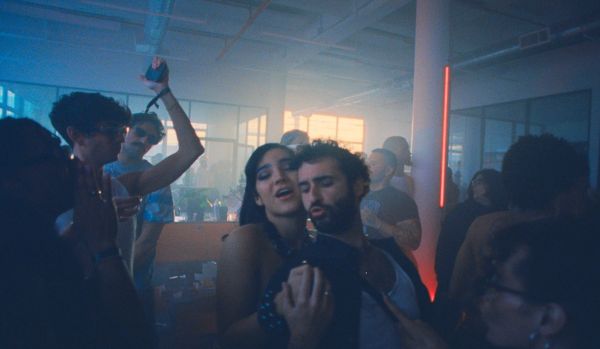
Longtime couple Lee (Lily Gladstone) and Angela (Kelly Marie Tran) have been trying—without success—to conceive through in vitro fertilization treatments. Their friends, Chris (Bowen Yang) and Min (Han Gi-Chan), live on their property in a carriage house. Min wants to marry Chris, but Chris is afraid of commitment and still figuring out his life. The makeshift clan has its little tensions here and there, but they’re a lovable, close-knit crew, hanging out and partying.
Outside of this chosen family, the film also examines the pressures that come with blood relatives—particularly Angela’s sunny yet complicated mother, May (Joan Chen), who, in overcorrecting for her past disapproval of her daughter’s coming out, now comes off as a virtue-signaling queer ally, at least in Angela’s eyes; and Min’s grandmother, Ja-Young (Youn Yuh-Jung), the matriarch and head of Min’s family’s Korean financial empire.
Worried about his student visa expiring and hoping to help Lee afford another round of IVF, Min and the group concoct a plan: Min, who hasn’t come out to his family, will marry Angela. In true screwball fashion, the haphazard idea doesn’t go as planned.
James Schamus, co-writer of the original movie and of many works within Ang Lee’s eclectic, impressive filmography, returns here to collaborate on the script with Ahn. Reworking material that’s no longer quite as bold or fresh as it was in 1993 is tricky—especially while juggling a dissonant mix of raucous comedy and effusive drama. At times, the script seems to awkwardly cling to its predecessor’s plotlines instead of rambling freely. Some contrivances are hard to buy, including a sexual mishap between two of the friends that feels reminiscent of the creaky drama between Rupert Everett and Madonna in John Schlesinger’s ill-fated 2000 film The Next Best Thing.
Still, the cast is so charming, with natural and snappy back-and-forth repartee, that I was able to overlook the story’s occasional flimsiness. Once the film moves past bursts of over-the-top quirks and zany antics, it settles into a more nuanced, dramatic groove and becomes a moving, lovely portrait of friendship and intergenerational familial bonds.
The film is exquisitely shot by Ki Jin Kim, who also worked on Ahn’s Spa Night and the quietly poignant Driveways. The photography excels in its simplicity, especially in the central house—passed down from Lee’s late mother—which becomes a character in its own right. (Gladstone has an incredible moment describing what her family home means to her in one of the best scenes here.)
As in her Oscar-winning turn in Minari, the scene-stealing Youn Yuh-Jung is wry and impactful. Every glance communicates that her character knows more than those around her realize. Tran carries the story’s widest emotional range—from inward restraint to heavy drama to silly slapstick—and pulls it off beautifully. Yang reveals a vulnerability that deepens his comic persona, while Gi-Chan shines in the farcical bits. Gladstone is once again moving and completely natural—a quietly mesmerizing screen presence.
By the time this mishmash of styles and dynamics hurtles toward its sweet, bleary-eyed conclusion, it’s all, admittedly, very affecting.


Leave A Comment