

Once more, director Ryan Coogler proves he can knock any movie genre out of the park. From biopics to sports dramas to superhero blockbusters, Coogler continues to establish himself as one of our best filmmakers—and Sinners proves his talent extends to horror. A vampire flick set in the Jim Crow–era South, Coogler’s first original story is as twisted as it is thrilling, zigging where other horror films might zag and offering a boldly sinister revamp of familiar tropes with utter confidence.
That Sinners features not just one but two Michael B. Jordan performances certainly helps matters. Coogler’s longtime acting collaborator shines as twins Smoke and Stack, both World War I veterans who’ve spent the past few years working in Chicago’s criminal underworld—including with Al Capone. Rarely apart—Stack wears a red fedora, Smoke a blue newsboy cap—the twins return home to Mississippi in 1932 to open a juke joint and speakeasy in their old stomping grounds, where they’ve maintained a solid reputation among the local sharecroppers. This includes their cousin Sammie Moore (newcomer Miles Caton), the local preacher’s son and an aspiring musician who’s a natural with a guitar. For obvious reasons involving drinking and criminality, Sammie’s father doesn’t approve of him spending time with Smoke and Stack—but the twins like him, and they could use his skills for the club’s opening night.
That big occasion requires a team, which means rounding up old faces to get operations running. Among them: blues-and-booze-loving harmonica player Delta Slim (Delroy Lindo) for entertainment and cotton worker Cornbread (Omar Benson Miller) to man the door. It also means confronting women from their past. For Stack, that’s Mary (Hailee Steinfeld), a childhood sweetheart he pushed away to protect her from racist violence. For Smoke, it’s his ex-wife Annie (Wunmi Mosaku), who still mourns the death of their baby boy. Both women are part of this small but hardworking town doing what they can to survive in a culture built on segregation and violence—making Sinners’ bursts of musical joy feel cathartic. Even otherworldly.
That supernatural component ends up bringing vampires to Sammie and the twins’ doorstep. An opening monologue touches on the innate power of music, portraying it as both a source of positivity and a beacon for evil. In this case, the mysterious White stranger Remmick (Jack O’Connell) turns a pair of racists into vampires before hearing Sammie’s guitar and deeming his music a gift that must live on eternally. Naturally, this leads to biting, feeding, and transforming partygoers—complete with classic horror clichés (vampires must be invited in). Coogler wisely avoids excessive gore, instead creating an uncanny contrast between supernatural evil and the everyday racism that Smoke, Stack, and their community endure in 1930s America.
Sinners practically drips with atmosphere, taking its time to explore the ins and outs of its characters’ lives and indiscretions long before we even hear the word vampire. This world is full of charm and violence, perfectly embodied by Jordan’s dual performances as Smoke and Stack—men shaped as much by cruelty as by their commitment to each other. They’ve seen things, and everyone they know has too, from overt bigotry to lynchings. The vampire scenes are disturbing and bloody—thankfully light on jump scares—but in the broader context of Black history, they’re just another drop of blood in the bucket. Autumn Durald Arkapaw’s cinematography lends the world a sense of haunting beauty, even when the film goes full horror and lets the monsters run wild.
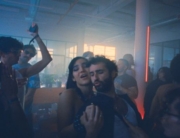
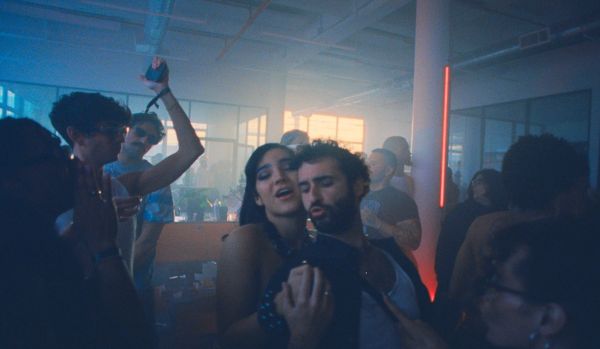
Perhaps the biggest surprise of Sinners is its focus on music—not just Ludwig Göransson’s killer score, but the idea of music as a force that attracts good as much as it does evil. Vampire music probably wasn’t on anyone’s 2025 bingo card, but Sinners pulls it off with a twisted rendition of “Rocky Road to Dublin,” a scene only outdone by a dance number in the juke joint that literally bends space and time, turning the dance floor into a living celebration of music and culture across all eras: past, present, and future.
That’s the last image you’d expect from a film marketed as a period horror thriller. Between that and an unexpectedly touching mid-credits scene, Coogler once again takes a bite out of the audience’s expectations. For that reason, Sinners is easily one of the best films of 2025 so far.




Leave A Comment