Mathematically, it’s possible for every filmgoer at the Toronto International Film Festival to see a completely unique program. With more than 200 feature films playing out over 11 days, and depending on the viewer’s stamina, there are countless variations of what to see. By design and scheduling, this year my selections took more of an international flavor, hitting almost every continent. For viewers who wanted a fall film preview, there were plenty to choose from, many of which might be considered vanity projects, helmed by actors turned directors. Traditionally, this, the weakest of the festival’s programming, is truly a shot in the dark.
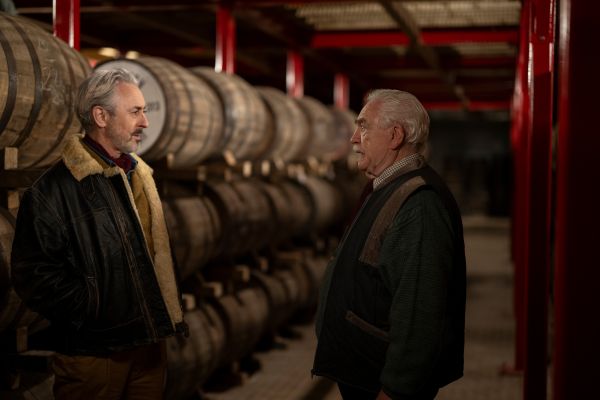
Given the range of movies available at the festival, the following lineup offers reminders of one’s personal taste, of what works and what doesn’t for that particular viewer. This was especially true with actor Brian Cox’s directorial debut, the Scottish-set Glenrothan, the type of drama that used to be called “straight-to-video” fare. Two brothers (Alan Cumming and Cox), apart for 40 years, reunite after a long estrangement to work out past trauma and decide who will take over the family-owned distillery. Everything here is conventional, from the performances (including a spunky child actor) and the trite story and dialogue to the cheesy, soft-focus familial flashbacks. The landscapes of the stark, windswept Highlands easily upstage the actors. One needed a shot or two of the family’s whiskey to get through this.
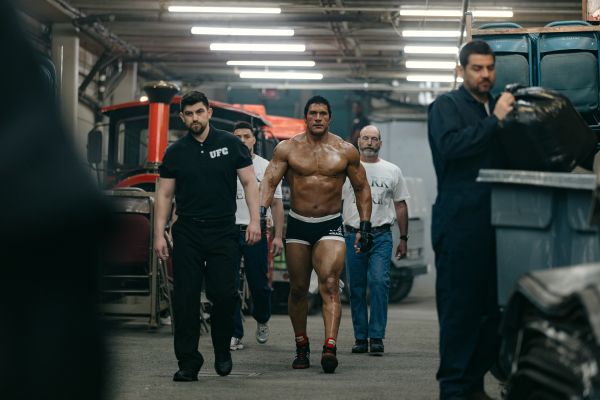
After Benny Safdie won the best director prize at the Venice Film Festival just days earlier, perhaps my expectation was placed too high for The Smashing Machine. What I saw was a routine sports biopic that plods along chronologically, chapter by chapter. The brutal and bloody fight scenes, as well as the countless montages, become repetitive. However, Dwayne Johnson gives a remarkably fluid and mercurial performance as mixed martial arts/Ultimate Fighting Championship superstar Mark Kerr. When the film begins, Kerr has never lost a bout. However, the harsh physical demands of the sport lead to painkiller addiction.
Given the beating his body takes, Kerr steals opioid medication and asks to pay for his multiple prescriptions out of pocket. However, the script eschews the hard work of getting sober. Still, his newfound sobriety places a roadblock in his relationship with the needling, nursing, and—to Kerr—nosey and noisy Dawn (the perfectly quaffed and made-up Emily Blunt). He can be a tough customer, though: He’s exact about what goes in his morning smoothies. However, undermining the tension, Dawn’s rote dialogue could have come straight out of the mouth of Saturday Night Live’s Angel, the girlfriend from every boxing movie. And speaking of clichés, there’s yet another replay of that anthem to independence, “My Way,” sung by Elvis Presley.
Johnson, the one big name that could have possibly portrayed Kerr, remains charismatic even while he’s nearly buried under prosthetics and a wig to look more like his real-life counterpart. The actor breaks through the facade. In a beautifully vulnerable moment—and standout scene—Kerr allows himself to cry in front of his best friend and former trainer, Mark Coleman (a strong Ryan Bader, MMA veteran) after enduring a devastating career setback. No women are in sight; guards come down.
Nevertheless, Safdie’s message about graceful sportsmanship is hardly original. Anyone remember the original Rocky, The Wrestler, or the OG Raging Bull? You’ve seen this movie before. However, it was a treat to see my hometown of Albuquerque, New Mexico, used as the stand-in for Phoenix.
Now to the festival’s unflashy gems. By coincidence, two intimate family dramas centered on male teenagers with severe behavioral problems. Both are the filmmakers’ debut features, featuring remarkable direction of the actors. You’ll feel like you’re intruding into these two households.

In the melancholic Canadian/Hungarian co-production Blue Heron, a blended family moves to Vancouver Island in the late 1990s. Three of the kids, children of the mother’s second marriage, speak fluent Hungarian, while the oldest and by far the tallest in the family, Jeremy (Edik Beddoes), from the mom’s first marriage, speaks only English. The age gap between Jeremy and his siblings further alienates him from the family, though he has a playful and breezy bond with the youngest in the bunch, Sasha (Eylul Guven). Told from the girl’s perspective, the tone swiftly turns tense as Jeremy’s behavior shifts from shoplifting to threatening to burning down the house. His parents send him to a therapist, who diagnoses the teen with oppositional defiance disorder. In other words, Jeremy believes he’s in charge.
After the straightforward first half, director Sophy Romvari takes a leap and liberties with the point of view, jumping from the 1990s to the present day. Sasha, now a filmmaker, is researching mental illness. She has gathered a group of therapists to specifically ask about her big brother’s behavior and what would be done differently today to treat his symptoms. That’s simply a setup for a wallop of an ending where, yet again, Romvari shifts the point of view and adds further resonance to the family’s actions of the past. Romvari won the Best First Feature Award at the Locarno Film Festival in August, and her film was among the most talked about movies at TIFF for those who were lucky to have seen it.
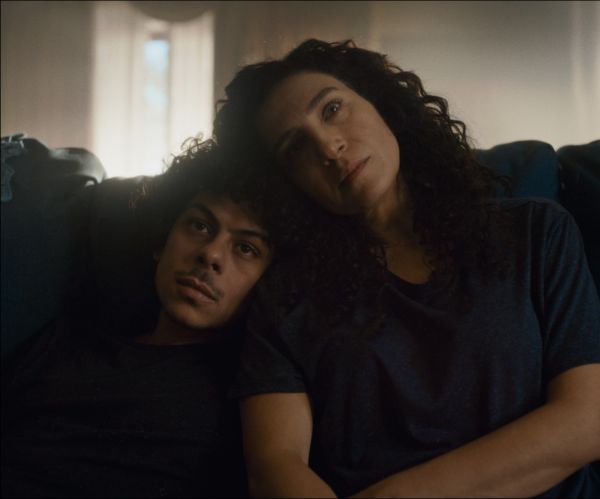
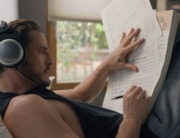
The festival hosted the world premiere of Zain Duraie’s empathetic and ofttimes harrowing Sink, set in Jordan and centered on an upper middle-class household. Slumped over, wearing a hoodie and headphones, the often sweet-natured Basil (the remarkable Mohammad Nizar) could appear almost like any teen. Yet his erratic actions embarrass his younger jock brother and sister, whose friend considers Basil to be “weird.” He is definitely a mama’s boy, shrugging off his father’s hand on his shoulder and ignoring him. Basil swims laps with his mother, Nadia (Clara Khoury). Dances with her. He even takes to smoking, like her. Nadia has a more playful and intimate bond with him than with her other children. (Khoury has a strong presence in another TIFF selection, The Voice of Hind Rajab. She was a festival MVP.)
After Basil has displayed violent behavior toward a teacher, an accusation Nadia disbelieves, he is suspended from school. So, it’s only natural that Nadia would remain at home with him while the rest of the family takes a vacation. In Sink and Blue Heron, the weight of the sons’ fate weighs more heavily on the mothers’ shoulders. Perhaps the strongest obstacle Nadia and Heron’s mother face is overcoming the burden of the sacrificial mother role model and realizing the limits to what they can do for their sons.
Of the films discussed above, only The Smashing Machine will be released soon theatrically, on October 3.

Leave A Comment