
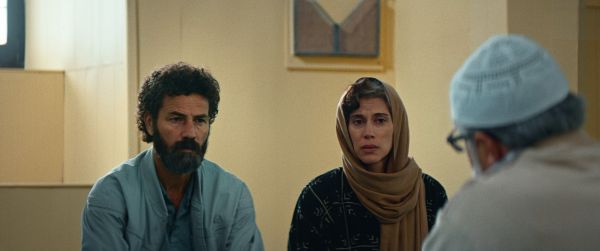
All That’s Left of You, Jordan’s official submission for Best International Feature Film at the 2026 Oscars, is ambitious in its scope and intimate in its focus. The story begins in Jaffa (now part of modern-day Tel Aviv) in 1948 during the violent eviction of Palestinians during the Arab-Israeli War, and ends in 2022, just one year before the October 7 attacks launched the Gaza War. There are two chapters in between—one set in 1978 and the other in 1988—involving members of a fictional Palestinian family whose loss magnifies as the decades proceed. The most dramatic aspect of this loss concerns Noor (Muhammed Abed Elrahman), a young adult who gets caught in a protest in the occupied West Bank in 1988. A brief snippet of this episode and a direct address to the camera from his mother, Hanan (writer-director Cherien Dabis), inform us that the family’s history led to this moment.
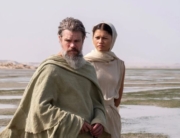
The Jaffa we see first is one of orange groves and luxurious houses, where Sharif (Adam Bakri), Noor’s grandfather, lectures his children about poetry at the dinner table, only to be interrupted by the sound of explosions and gunfire. In 1978, the household is making the best of living in a refugee camp in the West Bank, though that certainly isn’t easy when one is likely to be stopped, threatened, and humiliated by Israeli soldiers. In 1988, the West Bank is rife with protests and violence, and the lack of medical care for Palestinians is brought sharply into focus. The Jaffa at the end is a city that Salim (Saleh Bakri), Sharif’s son and Noor’s father, barely recognizes. Throughout, the effects of oppression on this family—the decisions it forces them to make and the way it changes their relationships—are intensely explored.
There is much material for an excellent film in this story, and at times, it is realized. There is an incredible feeling for place, especially as it is evoked in the 1978 chapter and in the furious movement of the 1988 protest. There is some beautiful acting, especially from Saleh Bakri, whose ebullience as Salim is sharply at odds with the compromised nature of his circumstances. An occasional haunting detail or an eye for human oddity does much to enliven the film’s themes, such as a wonderful sequence in which an older Sharif (Mohammad Bakri) sleepwalks in search of his former home.
Yet one fault, writ large, is that, unfortunately, much of the dialogue comes across as agitprop, so that the characters so often come across as mere tools to represent the plight of the Palestinian people. They are rarely allowed much life of their own. Although this is not always true—a lovely scene in which Salim, who is an elementary school teacher, jokes with his students is a notable exception—there are enough scenes in which a child asks the perfectly worded relevant question, or the region’s violent history enters the characters’ conversations when we know so little else about them, that it stands in the way of the saga’s resounding success. A misguided, or at least mishandled, third act involves a medical odyssey that often strains for pathos in situations that do not require more of it, and reduces its characters further to pawns for the story’s message.
Many recent films have sought to portray the fraught history and tragic present of the region (such as Scandar Copti’s Happy Holidays); the strengths of All That’s Left of You make this viewer eager to see what subsequent feature films might achieve.
Leave A Comment