The 27th annual Provincetown International Film Festival delivered irreverent humor, quirk, and much-needed warmth to an unseasonably chilly weekend in mid-June. Many of the films made their splash earlier at Sundance, including James Sweeney’s twisty Twinless and Eva Victor’s affecting Sorry, Baby. Documentaries such as Michael Koehler’s Spiritus: No Business Like Dough Business and Michael Cestaro’s Everything Moves provided entertaining local flavor.
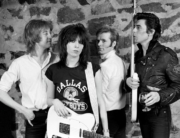
Directed by Linus O’Brien, the son of The Rocky Horror Picture Show creator Richard O’Brien, the opening night selection Strange Journey: The Story of Rocky Horror is a splashy, celebratory documentary about the stage musical and its 1975 movie adaptation. Originally premiering at SXSW, it was a galvanizing start for PIFF and went over well with the Town Hall crowd, who laughed and clapped throughout.
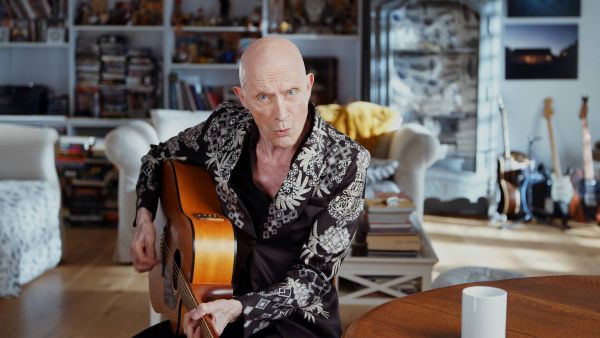
Living in New Zealand, with his shaved bald head and clad in a black, gender-fluid, ‘80s punk-style get-up, Richard O’Brien sings some of the show’s songs—all of them such catchy earworms with clever, dynamic lyrics (“Science Fiction/Double Feature,” a personal favorite). He expresses deep affection for this part of his past, even poring over old notes and script treatments he hasn’t looked at in years. He amusingly wonders aloud who this intelligent person who wrote them was.
The documentary features interviews with cast and crew from the original film and stage productions, including the always wise, sublime, and charming Tim Curry (unforgettable as the original Frank-N-Furter), Susan Sarandon, Nell Campbell, no-nonsense producer Lou Adler, and English costume designer Sue Blane, whose original designs have become iconic. Everything acid-tongued Patricia Quinn says—including the backstory behind her red lips gracing the film’s opening credits—is a hoot. Jack Black makes an amusing appearance, sharing his experience of seeing the movie for the first time and connecting with Meat Loaf’s character, someone who looked like him onscreen.
Strange Journey feels both deeply personal and historically rich, surveying the lore of a cult classic. From the show’s smash runs in London and Los Angeles to its bizarrely muted Broadway response, the film’s rocky box office debut, and eventual midnight screening success, it’s an arresting tale. The use of the film’s music, colorful clips, and decade-spanning footage of participatory audiences is well assembled by editor Avner Shiloah.
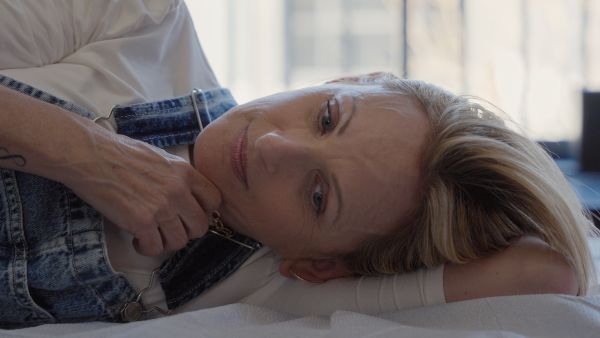
Marlee Matlin: Not Alone Anymore is a moving documentary about actor Marlee Matlin’s struggles and triumphs, especially within a fickle, cutthroat industry that has offered scant deaf representation. The story is at times harrowing, especially when it details her psychologically and physically abusive, drug-fueled relationship with Children of a Lesser God co-star William Hurt.
The film begins at the Oscars, where Matlin became the first deaf actor to win an Academy Award. She noticeably recoils in ceremony footage as Hurt presents the award. Later, her CODA co-star Troy Kotsur—one of the documentary’s interviewees—would become the second deaf performer to win an Oscar, in 2022. (Matlin had insisted on casting a deaf performer in his role, threatening to leave the project otherwise.)
Often nonlinear, the film skillfully weaves through her life: growing up in a family that mostly never learned to sign, rebelling against her parents, and enduring a harsh, often lonely education. Matlin’s ongoing advocacy includes helping mandate closed captioning across TV channels. She also remains one of the few prominent deaf actors in Hollywood.
Director Shoshannah Stern, also deaf, interviews Matlin face to face in relaxed, candid sessions that allow Matlin’s dry humor to shine. The film eschews anonymous voice-overs or muted signing. Instead, it employs inventive, era-matching caption styles that add freshness and unpredictability, making it more inventive than typical celebrity chronicles.
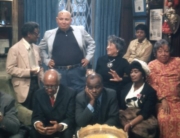
Michael Cestaro’s world premiere Everything Moves, a portrait of Provincetown legend Salvatore Del Deo and his fascinating late wife, Josephine (who died in 2016), was especially well received by the enthusiastic audience. Del Deo, salt-of-the-earth, seemingly gruff and lovable, is a gifted storyteller.
Born in Providence to Italian immigrants in 1928, Del Deo moved to Provincetown in his late teens to become an artist. A Korean War vet, he has painted for decades and co-founded two popular, enduring local restaurants (Ciro & Sal’s and Sal’s Place)—a blend of bohemia and entrepreneurship. Josephine, whom he married in 1953, was an artist, writer, and a political firebrand, advocating for causes like the preservation of the Cape Cod National Seashore. Their love story is one of the film’s most enchanting threads; in fact, a standalone portrait of Josephine would be equally compelling.
The film also tackles the controversy over the National Park Service’s attempted takeover of the back shore dune shacks, one of which is Del Deo’s longtime part-time home and studio. His case gained national media attention and ultimately led to an extended lease.
Cestaro’s style is elegant and tactile, with exquisite attention to the Cape’s imagery and natural sounds. The film is enriched by radiant footage of Del Deo’s paintings and rare archival 8mm home videos of Sal and Josephine in postwar Provincetown—an earthy, bygone artist colony kind of life.



Leave A Comment