

A film shouldn’t necessarily be compared to its predecessor, but when that predecessor is Otto Preminger’s splashy and stunning 1958 adaptation of Françoise Sagan’s 1954 coming-of-age novel, it’s difficult not to. Durga Chew-Bose’s directorial debut—a contemporary take—is likewise elegant and intriguing, but far more restrained and austere, leaving one pining for Preminger’s panache.
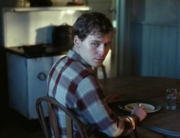
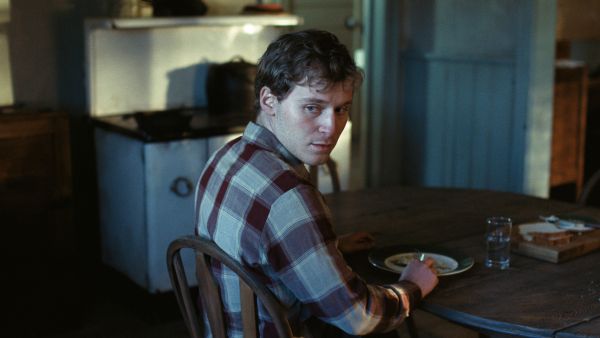
Set in a villa in the South of France, 18-year-old Cécile (Lily McInerny) is leisurely spending her summer with her dashing, widowed father, Raymond (Claes Bang), and his effervescent girlfriend, Elsa (Naïlia Harzoune). The trio appear to enjoy each other’s company, quietly joking and listening to music. After Cécile meets a flirty French guy on the beach, Cyril (Aliocha Schneider), the two carry on a superficial fling. Yet there’s an overriding sense of boredom for Cécile—one moment features her slowly buttering bread and eating it alone in the kitchen, staring off into space.
The delicate balance of this group is disrupted when Raymond invites Anne (Chloë Sevigny), a fashion designer and old friend of his late wife (gone 12 years now), to join them. Cécile doesn’t seem especially enthused about Anne’s arrival. She’s perhaps too young to remember her well, though her father describes the special bond Anne once shared with her mother. When Anne shows up, she’s chilly and somewhat passive-aggressive, telling Cécile how spoiled she is—having a huge villa and its pretty views to herself and her father—and how she should invest less in lazing about and more in her studies. As the friction between Anne and Cécile (and also Elsa) festers, Anne and Raymond grow closer.
The performances, like much of the film’s look, are minimalistic and understated. McInerny’s placid, internal turn—as someone Cyril describes as “reckless, but careful”—is a far cry from Jean Seberg’s incarnation in Preminger’s film. Seberg is brash, bratty, chic, and electric; her movements and speech are swift and punchy. She is a propulsive force. McInerny, by contrast, is often still, timid, wide-eyed. The lack of a dynamic protagonist makes the film drag at times and causes the tight, tragic tinderbox of Sagan’s plot to feel less impactful. Bang is fine but fades away like much of the cast. He’s no match for David Niven’s ostentatious, open-shirted playboy of the 1958 film.
Nevertheless, Sevigny often brings the film to life. With her blonde Vertigo–style bun, flat line readings, heavy mascara, and severe, stony side-eyes and glares, there’s something stiff, unsettled, and sad about Anne. Elements of her performance are in conversation with Miyako Bellizzi’s graceful costume design, which highlights Anne’s complexities and contradictions. The sketches Anne creates display her talent, but she wears clothes as though they are wearing her, as if they’re burdens. She nervously questions a red dress and dons a conservative, dowdy jacket that draws attention away from one of her designs: a flowy, fabulous-looking skirt.
The soundtrack features stylish, lilting music, such as Aliocha Schneider’s stripped-down version of “Blue Skies” that opens the film, the Roches’ cover of “Come Softly to Me,” and a sweeping original song, “What Then,” from Hailey Gates and Z Berg, with melancholic melodies reminiscent of Serge Gainsbourg. Lesley Barber’s score oscillates between piano etudes and brittle strings, adding to the film’s gossamer yet ominous atmosphere.
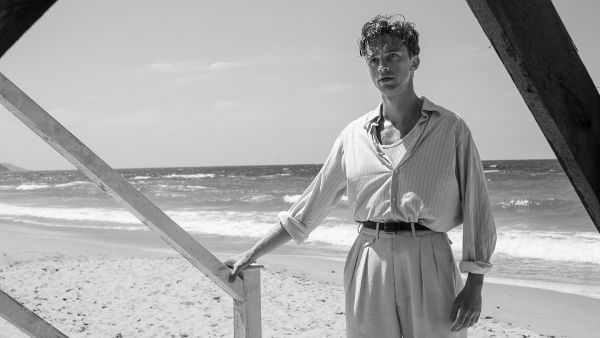
Shot in gorgeous Cassis, with its rocky landscapes and exquisite royal-blue waters, cinematographer Maximilian Pittner captures the ravishing natural beauty and contrasts it with the spare, tasteful elegance of the characters. The compositions often focus on order and clean lines—close-ups of colorful tiles in the main title sequence, a neat arrangement of shells on a towel, the making of a bed, or Anne’s meticulous carving of a pineapple. These shots express a contrast with how messy human emotions are—they can’t be arranged geometrically, so tidily.
Bonjour Tristesse has a dishy, moral, tragic, and very French plot, but it feels somewhat detached and muted. It seems to be aiming for the tone of Éric Rohmer’s seasonal “Tales” series, yet those films still build with unremitting tension.




Leave A Comment