
Fifteen years since its release, not much has changed regarding The Social Network’s status as one of the 21st century’s most acclaimed films. Public perception of Facebook CEO Mark Zuckerberg is a different story entirely. Aaron Sorkin’s unexpected follow-up replaces Jesse Eisenberg’s nebbish and arrogant (but occasionally empathetic) tech upstart with a vain, power-hungry oligarch who controls how the world consumes information and especially misinformation. It’s the latter’s central role in Facebook’s algorithm that forms the backbone of The Social Reckoning, a decent thriller that can’t help but feel lesser than its predecessor.
Though Sorkin returns to write this sequel, the absence of director David Fincher is sorely felt here. It was Fincher’s eye for cinematography that turned a tale of obnoxiously elitist Harvard graduates suing each other into something riveting, and Sorkin, despite his own filmmaking successes, can’t replicate that. This leaves the investigation driving The Social Reckoning a little by the numbers, intermittently tapping into something unique when focus is placed on the onscreen monster Zuckerberg has become in the interim.
Early Facebook was created so users could meet new faces or reunite with old ones. The Facebook of 2019–2021 represents its toxic evolution: a 24/7 information space that funnels users into ideological groups while keeping them endlessly hooked on social media. Its business side resembles a massive tech conglomerate more than the thriving startup of The Social Network, but with that comes an atmosphere of secrecy and distrust toward journalists interested in how Facebook functions. This includes Wall Street Journal reporter Jeff Horwitz (Jeremy Allen White), whom Facebook media relations head Teddy (Billy Magnussen) describes as akin to a gadfly barging in on the company’s work. In actuality, Horwitz is more concerned with the political component of Facebook’s influence, such as its willingness to delete negative comments to boost Zuckerberg’s public image.
Researching the Civic Integrity Team brings him into secret contact with Frances Haugen (Mikey Madison), a data engineer and future whistleblower torn between two mindsets. Haugen repeatedly describes herself as someone who believes in Facebook’s mission of connecting the world, yet her work keeps drawing her attention to channels pushing the company’s risk factors to their limits. She also drops a bombshell: 64 percent of users who joined extremist groups on Facebook did so because of Facebook algorithm recommendations, including a former friend of Haugen’s who jumped from progressive to alt-right in record time. The Social Reckoning’s opening sequence puts that throughline between radicalization and clickbait in full view, with her friend provoking two cops on a highway so she can post a video to a right-wing Facebook page railing against “DEI” police.
The more Horwitz presses, and the more company details Haugen provides him with, a bigger picture emerges of misinformation and rage bait becoming the driving force keeping Facebook users online. It’s a good hook, but one that feels a bit restrictive in terms of performances and location. Sorkin primarily shoots in office buildings, hotels, resorts, and other tightly packed locations, which complements the genre but comes across as fairly limiting in scope. Likewise, White and Madison do a fine job as the diligent reporter and conflicted employee-turned-whistleblower, though their dynamic becomes somewhat repetitive. He dryly remarks on her aloof, prickly attitude, while she calls out his overly old-school relationship with technology and even his old movie references. Rinse and repeat.
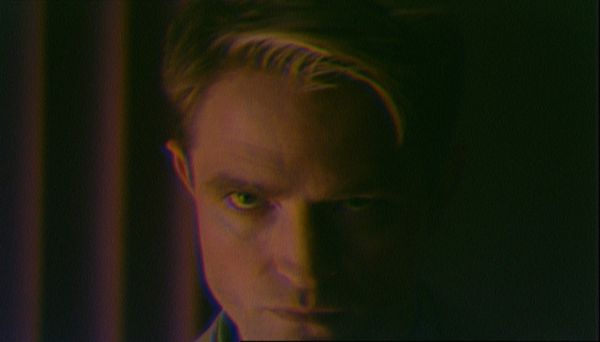
Where these limitations benefit the drama is when Sorkin turns his attention back to an older Zuckerberg (Jeremy Strong) as he is guided on how to respond during an upcoming Congressional hearing in 2021. The questions from his counsel (Wunmi Mosaku) and a former colleague (Bill Burr) about algorithms and meaningful social interactions are designed to put him in the hot seat and make him react accordingly. Yet Zuckerberg’s perpetually irritated, emotionless reactions suggest he’s insulted that anyone is challenging him on anything. Whether answering regarding misinformation in political ads or acknowledging social media’s mental health toll on youth, the costs are less important to him than Facebook’s perpetual business growth—and, by extension, his wealth and authority.
Succession comparisons are inevitable with Strong replacing Eisenberg, but this isn’t just Kendall Roy if he were actually successful. It reflects a profound transformation of Zuckerberg compared to his Social Network years: more isolated, more emotionless, more hostile to criticism regarding his product and how it’s corrupted or radicalized users. That Sorkin sets this against the backdrop of the January 6 U.S. Capitol riot couldn’t be a more direct indictment.
Unfortunately, Sorkin’s decision to end his story on a semi-optimistic note doesn’t mesh with reality either. In 2026, tech platforms have further eased up on fact-checking, misinformation is being pushed at the highest levels of government, and the rise of AI has created a new tool that billionaires—until recently—have shown little interest in regulating. That The Social Reckoning rarely, if ever, has Zuckerberg interact with others highlights how little he’s grown to care about such issues, at least to a certain extent. Instead of matching its predecessor’s ambition, this continuation ends up playing things a little too safe.








Leave A Comment