

Like many teenagers, John Santucci (Jake Ryan) is in the throes of emotional agony. Sexual desire, the pressures of parents, of school, of friends who are navigating this complicated moment themselves—all of that is here. His parents are divorced, he’s a new student at a fairly strict Catholic school, and his first girlfriend, Rachel—aka Lilith (Skye Alyssa Friedman)—is eager to explore her sexuality and push boundaries.
John’s real issue, however, might be that he takes what everyone around him says literally. It doesn’t matter if the information is contradictory. It doesn’t matter if a little part of him whispers an objection. He believes his devout mother (Jeanine Serralles) when she refers to sexual activity as sinful, even if it’s as innocent as kissing. He believes his friends—unashamed virgins all around—when they tell him kissing means nothing: There’s no way to know if a girl likes you unless you feel her “down there.” He believes Rachel when she tells him she’s been with close to 40 guys before him, even though it’s clear to the audience that he’s her first.
Though he’s bold enough to ask Rachel out in the first place (awkwardly, of course), he has trouble knowing what he wants and who he is. He’s so easily swayed and dominated by others. As a result, Rachel keeps asking him to do increasingly transgressive things in exchange for moving further with her physically. He complies. Yet he also keeps interrupting their make-out sessions to ask questions like “Am I as good as other guys?” or “Are we being sinful?” It’s only natural that he should come to a breaking point.
Lemonade Blessing is, like many coming-of-age movies, a story of self-discovery. It includes familiar tropes, and some moments may strain believability when examined closely (such as sexual exploration on a school bus without anyone noticing). Yet this is not just another teenage film by rote. Much of it is so convincingly awkward that I kept needing to hide my face in embarrassment.
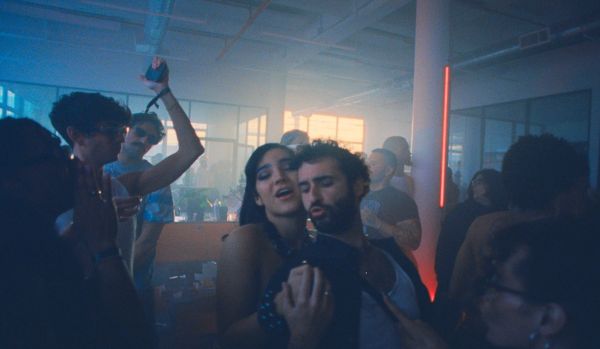
There is a specificity to the cinematography—heightened color palettes, close-ups on unlikely parts of the face, cunning use of the subjective lens—which strengthens and illuminates the film’s emotional landscape. Ryan’s face, in particular, is subject to a number of beautifully odd shots. The acting throughout is strong and spunky, with an especially funny group of supporting players among the teenagers. Though this film lives largely within John’s perspective, it never lets us forget that those around him have their own internal lives. Rachel, his mother, and his friend Angelo (Miles J. Harvey) all have moments in which we see—sometimes subtly, sometimes directly—what John himself might be missing.
Most of all, Lemonade Blessing is not a film that fully finishes John’s journey of becoming. It leaves him, Rachel, and his mother mid-transformation. We cannot say for sure what is to come for any of them. John is only starting to know what he needs—and writer/director Chris Merola’s feature debut is truer for it.
Lemonade Blessing had its world premiere at the Tribeca Festival and screened in the U.S. Narrative Competition section.







Leave A Comment