
Christian Petzold’s latest film reprises motifs from his other movies: a tragic car accident, restless bike rides through dappled landscapes, and the dizzying sense that two strangers suddenly know each other. He’s made some changes, though. After tackling lofty paradigms of a fascist takeover (Transit), mythological shapeshifting (Undine), and encroaching climate disaster (Afire), Petzold brings Miroirs No. 3 down to earth in the countryside, where a young woman comes across a troubled family and its secrets. The movie feels softer and more “breathable” than the director’s others—it’s a modest but welcome shift.
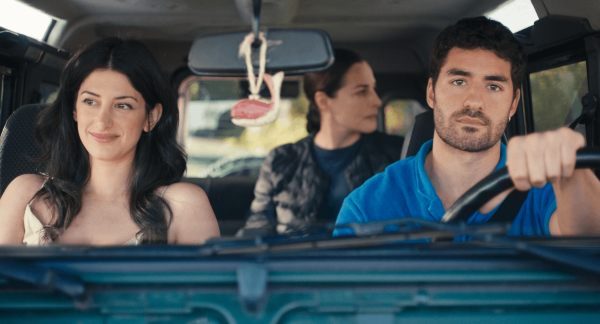
For all the newfound lighter touch, the Petzoldian tableau has to include alienation, and from Miroirs’s tense first frame, we feel it. Musician Laura (Petzold muse Paula Beer) stands mutely and inertly by a riverside when she’s supposed to be headed on a jaunt to the countryside with her rather disagreeable boyfriend, who seeks to accomplish some social climbing on the trip. Once on the road, Laura is quiet in the car, then offers her excuses. She’s lost her bag; she’s feeling sick. Her boyfriend angrily agrees to drive her to the train station to head back to Berlin alone.
As he speeds along winding roads, Laura locks eyes in slow motion with an older woman on the shoulder of the route just before the young man plunges the car into a terrifying smash-up. The woman runs to the unconscious Laura’s aid; the boyfriend lies dead, but Laura and her rescuer immediately sense an unspoken need in each other. As she recovers from her injuries in the home of her new friend, Betty (Barbara Auer), Laura and Betty wordlessly see eye to eye that Laura has come to stay.
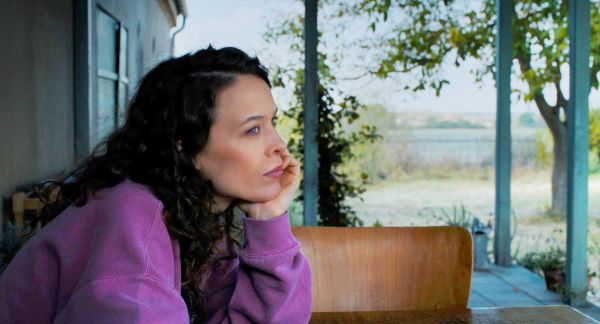
Betty seems solitary and anxious, but eager to reach out; she is nervous and touched when Laura impulsively asks to stay in the house for an undefined period. First, Laura wears some clothes Betty happens to have on hand. Then she helps with chores in Betty’s comfortably shabby cottage. The two strike an awkward yet oddly affectionate rapport. However, neighbors do silent double-takes when they see Laura, and it’s Betty’s semi-estranged husband and stolid mechanic son, Max (Enno Trebs), who are really taken aback by her presence.
The pair can’t help but reluctantly warm to Laura, though. The recent victim of tragedy comes to life playing the piano (the film’s title refers to a Ravel piece), cooking, and, most importantly, helping Betty, which relieves the men of residual guilt and worry. Laura grows into a surrogate role in a family with its own unmentioned undercurrents. But hanging out at the auto repair shop with Max—for whom she develops an uneasy attraction—Laura begins to detect a sinister note in the sudden domestic bliss that has felt so effortless and natural. Something is eerily missing in this family. A groping awareness begins to coalesce, with consequences for everyone.
The director could opt for film noir shadings to amp up the unease of the situation he has devised. But a windswept feel and natural light add an everyday openness to this fraught emotional territory. Having last played a sexy, aloof figure in Afire, Beer seems more vulnerable than usual, her character fey and watchful but mirroring some of Betty’s own loneliness and need for love at her core.
Reverberating with trauma, Miroirs No. 3 somehow finds a countervailing strength in a message of connection. For damaged but hopeful people, a relationship can be twisted but healing in its own way. Laura’s face in the final frame glows with a cautious possibility. “Maybe” is a good look for Petzold, too.








Leave A Comment