

During the run of the 2025 Tribeca Festival, one of the great pleasures was being part of an audience discovering a film for the very first time. Among these offerings, international gems emerged, allowing viewers to encounter new filmmakers from around the globe. In this regard, three world premieres stood out.
Without straying too far geographically, Esta Isla (This Island) offers a welcome showcase of Puerto Rican cinema, which rarely makes it across the water to wider audiences. This modest project marks the feature-length debut of co-directors Lorraine Jones Molina and Cristian Carretero, who expand upon and deepen the concept of a short film Carretero completed in 2014. As the title suggests, the country itself is more than a setting—it’s central to the story and the characters who inhabit it. The film provides an opportunity to explore the so-called Isla del Encanto from a raw and grounded perspective, stripping away tourist propaganda and gentrified portrayals.
Bebo (Zion Ortiz), a carefree teenager, is the younger brother of Charlie (Xavier Morales), a married man with a daughter and a baby boy. Charlie works hard as a fisherman and serves as the family’s main provider, burdened with responsibilities and constant worry. They live in a public housing complex near open waters. For the average working person, hard labor is rarely enough, the minimum wage doesn’t stretch far, and the temptation to fall into criminal activity is difficult to resist. In this neighborhood, it’s nearly impossible not to mingle—or be related to—someone connected to the underground world, like their cousin Moreno (Audicio Robles). Over time, exposure to crime and violence takes a toll.
Bebo becomes the central protagonist after a family tragedy forces him to devise an impromptu escape plan—his only shot at survival. His sole companion on this journey is his girlfriend, Lola (Fabiola Brown), who comes from a wealthy family but a home life that has not been as happy or stable as outsiders assume. She wants to escape. He has no choice but to keep moving forward. With few places to hide, their trek leads them alternately away from danger and deeper into it. As they travel through endless hills, crumbling roads, and abandoned properties, their relationship begins to fray.
Esta Isla is defined as much by what it says as by what it subtly alludes to, never veering into the obvious. The social and cultural issues it touches upon are conveyed through casual dialogue and visible wear—on the land and in the people who grew up in “paradise.” The directors withhold images of the ocean until it becomes thematically essential, and even during moments of music and celebration, tension never fully disappears. By stripping the country of its clichés, the film enhances its beauty all the more. (Cedric Cheung-Lau’s cinematography captures striking landscapes.) In this downward-spiraling journey, Puerto Rico becomes a symbol of longing and displacement, even for those who (still) haven’t left.

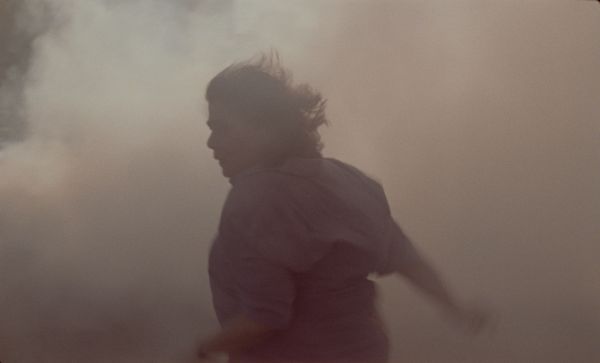
Straying just a bit from the present, the Uruguayan film A Bright Future is a striking lo-fi sci-fi piece and Lucía Garibaldi’s second feature, following her Sundance-awarded debut, The Sharks. One could say she returns with a clearer, more precise vision.
Set in a South American village, A Bright Future depicts a quiet dystopia plagued by famine, animal extinction (no one keeps pets anymore), dwindling technology, and unexplained but hysteria-inducing ant infestations. In this post-chaos world, efforts are underway to find solutions to the current state of deprivation, with all hopes pinned on the young, whose numbers are steadily declining—fertility rates are down.
Elisa (Martina Passeggi), just 18, is one of the few selected to help rebuild the future after passing a series of psychological tests, including word associations and drawing exercises. Her reward: entry into a promised land known only as “the North,” where people work to rewrite “a history without mistakes.” What she’ll be doing there remains unclear—it’s a one-way trip. Elisa doesn’t want to go, but she feels pressured by her family, neighbors, and friends, all celebrating that someone from their community has been chosen. Her older sister, who left years ago, rarely replies to messages.
In this world, youth is fetishized. Some even pay to inhale the scent of young people during supervised sessions. Once again, Garibaldi focuses on a young woman asserting agency in a society that demands compliance. A Bright Future is an understated meditation, evoking a melancholic atmosphere that questions whether a better world can truly be built. It withholds just enough to let a few shocking moments land with force, always remaining faithful to its characters.
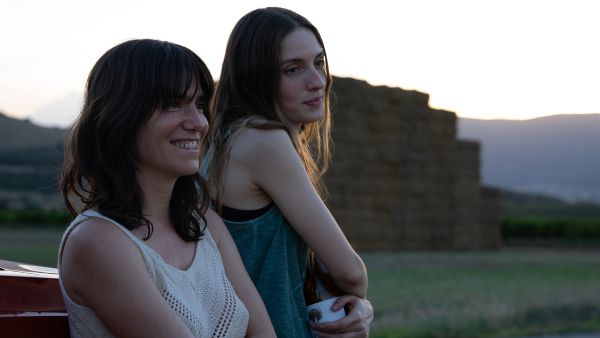
The third gem comes not from a promising new voice, but from a seasoned filmmaker exploring new territory. All We Cannot See marks the return to fiction filmmaking for Venezuelan director Alberto Arvelo. Here, he leads a Spanish/American co-production based on a screenplay he co-wrote with Cuban novelist Wendy Guerra, in her first foray into cinema. Once one of the most recognizable names in Venezuelan film, Arvelo now works in the diaspora, himself symbolically exiled. (His filmography includes A House with a View of the Sea and collaborations with Edgar Ramírez before his Hollywood breakthrough.)
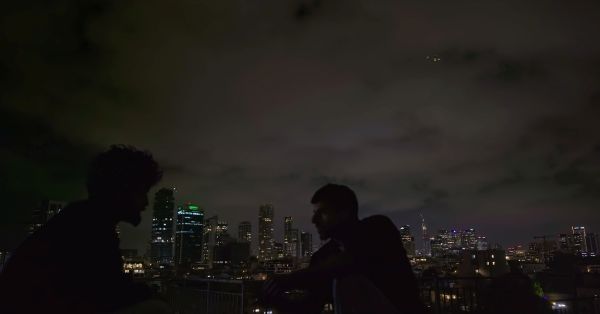
All We Cannot See is a romance and a road movie about two lonely women who momentarily find peace with their grief, allowing themselves to give and receive companionship just when they feel least ready—and when the world around them seems to be collapsing.
Aroa (María Valverde) and Miquela (Bruna Cusí) first meet in a service station bathroom, where Miquela hears Aroa crying in the next stall and tries—unsuccessfully—to start a conversation. They cross paths again at a train station, where Aroa is slightly more receptive. Miquela is intrigued and concerned by this stranger: disheveled, sad, bruised, with blood on her shoes. But Aroa isn’t looking to be saved—or doesn’t quite know what she’s looking for, other than escape. The occasional military patrols, protest slogans on public walls, and snippets of radio news hint at a Europe in conflict. In their second encounter, Miquela reveals she’s leaving Spain for Portugal and daringly invites Aroa to join her. After much hesitation, she accepts.
Their road trip unfolds along quiet highways in a rented car, stopping in wide-open fields that feel almost post-apocalyptic. They sleep in hotels or abandoned buildings under the stars. Eventually, space opens for their connection to move from sexual to romantic. However, the film isn’t about rediscovering sexual identity. It’s about two people finding each other as if by fate, and allowing that bond to lead them—at least for a while.
Both women harbor secrets, but only Miquela is willing to share hers. Aroa remains guarded, though prone to sudden, intense gestures of affection that catch Miquela off guard. These moments of friction threaten to reveal a hard truth: that no escape lasts when you’re fleeing what you refuse to confront. For Miquela, that’s the memory of a lost childhood. For Aroa, it’s the secrets she won’t name.
Filmed largely in Navarra, the landscapes—captured by Venezuelan cinematographer Gerard Uzcátegui—glow with an Edenic beauty. The score, composed by Gustavo Dudamel, adds a ghostly presence, like a companion shadowing the two travelers (another Venezuelan talent in the mix). The story Arvelo and Guerra crafted takes few dramatic detours, and much of the dialogue feels enriched by improvisation between the leads. Thanks to its tenderness and attention to character, we fall under the film’s spell—a cinematic caress in the middle of adversity, worth pausing to experience.




Leave A Comment