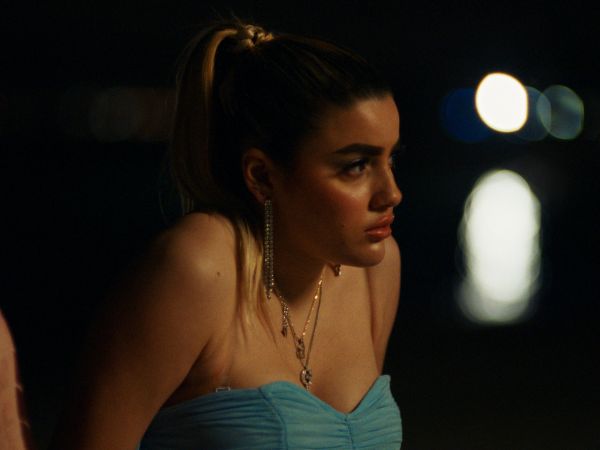
Say bonjour to Liane (Malou Khebizi). Her sullen lips are bloated from an improvised injection, and her lithe teenage body is weighed down by enormous bolted-on breasts. With its gnarly dark roots, the shaggy bleached-blonde hair she likes to shake around makes an odd contrast with her elaborate, bejeweled nails. At 19, Liane is a low-rent social influencer with more than 50,000 followers who alternate between adoring her and urging her to kill herself. First-time director Agathe Riedinger’s film Wild Diamond gives us a glimpse into Liane’s world—a callous yet naive place with its own fickle rules. It’s a harsh watch, but one that, like its anti-heroine, achieves a certain grace against the odds.
Shoplifting, fencing stolen goods, and shamelessly trying to mooch cash, Liane careens through her careworn small town in southern France with the explosive force of a bomb-laden combat drone powered by TikTok. Around her friends, she can suddenly erupt in fits of foul-mouthed rage. But once we get used to her volatility, we begin to understand why. She has cycled in and out of foster care, lives unhappily with a penniless and defeated mother facing eviction, and is often charged with caring for her younger sister. Liane’s been dealt a bad hand—and she knows it.
The influenceuse is looking for a way out. And miraculously, along comes a phone call dangling an audition for the reality show Miracle Island. Liane visualizes endorsements, a swollen cohort of new followers, the chance to pick hair-pulling fights on camera—the opportunity would be living the dream. She swears to the off-camera producer that she’ll instigate trouble, never back down from a fight, and always show off her contempt for the weak, sounding like an avatar from some reality TV master race.
Liane takes the producer’s don’t-call-us-we’ll-call-you dismissal as a guarantee that she’s got the job. She boasts to everyone about her impending stardom, then bristles in shame when the summons to showbiz paradise fails to materialize. Financial and social pressures mount, and the already desperate Liane feels her back against the wall.
Some viewers of a certain age and social class may recoil from Liane’s foul mouth and reckless lifestyle. But director Riedinger is patient with us—and with her wild child. Slowly revealed are the hurt behind the bravado, the quest for dignity that comes from poverty, and the urge to cover up that can suddenly overwhelm Liane’s constant exhibitionism. A young man who is trying to better himself attempts to win Liane’s heart with brusque tenderness, and it’s a loss to both when he can’t get through. One frightening episode alarms us when Liane gets in over her head—this foray into adulthood is far more dangerous than her brushes with the law or run-ins with other teens.
For a film that revels so deeply in extreme behavior, it ends on something of a gentle, gauzy note—if that’s not giving away too much. The movie allows Liane to achieve a moment of peace, and lets us have one too: a respite from the social media seesaw between triumphant entitlement and self-hatred. A tough way to exist, but many do, and Wild Diamond helps us understand that way of life, if only for a little while.
Leave A Comment