
Filmmakers and Israeli investigative journalists Yuval Abraham and Rachel Szor reunite for their latest documentary, a piercing, sobering glimpse at the horrors of Israeli military violence against Palestinian civilians. Their previous film, No Other Land, recorded between 2019 and 2023 (ending in the immediate aftermath of the October 7th attacks), was co-directed by Palestinian filmmakers Hamdan Ballal and Abraham’s close friend, Basel Adra. It detailed the displacement of a West Bank community by the Israeli military. A gut punch of a film, No Other Land also covered the budding alliance and friendship between Abraham and Adra, capturing a prelude before a major war.
Much has changed since that film, with a ramping up of military force in the Gaza Strip resulting in thousands of deaths in the region. As of this writing, Gaza’s Health Ministry estimates over 74,000 people have died since the war began in October 2023. NAZA, its title a Hebrew military acronym for Nezek Agavi, meaning “collateral damage,” is a harrowing account of war told from the perspectives of members of the Israel Defense Forces. Because of what the film exposes, Israeli Prime Minister Benjamin Netanyahu earlier this month threatened to revoke the citizenship of Abraham and Szor.
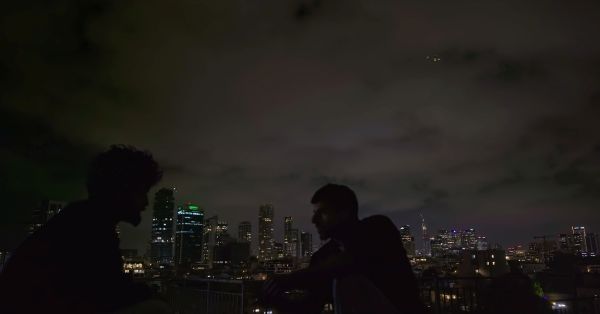
NAZA is told in an atypical way. Shot over the past three years, beginning in the months following the October 7th attacks, clandestine nighttime interviews are conducted by Abraham—with a directness and calmness that somehow rarely breaks with emotion (his silences often carry the most weight)—with two dozen anonymous Israeli intelligence officers and soldiers on rooftops in Tel Aviv. To protect and disguise their identities, their faces and bodies are shadowed out and their voices digitally altered. There’s an eeriness to this setup: In some ways, it suggests that, physically, seemingly everything shot on rooftops is out in the open, yet is also shrouded in darkness—a theme of what is visible and invisible runs throughout, both in the film’s style and in the military strategies described.
The officers detail their methods of surveillance and killing of Gazans (a “factory of targets,” as one notes, a phrase that sticks long after, chilling in its suggestion of mechanical banality). The images their testimonies invoke are distressing and chaotic, told with cold remove by the whistleblowing perpetrators. We hear of a method of dousing houses with olive oil to burn them down. Of video game strategies—targeting people and buildings remotely (like in the movie Eye in the Sky, one mentions). Artificial intelligence plays a part, too, in a program called Lavender that traces computer-recommended Hamas targets through surveillance and phone conversations with family members. The interviewees consistently admit that these systems aren’t foolproof, as well as acknowledging the purposeful eradication of civilians.
Meanwhile, the camera films residents in the Tel Aviv high-rise apartment buildings that surround Abraham and the interviewees as they go about their evenings, mostly in front of giant flatscreens broadcasting Israeli TV news. Though the city is regarded as an Israeli liberal hub, these news broadcasts aren’t reporting what the documentary’s subjects are revealing. The shots we see are fragments of people—sometimes partially a face, obscured by the frame of a window. There are limitations to this presentation; it can feel a bit repetitive, and yet, in the fleeting 80-minute runtime, there’s a haunting dissonance between these ordinary, cozy existences and the mass casualties nearby. (The Zone of Interest director Jonathan Glazer serves as executive producer.) We also see (and hear) the construction of more massive high-rises—a contrast to the descriptions of the decimation of buildings in the neighboring Gaza Strip. Interspersed among these images is wrenching cell phone footage of body parts in rubble.
Shattering as it may be, NAZA is a must-see effort from its courageous filmmakers and producers. There may be some detractors who argue that the sources are made anonymous by the filmmakers, but their testimonies are so specific and detailed that they are impossible to dismiss. Often, the criticism leveled against documentaries like this one mentions that there hasn’t been enough screentime for another perspective (including from the protesters outside the film’s New York Film Festival screening). Nevertheless, this film is made by two brave Israelis who reveal the perspectives of those within their country’s military.








Leave A Comment