
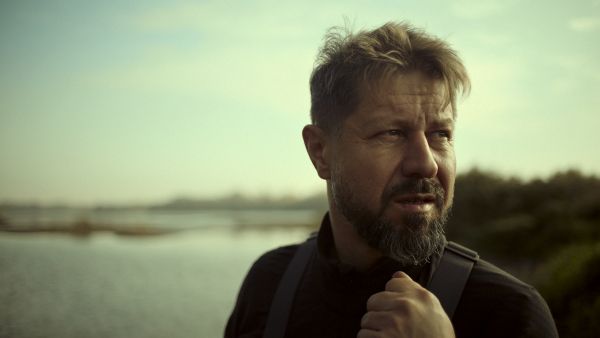
Losing a child is every parent’s worst nightmare. After Krzysztof, the 16-year-old son of Daniel and Agnieszka Dyminski, disappears one night in 2023, Daniel never stops trying to discover any trace of him, repeatedly dredging the Vistula River, hiking through local woods, and watching video footage, including that which caught the last moments Krzysztof was seen on the Gdansk Bridge in Poland’s capital, Warsaw. Daniel’s obsessive search only intensifies once the authorities end their own investigation since there is no body and no other evidence of what might have happened.
Director Michał Marczak happened to be scouting locations for another project on the Vistula when he met Daniel looking for signs of his son. The result is an emotional and nakedly intimate chronicle of a man desperate to find out whether his son is alive or dead, who is also learning how to live the new, horrible normal with his wife and surviving son, Patryk.
Marczak begins the documentary in 2024 with Daniel tossing a dummy into the turbulent Vistula, which he then follows to track where his son’s body might have washed up—if he did jump from the bridge. Throughout, Daniel uses devices, including GPS and drones, to keep looking for clues. These efforts often lead to dead ends, but other bodies are also uncovered, which helps give other families of missing persons the closure that the Dyminskis have not received.
Marczak’s sensitive camera pries in close, capturing minute changes in Daniel’s facial expressions as his ongoing search drains him physically and psychologically. Marczak also depicts how the relationship between Daniel and Agnieszka frays but holds steady despite their son’s disappearance. When the couple puts up Christmas decorations in their home, they act as if they are happy about the holiday season, until Daniel suddenly says, “This brings me no joy.” But the couple continues to put up a united front in the face of their devastating loss.
Marczak occasionally inserts third-person narration in the form of media voices who give pertinent information on Krzysztof’s disappearance. There’s also discussion about how the percentage of young people committing suicide has risen in our current era of isolation thanks to phones and the internet. Indeed, Krzysztof was said to have been upset over an unrequited love, which may have been the reason he left his parents’ home, caught public transportation to downtown Warsaw, and ended up standing on a bridge that may have been where he jumped to his death. (The available CCTV footage only shows him getting to the bridge; there is no footage of him either jumping or walking away.)
The rawness of Daniel’s emotions as he keeps doing whatever he can to keep at least the memory of his son alive is palpable. When Marczak withholds a glimpse of Krzysztof until a poignant moment late in the film, it makes the viewer realize that the Dyminski family has been frozen in time since Krzysztof disappeared. Whether they will get the closure they desperately need is unknowable, but Marczak’s artful filmmaking (both his cinematography and Anna Garncarczyk’s editing dynamically visualize Daniel’s intimidating but unrelenting journey) makes Closure a thoughtful, humane portrait of hope.



Leave A Comment