
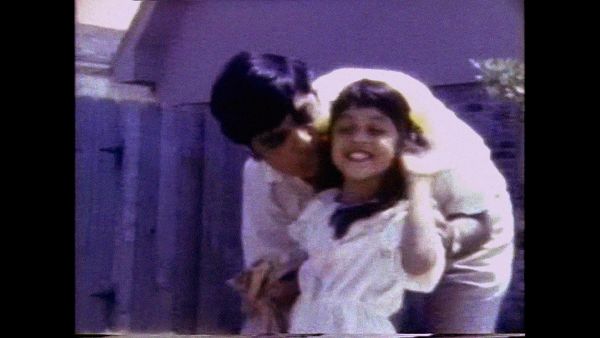
There is more than meets the eye in The Gas Station Attendant, a deeply personal documentary that grapples with family history and offers no easy answers. On the surface, it seems like a conventional, heartwarming ode to the type of hardworking immigrants who are the backbone of America—but it goes deeper than that.
Directed and edited by Karla Murthy, it features her thoughtful narration and painstakingly assembled video and audio about her father, H.N. Shantha Murthy. Karla had shot video of her dad for years and started making audio recordings of their phone calls because she knew he was a remarkable man whose story should be chronicled.
Shantha grew up living in extreme poverty in India and ran away from home as a young boy. For a while, he was homeless and even suicidal. Because he knew English, he was able to eventually get a decent job at a fancy hotel, where he met some nice Texans, the Kern family, who invited him to live with them in the States, sponsored his visa, and supported him while he started a new life. Karla asks her father why the Kerns did so much for him, a random hotel worker whom they had just met, and Shantha says he doesn’t know. Karla surmises that it’s because he was just his usual friendly self. This is a theme throughout: her father makes friends everywhere he goes, getting gifts for the mechanic who works on his car, diner waitresses, and hotel lobby attendants. This had always been slightly annoying and embarrassing to Karla, but she grows to accept it and understands that that was how he made it through his tumultuous life.
Shantha graduated from college with an engineering degree and landed his dream job shortly after, working as an aerospace engineer for Boeing in Seattle in the 1970s. Then the airline industry hit a rough patch and Boeing laid off thousands of people, including Shantha. He never really recovered his career trajectory, though he never gave up trying to support his growing family. He formed his own engineering company, but it didn’t work out due to, in his words, a “lack of capital.” After that, he opened two Indian restaurants around Seattle, but they failed; Indian food wasn’t popular in those days. So, the family—Shantha’s Filipina wife Buella and their children—moved to Texas. Shantha threw himself into a variety of jobs: selling children’s clothes, medical supplies, and running a travel agency, to name just a few. Buella died of cancer when Karla was young, and Shantha remarried and had several more children. His dream, he says, was to have a big family, and he succeeded in that, doing whatever he could to support them.
As one of his string of jobs, he worked part-time at a gas station, but he still focused on his last venture: selling jewelry at trade shows. Karla joined him on one of these final trips, to New Orleans. There you get a feel for what his life has always been since he was a boy—on the go, making friends wherever he went.
At a certain point, later in his life, Shantha took out a loan in Karla’s name without telling her. This caused friction between them, and she started to avoid his phone calls and let him leave her voicemails. It is the sharpest example of why Karla’s relationship with her dad could be strained at times, but she never stops loving him. She continues to try to understand him, even when his actions make that more difficult.
The film becomes a keen examination of generational restlessness. Karla is a lot like her father (although not as outgoing), and you can sense her grappling with his history and personality to understand why she is the way she is. It has somewhat of a sad ending, but it is ultimately life-affirming, about accepting who you are and where you come from. The Gas Station Attendant leaves us with the indelible message that those from humble walks of life—gas station attendants, Denny’s managers—can lead extraordinary lives.









Leave A Comment