
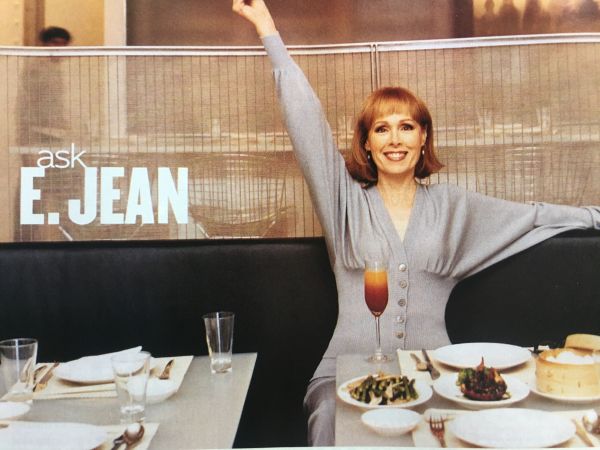
Ask E. Jean, the documentary profiling the woman who extracted damages from Donald Trump for sexual abuse and defamation not once but twice, is inspiring and infuriating at the same time. Inspiring in its portrait of E. Jean Carroll, the spitfire who took on a crass, overbearing sexist who happens to be the former president of the United States. Infuriating because it underlines that in a world where honest political communication has broken down, Carroll’s proof of Trump’s documented misdeeds barely makes a shred of difference.
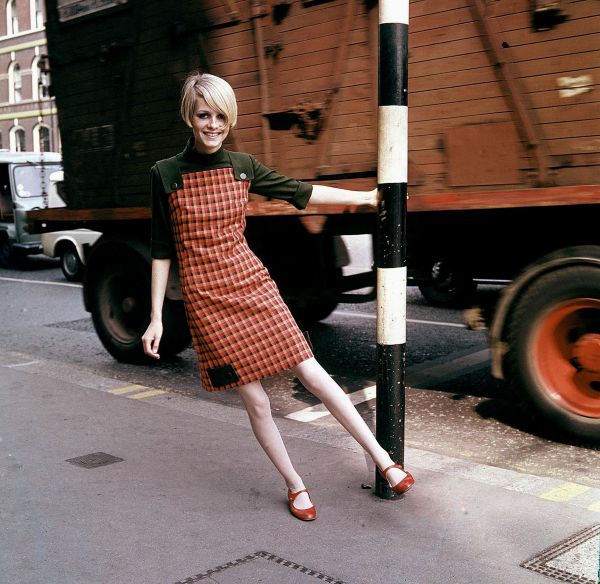
Filmmaker Ivy Meeropol assembles Carroll’s life story, career, and legal challenge through video clips and dialogue with friends, including The Official Preppy Handbook author Lisa Birnbach. In conversation, Carroll exhibits an intriguing mix of inner steel and kittenish archness. The slender quasi-celebrity was a quirky star in the now-quaint world of 1980s and ’90s media, hanging out at Elaine’s, penning an advice column for Elle magazine, writing for Playboy and Esquire, and hosting an advice show on America’s Talking, a forerunner to MSNBC launched by cable executive Roger Ailes, who was himself later exposed as a serial sexual harasser. Viewers may chuckle at Carroll’s plaid wardrobe and enjoy the sassy, you-go-girl broadsides where she encourages women to stand up for themselves. “The Ask E. Jean philosophy is to stop cowering … and always press charges!”
Carroll did not press charges when sexually assaulted by Donald Trump in the mid-1990s in a Bergdorf Goodman department store encounter that started out light and turned ugly fast—Carroll’s taut courtroom description of the attack induces shivers of revulsion. The #MeToo movement and Trump’s gleeful boasting about preying on women prompted Carroll to publicize her account years later, ultimately leading to her civil lawsuits. A sense of personal honor played a part too: “He called me a liar and I couldn’t let it stand.” Carroll showed nerve confronting what she described as a sexist “avalanche of slime,” along with Trump’s contemptuous brush-off of her as “not my type.” She won $5 million in the first case, then an additional $83.3 million after Trump persisted in denigrating her and dismissing her claims.
Reasonable viewers might have permissible questions about Carroll’s handling of her experience. Why didn’t she report the assault when it took place? She claims a fear of confrontation and the potential blowback. The former TV host and Miss Cheerleader USA clearly has a comfort with public attention; does that play a part in her legal crusade? Carroll’s statements and dialogues with friends breezily debunk any potential detractors, and those who might take issue with her lawsuits are reduced to mean voices on the internet. Multiple clips from MSNBC breathlessly reporting on the case reinforce a sense of the film preaching to its own choir. But there are worse things than a documentary standing firmly on the side of someone with the brass to take on a boor and brute.
For all the good it did her, or any of us. At the film’s release, Carroll has not received a hot cent of the monies awarded her by two separate courts, as the judgments remain tied up during Trump’s ongoing appeals. The pundits predicting Donald Trump’s downfall time and time again have been consistently mistaken: Trump looms over the political landscape as powerful and vengeful as ever, applauded by accomplices who refuse to see wrongdoing unfold before their very eyes. One could conclude that no movement against Trump ever gains permanent traction, one based on a woman’s testimony least of all. Although it showcases the valiant heart and high courage of its subject, this film ultimately proves a bitter pill to swallow.




Leave A Comment