
The 63rd New York Film Festival provided the perfect opportunity to rediscover highlights of cinema’s past in its wide-ranging Revivals section. This sidebar reintroduced older films that in many cases had been restored, reassembled, or recovered to be presented in their best possible format. Among them were a long-lost documentary about the unrealized work of one of the contemporary titans of the performing arts, a science-fiction anime that has become a fundamental cult favorite, and the blueprint of the genre-blending masala movie presented in the original director’s cut, once censored and unseen for decades.
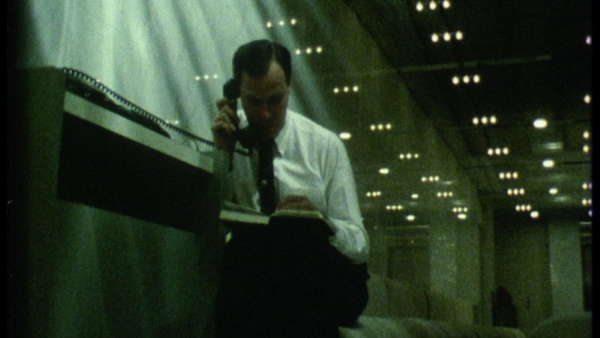
Robert Wilson and the Civil Wars is now much more than an appropriate homage to the unique and multidisciplinary talent of the recently deceased American theater director who revolutionized and revitalized the language of the performing arts. That we can see it on the big screen, decades after its 1985 release and as it was originally conceived by its director, Howard Brookner, is thanks to an arduous effort of recovery and restoration. The journey of this forgotten, time-damaged work could inspire a documentary of its own.
Brookner was only able to direct three features (two of them documentaries) before his 1989 AIDS-related death at 34. Additionally, part of the original material was lost after Hurricane Sandy in 2012. Under the supervision of Aaron Brookner, the director’s nephew, 12 years were spent achieving an optimal restoration using a 16mm print, VHS copies, and magnetic audio tapes to replicate the final result.
The documentary is a vital piece that lifts the veil of mystery on how an artist does what he does: Wilson’s working methods, his tireless discipline, and his inexhaustible inspiration to stage something extraordinary. In the midst of what could technically be considered a “failure,” Brookner captured the exhausting backstage drama in situ, without the knowledge of how everything would turn out.
The project in question must have sounded unimaginable then, just as it would today. Wilson’s idea was the live-transmission of a 12-hour opera as a companion piece to the 1985 Olympics, commissioning six international theater companies to each represent a segment in a different city. Each part of this experimental opera, with music by Philip Glass and David Byrne, was meant to portray a historically recognizable civil war, all under Wilson’s direction.
What’s astonishing is that the creation process was already quite advanced, with rehearsals, costumes, music, and elaborate stages. Meanwhile, time was running out, the budget was exhausted, and Wilson, burning out second by second, was nevertheless convinced that nothing could stand in the way of his ambition.
Robert Wilson and The Civil Wars is a tale of hubris, yes, but it also captures an era we can now only dream of, in which art mattered as a cultural contribution without extra justifications, and a maverick artist could have absolute freedom not only to create but also to fail.
From Japan we get Angel’s Egg, also released in 1985—a landmark of experimental animation by one of the medium’s most respected directors: Mamoru Oshii. Today, Oshii’s name instantly recalls one of the most influential works of science fiction, Ghost in the Shell (1995). Curiously, Angel’s Egg is a far more inaccessible and strange work, a blend of science fiction and fantasy that has more in common with André Breton’s surrealism than with the dominant cyberpunk of the 1980s, of which Oshii would become an essential contributor. Almost a silent film, with minimal dialogue, entrancing music, and apocalyptic imagery laden with anachronisms, it feels like watching the end of the world in motion.
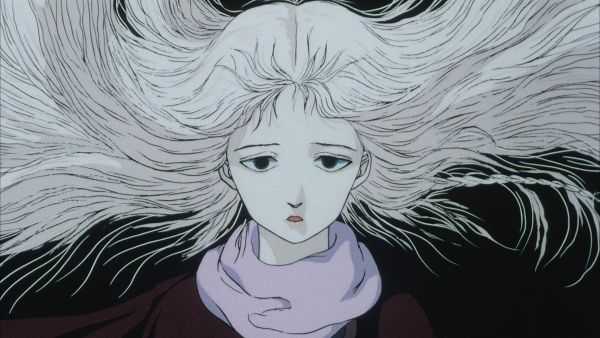
In the desolate landscape of a ruined city, a girl carries a large egg that might be the vessel of a fantastical creature yet to be born. She thinks she’s protecting an angel inside, so she wanders with her burden pressed to her stomach as if it were a pregnancy. This image of a girl playing at motherhood is tender and at the same time bizarre.
A second character joins her journey, a sort of warrior carrying a disturbingly designed weapon that seems part natural, part mechanical. He wants to break the egg and see what’s inside, as if suspecting it’s something that must be destroyed to prevent the danger it could unleash. That’s about all that can be guessed as a coherent narrative in a movie where what’s suggested is far more important than what’s explained.
For animation fans and defenders of the medium, Angel’s Egg should be an essential piece, proof of how complex and artistically unfathomable animation can be. Filled with symbols and allegories that aren’t meant to be obvious, it resists explanation. The girl’s long blonde hair seemingly having a life of its own, shadows of ships that fly a mechanical sun, and a great bird out of a fairy tale—these are part of the delirium filling the screen, among the magnificent illustrations by Yoshitaka Amano, who collaborated with Oshii on the project. Now remastered in 4K, the images look better than ever, capable of stimulating our imagination to build theories and interpretations that ultimately matter less than the emotions evoked by the mere, silent contemplation of something absolutely beautiful over a short 73-minute runtime.

Finally, perhaps one of the great events of this year’s New York Film Festival was the original cut of Ramesh Sippy’s Sholay (1975), one of the best moviegoing experiences anyone could have, especially if you’re surrounded by fans and enthusiasts who know it by heart. This “curry western,” as it’s often called, is one of the most entertaining genre hybridizations ever made. It’s also the perfect entry point and ultimate example of what’s great and inimitable about popular Indian cinema and a showcase of Bollywood filmmaking in direct and unapologetic competition with Hollywood.
A mix of exuberant melodrama, explosive action, unflinching crime and violence, addictive musical numbers, and epic romance—there’s nothing quite like Sholay, or at least not unless you’ve watched enough Indian blockbusters. Even so, this one remains a masterclass in filmmaking, with so many remarkable sequences and memorable characters that pull you into a story where you never know what’s coming next.
Two thieves who split their time between crime and jail are summoned by a retired inspector they know from past experiences. Thakur Baldev Singh (Sanjeev Kumar) tracks Veeru (Dharmendra) and Jai (Amitabh Bachchan) down in prison, believing they’re the only men with both the integrity and the skill to defeat Gabbar Singh (Amjad Khan), a wanted, dangerous criminal who continues terrorizing the Thakur’s village.
The reasons why Thakur is unable to take direct action and why he wants personal revenge against Gabbar are revealed in due time, in a horrifying flashback that leaves your heart in your throat. Every scene featuring Gabbar confirms him as one of the most evil and cruel villains ever conceived.
Veeru and Jai, best friends forever, accept the mission in exchange for a reward, but it’s clear they’re not as unscrupulous as they pretend to be. Soon enough, key romantic interests develop: Veeru falls for Basanti (Hema Malini), a horse-cart driver who never stops talking, while Jai shares discreet glances of longing with Radha (Jaya Bhaduri), whose widowhood and connection to Thakur make hers a kind of impossible love. Can two small-time crooks really stand against a warlord and his gang of criminals? For more than three hours, the world of sensations created by Sholay never pauses long enough to think too much about what’s logical or absurd.
Although we’re used to thinking of Indian blockbusters as too glossy to tell stories that feel real or dangerous, there’s enough dirt and grittiness here to counter that, which partly explains why Sholay remains timeless. That Sholay combines escapism with moments of horror is itself a marvel, a reminder that cinema’s only true rule is what can be dreamed: like a musical number where Basanti is forced to dance nonstop on rocks and shattered glass to keep Veeru alive. On top of that, you see why Bachchan became the biggest superstar of Indian cinema. This is where his myth began.
The version of Sholay presented at the festival includes the original sequence that the Central Board of Film Certification deemed excessively violent for Indian audiences and a dishonor to their police officers. Sippy always considered this version his original vision—one that follows through to the ultimate consequences of revenge. This is the cut you must seek out.



Leave A Comment