

One trusted rule of thumb I have learned over years of attending the Tribeca Festival is to lean toward the documentaries. Year after year, they have tended to showcase the strongest works in the lineup. Once again, this axiom proved to be true.
Perhaps no other region in the United States has inspired as much material for filmmakers as the South. The top prize winner in the U.S. Documentary Competition, the provocative Natchez, joins other illuminating works that could fall under the umbrella of “Southern Discomfort,” such as Godfrey Cheshire’s Moving Midway (2007) and Margaret Brown’s The Order of Myths (2008) and Descendant (2022).
Director Suzannah Herbert compares divergent outlooks on the history of Natchez, Mississippi. Before the Civil War, it reportedly had more millionaires per capita than anywhere else in the United States because of King Cotton and enslaved labor. In the 1930s, when the town was on its knees after a boll weevil infestation, White citizens began holding tours of the plantation homes and biannual garden parties to raise money for their upkeep.
Nearly a century later, the tours are run by what is derisively called the “blue-haired mafia”: the Pilgrimage Garden Club. Tourism has become the main economy of the town, population roughly 14,000. In many of these homes, the descendants of pre–Civil War plantation owners still hold court. One White volunteer guide and recent arrival to Natchez, Tracy, gives a tour wearing a midnight-blue hoop-skirted antebellum gown that could have come from Scarlett O’Hara’s closet.
The emphasis of these tours is to indulge in and celebrate the romanticized lifestyle of the former Southern aristocracy. Perhaps some of this idealization can be traced to that ode to the Old South, Gone with the Wind, both Margaret Mitchell’s 1936 novel and David O. Selznick’s 1939 Technicolor extravaganza. Indeed, Herbert hints at this in a sequence where Tracy, in her Southern belle best, walks along the bluffs overlooking the Mississippi River against a purple sunset—a shot that Selznick would have envied. Although never directly mentioned, the specter of the Lost Cause hangs over the film like Spanish moss.
Anyone following recent news of Confederate monuments being taken down won’t be surprised to hear the defensive and rose-colored perspectives from many—though not all—White Southerners in the film. On at least three occasions, tour guides refer to the enslaved as “servants.” A superintendent of Natchez’s National Park Service sites describes the town as “a complicated little place.” Case in point: In 2016, Natchez overwhelmingly elected the first openly gay Black mayor in Mississippi.
Meanwhile, a Black Baptist minister from a nearby town, who goes by “Rev,” takes small groups on a tour of Natchez in his van, offering a frank, historical account. The grand mansions are not on his itinerary. Instead, he points to an unassuming grassy lot where the Forks of the Road slave market once stood. An estimated 750,000 people were sold there. This leads to a subplot: An effort to establish a National Park at the site has stalled. One White property owner, not wanting to start over in his 60s, refuses to give up his property and relocate his auto repair shop. His antagonism toward the proposed project becomes clearer as Rev leads a tour to the market site.
Viewers might ask: How did the director make her subjects so comfortable that they casually utter ill-informed and racially derogatory comments on camera? Didn’t they know they were being filmed? The result is a disquieting time capsule of the 2020s.
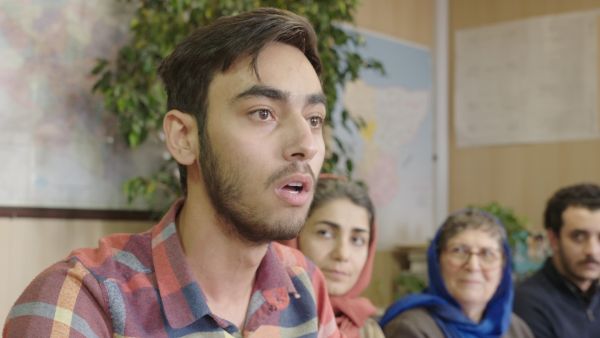
Winner of a special jury mention and a prize for editing in the Documentary Competition, the powerful An Eye for an Eye has more raw emotion than most feature films. The U.S.-Danish-Iranian co-production, directed by Tanaz Eshaghian and Farzad Jafari, was filmed entirely in Tehran. (It was screened just days before recent military escalations in the region.) It candidly explores the Iranian legal concept of diya, or blood money—here, a financial settlement to be paid by the perpetrator to the family of a murder victim in exchange for forgiveness and to avoid capital punishment. At its heart, though, the documentary captures one family’s dogged pursuit of vengeance.
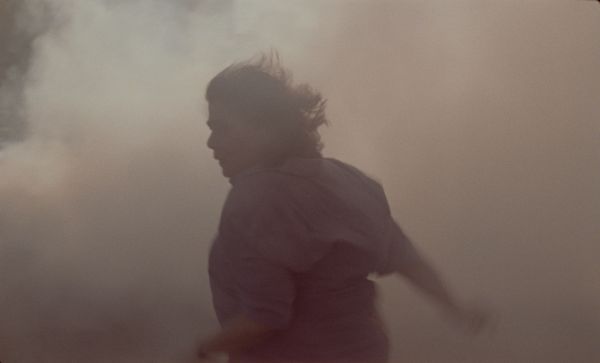
Tahereh has served a 14-year prison sentence for the murder of her abusive and addicted husband. Her two daughters were also imprisoned for their involvement but were later pardoned. Now out on parole, Tahereh, 47, and her now-grown children must raise the money demanded by her late husband’s relatives. If the amount isn’t met or accepted, she faces execution. However, the victim’s family demands an exorbitant sum and refuses to negotiate. Tahereh expresses no remorse, while her former mother-in-law wants her dead. Amid the familial rancor, an activist tirelessly tries to broker a deal.
The victim’s family does not believe Tahereh and her daughters acted alone. Here, the film will appeal to true crime aficionados. A male friend of Tahereh’s was a person of interest for possibly aiding in the murder. Yet Tahereh insists she and her daughters dug up a cement floor, moved her husband’s heavy body, and buried it themselves in the middle of the night. One investigator, unconvinced, says, “It was a professional job.”
The filmmakers had remarkable access to all parties, including Tahereh’s former lawyer, who, in so many words, all but admits her client lied in court. After the deadline for compensation is extended, the two families confront each other in person, with Tahereh’s son, Mohsen, pleading for mercy. Emotions run so high that viewers may feel embarrassed that they’re eavesdropping. Don’t expect a tidy resolution. The film highlights the messy and painful gray areas of justice, grief, and forgiveness.

Leave A Comment