
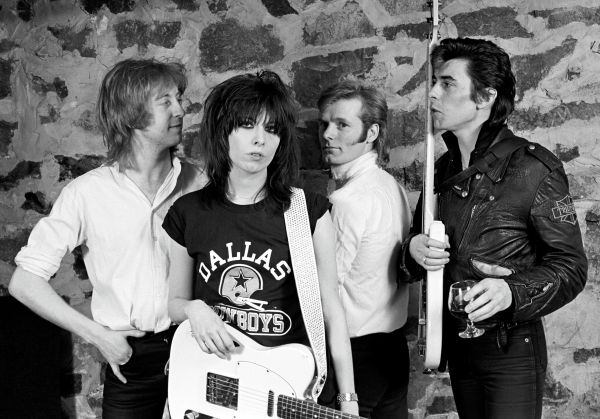
After watching two musical biography documentaries back-to-back at the Toronto International Film Festival, it is inevitable to compare Darlene Love: I Know Where I’ve Been with Pretenders, featuring songwriter and frontwoman Chrissie Hynde. Both are structured in a standard behind-the-music format, complete with sit-down interviews, plenty of clips, and archival footage. However, where they diverge lies with the artists spotlighted. One engages; the other pulls back.
Though the two music industry veterans are rock-and-roll singers, they are completely different artists in terms of singing style, background, outlook, career trajectory, instinctual talents, and on and on. Not surprisingly, both women approach their respective films differently. Hynde could not be more reticent to appear on camera. Director Joss Crowley interviewed her four times off camera, and Hynde only agreed to be filmed for the fourth. Cautious and not entirely cooperative, the musician behaves as if she is at the dentist. One reason: Hynde does not like to be observed. Another rationale for her reluctance concerns her early days with biker gangs and as an American abroad during London’s punk rock era. She sums it up thus: “My story is about drugs.” Does she have regrets? “Yes. Drugs.”
Sometimes, it feels like Crowley has given up; the director refrains from drawing out more details from Hynde, especially regarding her involvement with biker gangs in her hometown of Akron, Ohio—their allure being that they had drugs. When she mentions a night where she was the main event at a party (a rape?), eyebrows and questions will be raised. Or, when Hynde claims that her band’s record company introduced them to drugs after she has admitted doing drugs since she was a teen, it prompts another question. Regarding her marriage to the Kinks’ Ray Davies, she firmly does not dish, otherwise “there is a lawsuit waiting to happen.” Luckily for the filmmaker, the band’s tour manager, the now-grandfatherly Stan Trippin, serves as a quasi-narrator. He kept volumes of year-to-year diaries—one journal was a gift from Adam Ant.
Crowley’s focus remains mainly on the band’s beginnings and their acclaimed run in the early to mid-1980s. Fans will be familiar with the tragedy that hit the group: the drug-related deaths of its founding members, bass guitarist Peter Farndon and lead guitarist Jimmy Honeyman-Scott. However, some may not have known that Hynde was a scathing music critic for New Musical Express in the early 1970s. (The equally caustic critic Rex Reed would have been simpatico.)
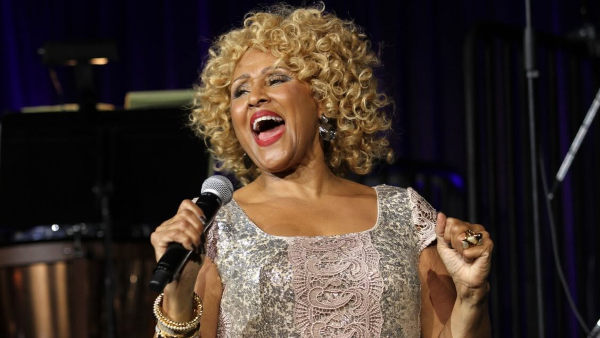
On the other hand, Darlene Love is more than willing to divulge her past, setbacks and triumphs all. In the Q and A following her film’s world premiere, she hinted that there was more where that came from. One can only imagine: On camera, Love reveals a two-year affair with Bill Medley of the Righteous Brothers, and notes that Elvis Presley was among her suitors, though in that case, their relationship was strictly professional—Love sang as part of the Blossoms backup group on his 1968 comeback TV special.
The list of recordings where her singing can be heard forms a 1960s hit parade, ranging from “Johnny Angel” to “Be My Baby.” After toiling in the music industry for 20 years as a lead singer (though often uncredited) and as a ubiquitous backup singer, the gigs dried up, Love went broke, and she became a Beverly Hills housecleaner. In the early 1980s, she took the advice of Steven Van Zandt of the E Street Band. He told her to go east, to New York, to rebuild her career. In a short time, the singer was on Broadway in the musical Leader of the Pack, and cinephiles may remember her from playing Danny Glover’s wife in Lethal Weapon or as one of the singers highlighted in the Academy Award-winning documentary 20 Feet from Stardom. Perhaps she is now best known for her annual performance of the holiday standard “Christmas (Baby Please Come Home)” on Late Night with David Letterman, a tradition that lasted 28 years.
But any narrative that includes record producer and controlling Svengali Phil Spector casts a dark shadow, despite Love’s reassuring declaration, “Your time is always going to come.” She sang lead vocals on such hits as “He’s a Rebel,” though Spector credited the Crystals as the artists. Love had signed a punitive contract; Spector would not allow her to record under her name on a different label, but that did not preclude her from backup singing or appearing with the Blossoms on the music TV show Shindig!, where she was a regular.
One example of an opportunity thwarted by the capricious producer: Love fell in love with the song “River Deep, Mountain High,” yet Spector assigned it to Tina Turner. (It is hard to imagine a better interpretation of the song, but Love certainly has a wider vocal range.) Even after he was imprisoned for the second-degree murder of actress/model Lana Clarkson, Spector still gave Love grief, threatening lawsuits.
Yet make no mistake, Love was no shrinking violet. Cher, who as a teenager hung out at Spector’s studio with her then-boyfriend Sonny Bono, remembers that Love would challenge Spector and tell him off.
At 115 minutes, Canadian director Barry Avrich (The Road Between Us: The Ultimate Rescue) overstuffs his profile with the praises of Love’s onscreen fan club, including Bruce Springsteen, who advocated for her to become a member of the Rock and Roll Hall of Fame; the droll Nancy Sinatra; Dionne Warwick; Andra Day; and many more. The redundant praise becomes overkill: The proof of her talent is amply shown in clips and footage of her contemporary recording sessions at New York’s Power Station. It is all there for the world to see.
Still, it is no head scratcher that Darlene Love won the festival’s People’s Choice Award in the documentary category, especially when Love sang post-screening after a number from the musical Hairspray, in which she starred on Broadway—a song that has become her anthem, “I Know Where I’ve Been.” At 85, she was in full voice, hitting all the notes and exuding the stamina of someone a quarter of her age.



Leave A Comment