
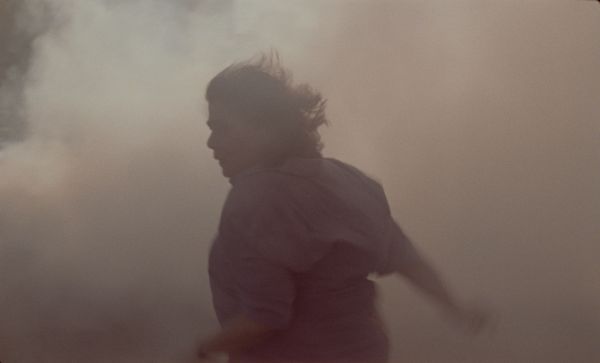
First of all, the title should not be confused with the 2007 film of the same name starring Keira Knightley. Instead, Reed Van Dyk’s feature debut centers on the United States’ involvement in the Iraq War and its ripple effects. He based his script on a real 2003 event that occurred in Baghdad during the first week of the war, when a U.S. Marine unit came under enemy fire in an urban street battle.
Stationed on rooftops, the forces shoot back and remain on the lookout for snipers. In the middle of the conflict, two cars drive into a nearby intersection—directly into the crossfire—and are fired upon by the squad. However, the vehicles’ passengers are not enemy combatants, but a family fleeing a bombing in another neighborhood to what they presume is safety. Within this single family, a father and his two adult sons are killed, and a daughter is shot in the shoulder.
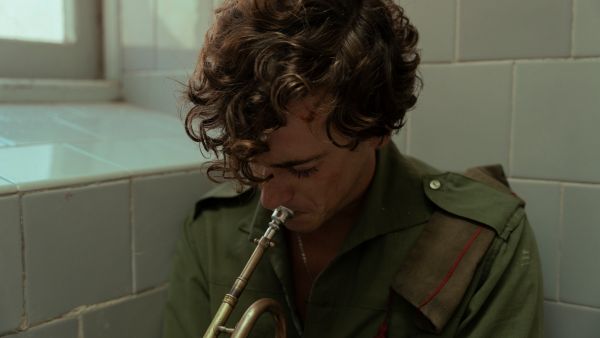
Soon after, the timeline jumps ten years later, following the aftermath of the shooting for both the victims and the soldiers who rained bullets that day—particularly Second Lieutenant Lou D’Alessandro (a mercurial and vulnerable Boyd Holbrook). Lou relies heavily on medication and works part-time as a bouncer before his hot-headedness gets him fired. He endured eight deployments, but was dishonorably discharged after failing a drug test. Now living in San Diego, he knows he’s flailing: He has been let go from a construction job for arriving late, is prone to panic attacks, and can’t open up to his on-again, off-again girlfriend, Anna (Gratiela Brancusi).
Perhaps to clear his conscience or at least explain his actions from a decade ago, he wants to reach out to the surviving Iraqi family. The go-between becomes journalist Michael Reid (Kenneth Branagh), a stand-in for Dexter Filkins, who wrote the 2012 New Yorker story that inspired the movie. Reid interviewed the Khachaturian family and has kept in touch with them over the years. However, the Khachaturians are perplexed. Lou had already reached out to them in an email, and their daughter Nora (Gheed) wrote back forgiving him, though he didn’t exactly apologize. She and her mother, Mariam (Hiam Abbass), are left puzzled: What does he want from them?
The director takes a straightforward, unfussy approach to his script and filmmaking, smartly trusting his stellar cast. He frames them mostly in medium shots. No extreme close-ups are necessary; the tension has already risen to a fever pitch by the time Lou travels to Glendale, California, to meet face-to-face with Nora and Mariam. Though largely an intimate drama, the intensely chaotic opening street battle, filmed in Jordan, has an epic quality fit for the big screen—ranking as one of the most fraught scenes of war since American Sniper and, going further back, Black Hawk Down.
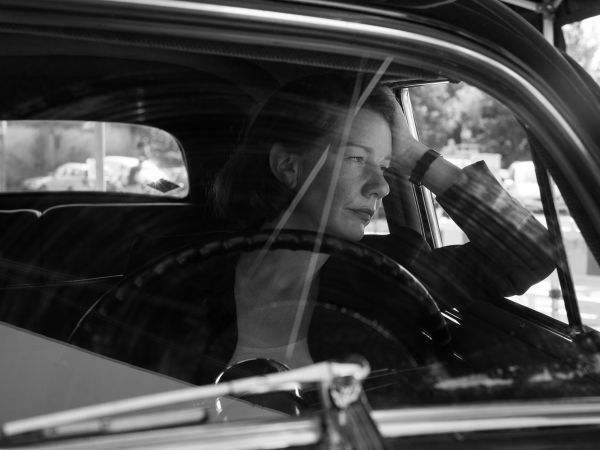
Most of all, the script offers Hiam Abbass an emotionally demanding role—a Role with a capital R—including moments when Mariam puts on her best poker face during the initial awkwardness of greeting the man who fired the bullets that killed her loved ones. Hers ranks among the best performances of the year. This is perhaps her most complex role in an already storied career, which includes Palestine ’36, HBO’s Succession, and Hulu’s Ramy.
Although it is not necessarily a requirement for good filmmaking, this singular film could refreshingly be described as “morally uplifting,” as my father used to say, even though it hardly offers any easy answers or a solid resolution, let alone an epiphany. Instead of tying up every loose end, Van Dyk leaves things realistically open.
Atonement screened at this year’s Toronto International Film Festival. It opens in the United States via Kino Lorber on October 2.




Leave A Comment