Between selections from veteran filmmakers and new directors, some films presented at festivals end up leaving exactly as they arrived: without a distribution deal in the United States, for reasons beyond the control of critics and audiences, and unrelated to a film’s quality or the reputation of the director.
In this regard, we can make a case for three works by regulars on the festival circuit, all of which screened at the 64th New York Film Festival, yet whose distribution futures—at least in the United States—remain unresolved. From Werner Herzog, Ira Sachs, and Albert Serra, respectively, we have an extravagant, almost fantastical tale of two inseparable sisters; the anticipated tragedy of an incandescent gay artist during the 1980s AIDS crisis; and the hypnotic concert film of a legendary muse under the gaze of one of the most exciting international directors working today.
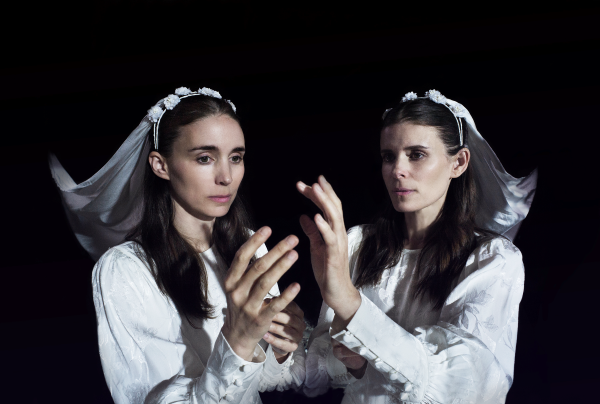
Explaining what Bucking Fastard is about will probably evoke a certain idea of absurdist and surreal cinema that might seem too opaque. Yet this is also one of Herzog’s most accessible works. Jean (Kate Mara) and Joan Holbrooke (Rooney Mara) are two sisters—but not identical twins—who live and behave as though they were a single unit. They lead an almost Victorian life as spinsters in a secluded Irish suburb, unconcerned about the fashions of the times, dressed in identical old-fashioned garb, with carefully maintained haircuts of precisely the same length. And, creating an unparalleled sense of uncanniness, they almost always speak in unison, as though they were one person, to the point that they both have simultaneous slips of the tongue (the film’s title is one such example). Only subtle differences allow us to accept that they are, after all, still two people rather than one.
Set in the present day but loosely based on a real case that attracted British media attention during the 1980s, Herzog reenacts a courtroom confrontation as a starting point for this eccentric yet sweet fairy tale about two sisters in search of love. Thus, the actual trial over the stalking of a lover who abandoned the sisters, their next-door neighbor Gareth Mulroney (a smug Orlando Bloom), is barely factual before taking intrinsically fictional directions. Even so, the opening sequence, in which the sisters receive special permission to share the witness stand and give their testimony, immediately takes us into stranger-than-fiction territory, amplified by the tremendous precision of the Mara sisters’ work. If the Academy handed out an Oscar for the year’s best dual performance, there would be no more deserving recipients than these two.
The director dedicates this film to David Lynch, but in no way does he attempt to create a directly Lynchian work. What the two directors share, though, is an affection for eccentrics who look to feel a little less lonely and misunderstood. In this case, inspired by a local legend, the sisters are determined to dig a tunnel to an enchanted land where their fantasies of love might come true, as long as they follow the fox they have rescued. Perhaps only Herzog could charm us into accepting such rambling, deliberately incomplete storytelling. (Don’t expect big resolutions.)
While still a minor work compared with his greatest achievements, this is perhaps Herzog’s best fiction feature in a long time (his documentary work, meanwhile, remains strong). Tender and guileless in its romantic portrayal of innocence, Bucking Fastard nurtures mysteries that we are more than happy to leave unsolved.
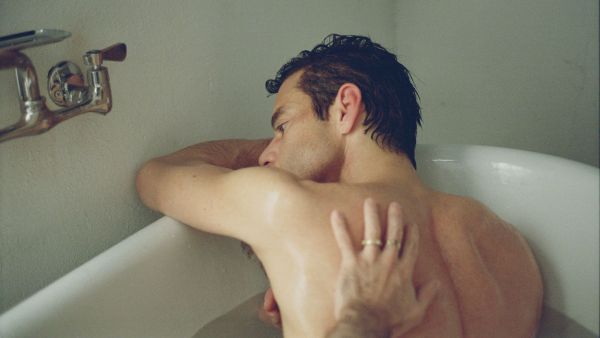
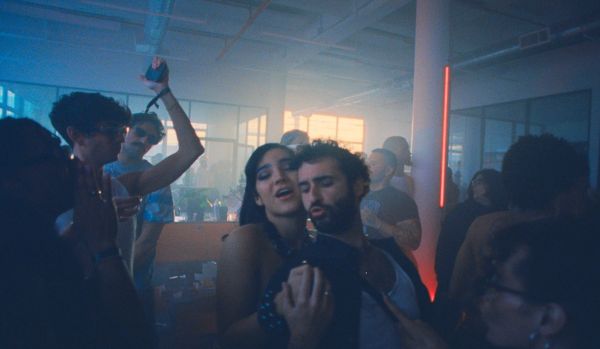
With sufficient commercial appeal and bolstered by a strong performance, The Man I Love is one of Ira Sachs’s more conventional offerings, without sacrificing intensity or complexity. The film plunges headfirst into New York’s bohemian and queer scene during the 1980s through the experience of a fictionalized artist: Jimmy George (Rami Malek), an actor and frontman of the theatre troupe the Machines, living with AIDS, and striving to stage what will probably be his final performance: a theatrical adaptation of Once Upon a Time in the East (a 1974 Canadian film by André Brassard and Michel Tremblay). As talented and shameless as Jimmy can be onstage and in rehearsals, his personal life is in constant turmoil because he cannot help making the people around him—the very people who love and admire him most—suffer the consequences of his histrionic egocentrism, which always demands the spotlight, front and center, without interruption.
Malek captures a man burning himself out toward inevitable failure, rebelling against death as much as he can while shattering the lives of those who love him. This may be Malek’s crowning achievement, after he was lauded too soon for an undeserving film (Bohemian Rhapsody, in which he played Freddie Mercury, another artist who battled AIDS). Here, however, he proves himself through a less empathetic figure and bitter musical performances far less concerned with making us clap and bang our heads.
The George Gershwin song that gives The Man I Love its title (also performed by Malek) encapsulates the fundamental tension of volcanic vulnerability held in check by fragile hope. It is a humming confession that never quite becomes a torch song, but also an ambiguous lament once you know Jimmy too well. Though he is the one singing it, in reality, he is the object of love, giving voice to the true despair within others—his sister Brenda (Rebecca Hall), his boyfriend Dennis (Tom Sturridge), and his recent, deluded lover Vincent (Luther Ford). We haven’t had such a rich, intelligent, and unadorned portrayal of gay life during the AIDS crisis in a long time.
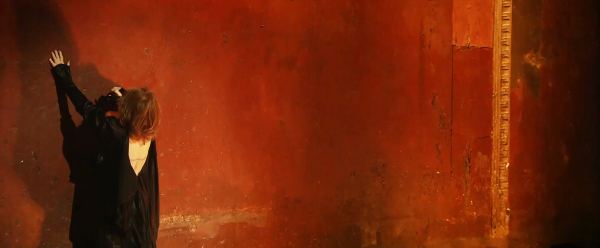
Finally, we can spare a few words for what proved to be a welcome and exquisite musical dessert among the many main courses served throughout the festival: the filmed, one-night-only concert by Ingrid Caven, performing her record Sixteen Moments of My Life live at the grand Théâtre des Bouffes du Nord in Paris. Performed and filmed in 2025, this is not merely Albert Serra’s filmed record of a unique musical occasion; he also conceived Caven’s live stage production and produced the album that provided the pretext for bringing the evening together.
Caven is best known as one of Rainer Werner Fassbinder’s muses and his wife for two years, yet she has outlived that legacy, surviving the fading glories of the New German Cinema. She is also a cabaret singer with a commanding stage presence and a mysterious aura, as we see here in her performance of each of the 16 original songs, which correspond tangentially to her own biography. These numbers, however, do not add up to a traditional, easily followed biopic. Instead, they offer the abstract experience of someone narrating her existence beyond the limits of what she has lived, making room for what she has dreamed, imagined, and left unread between ambiguous signs and omens.
Sixteen Moments of My Life conjures a cavernous yet intimate performance that seems conceived, first and foremost, to become cinema (even if we hear, but never see, the audience surrounding the stage). The invitation to watch a diva in the twilight of her career is an opportunity in itself—how many octogenarian singers get to have a performance worthy of a standing ovation memorialized in this way? Ultimately, Serra manages to capture lightning in a bottle.
Leave A Comment