
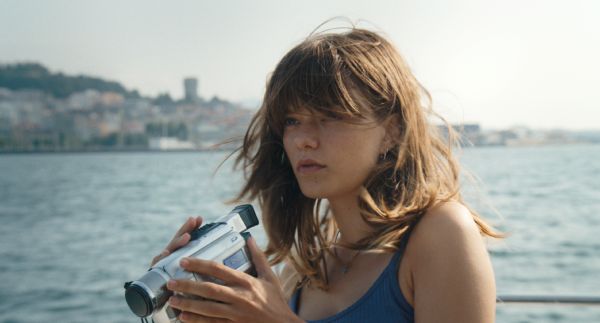
Over the course of her career, Spanish filmmaker Carla Simón has transformed her personal and family memories into film. With works such as Summer 1993 and Alcarràs, she has helped define Catalan cinema while reaffirming its universality. Her third feature is a truly special film—and her best yet—a brave exercise in autofiction that this time abandons the innocent perspective of the child protagonists who anchored her previous works. Without fully exposing herself, yet without concealing that this is an autobiographical story, Romería unfolds through the eyes of Marina (Llúcia Garcia), an 18-year-old reconnecting with her father’s family. Like Simón, Marina was orphaned at a young age and raised in Barcelona by her adoptive family on her mother’s side. Yet the purpose of her visit is far more practical than it initially appears.
During the summer of 2004, Marina is naturally curious about the family mysteries and secrets surrounding her parents’ deaths, eager to learn more about the love story between her parents of which she is both the product and the proof. She plans to enroll in a film academy and already carries a camcorder everywhere she goes, imagining a documentary project in the making. Her mother’s journals provide only one-half of the story, and they are not entirely reliable despite the dates and places they record. For Marina, this trip to Vigo—the coastal region of Galicia where she was conceived—serves a concrete purpose: obtaining an amended death certificate for her father that officially recognizes her as his daughter, a document that would allow her to apply for a scholarship. The obstacle: Her grandparents must agree to correct the original certificate, which omits both the cause of death and her relationship to him. Therefore, she navigates through the prejudices of the previous century, when conservative families of a certain social standing sought to hide their black sheep and erase any trace of gossip or scandal.
Over the course of several days, Marina gets to know the various uncles, aunts, and cousins who make up a large family with whom she shares little beyond blood. One aunt, a seamstress who owns her own shop, makes her a custom red dress. Another aunt claims she is the only reasonable member of the family and wishes she had been given the opportunity to raise her. An uncle offers distorted recollections about the past, despite having lived in Paris during the years of her parents’ deaths. Among them all, the surviving black sheep of the family, Iago (Alberto Gracia), keeps his distance from everyone else and proves to be the one who remembers her parents most clearly and fondly, though without sentimentality: “Love and drugs don’t mix well,” he declares. By the time Marina finally meets her grandparents, she understands a little better the circumstances her parents faced.
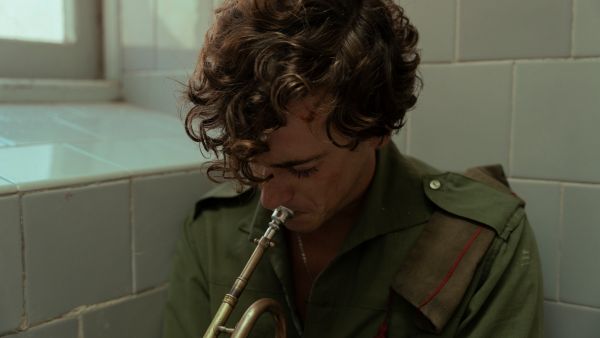
Interwoven with Marina’s story are passages drawn from her mother’s journals, illustrated through documentary-like images of Vigo. The convergence of these two voices—Marina’s and her mother’s—reaches its magnificent climax in a remarkable third act. As a brief respite from the central conflict surrounding the amendments to the death certificate, the lives of Marina’s parents are reimagined through visually poetic vignettes accompanied by readings from the journals and an alluring exploration of the region’s landscape. Garcia also takes on the role of Marina’s mother, while Mitch Martín, who until then had been playing her cousin Nuno (with whom there seemed to be a subtle chemistry and attraction), assumes the role of her father.
Like her previous films, Romería captures the dynamics of family life with all its secrets, regrets, and resentments. It also acutely conveys the detached sensation of sharing moments with relatives who are, in essence, strangers. Finally, it beautifully embraces chances for fantasies of what-ifs and why-nots. This time Simón dares to partially depart from her trademark immersive naturalism, and the results are graceful and magical.
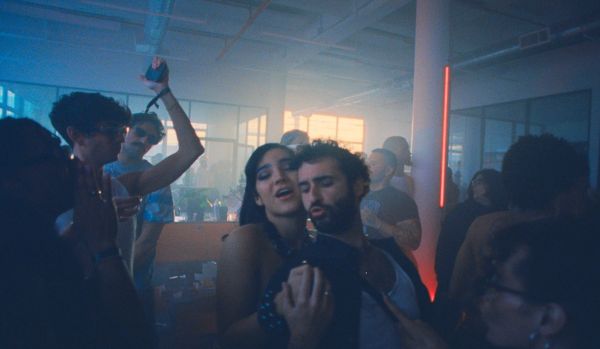
The extraordinary third act functions as a meeting point between memory and wishful thinking that could only exist through film. It includes a breathtaking dance sequence that serves as both tribute and mourning for the many young lives lost during the AIDS crisis. In the process, the film demonstrates that cinema and autofiction can coexist; that fiction offers the possibility of rereading one’s own history while healing painful memories; and that, sometimes, artistic expression grants the peace required to move forward.







Leave A Comment