“Provocateur” sounds more refined than “provoker”; “pest” sounds more down and dirtier than either one. Talented and proudly erratic Romanian filmmaker Radu Jude officially steps over the line from provocateur to pest with his AI-spackled film, Dracula, the cinematic equivalent of a lice-ridden raccoon and a scaly iguana fed into a fast-action blender and force-fed warm to the viewer over 170 minutes. Jude tosses around the Romanian-set Dracula legend and revisits obsessions familiar from his earlier movies, such as Bad Luck Banging or Loony Porn and I Do Not Care if We Go Down in History as Barbarians: porn and humiliating sex, state propaganda, nativist Romanian poetic and cultural traditions, and the ravages of capitalism. Tourism—a relatively recent phenomenon in Romania—comes in for a skewering, too.
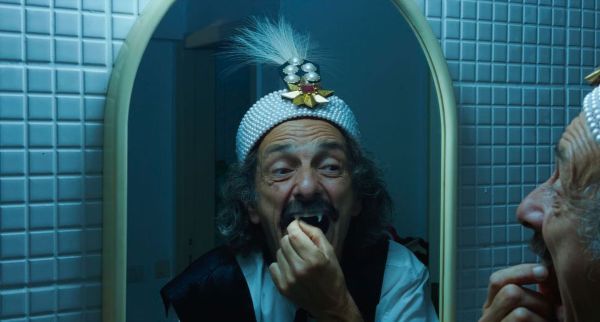
What really sticks out in the movie is the deliberately crude, promiscuous use of AI in its most unevolved forms. Pixelated, smudged images? Check. Lurid, gross sexual organs with teeth? You got it. Jude festoons the screen with flying bats, leering faces, and women thrown from cars with jagged edges around their bodies that look worse than underdone rotoscoping. Like vampirism, AI is an extended metaphor for predation, sucking the life out of everything it encounters.
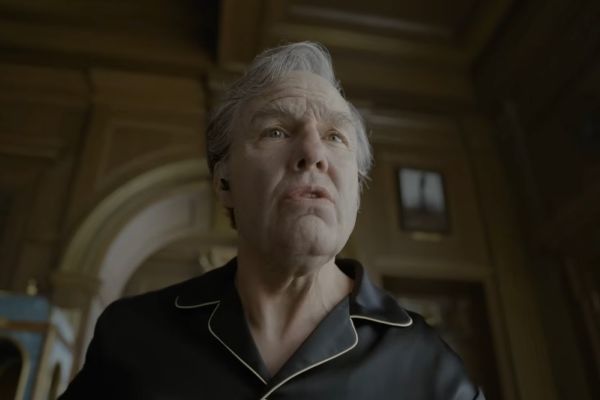
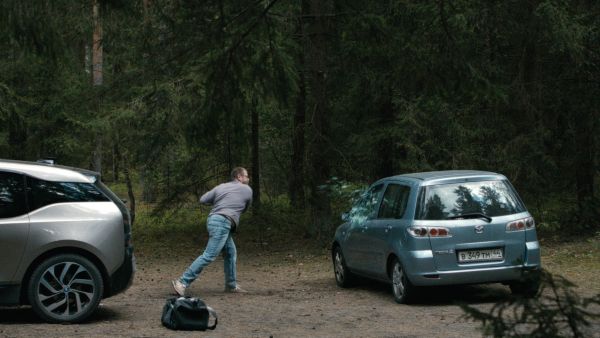
Fourteen chaotic and sometimes overlapping chapters make up the film. A simpering twit (Adonis Tanta, the chatterbox bike messenger in Jude’s recent and more conventional Kontinental ‘25) announces his plans to make a sure-fire hit movie for the masses using AI. A geriatric woman in an anti-aging clinic encounters a horny vampire who wants more than just blood sucked. A forlorn and impotent older performer flees a seedy show with a younger woman, pursued by murderous tourists with sharpened sticks. In the most restrained episode, a laborer seduces and betrays a naive farm girl in what looks like communist times. And a pompous corporate tool in Dracula headgear uses a robot to intimidate workers in a digital sweatshop. Characters yell, scream, curse, and sing on a cacophonous, often distorted soundtrack. Interludes suddenly end, then (sometimes) restart.
There is always something to admire in a Radu Jude film, and one day this work may be reassessed as an experiment—parts of it read like the early reels of cinema of over a hundred years ago. In the world of today, however, this movie is an oafish, raging watch. Jude has dealt with similar ideas in more interesting ways elsewhere many times. Rather than satirizing pernicious tropes, Dracula revels in them over and over in juvenile, neener-neener fashion. Its chortling, exploitative turns between irreverence and pomposity curdle fast.
Jude recalls Pier Paolo Pasolini, who was angry when his countrymen were mired in poverty and ignorance, then even angrier when they were able to relax and had a little money to spend. Life there is not perfect, but Romanians are freer than ever and recently rejected a pro-Russia populist in their presidential election. The internet and the gig economy have upped stress levels, but Romania is hardly alone in that plight. In Dracula, Radu Jude is mad as a hornet at his country for old reasons and newer ones. Now he’s used crude AI to unleash the rage. Although the movie is hard to like, that deployment may be the start of something more creative and (one hopes) more fun.

Leave A Comment