It might be counterproductive to immediately crown a new voice as a “horror auteur” when enthusiasm over a breakthrough film becomes both a promise and a curse for the artist in question. Think of Jordan Peele after Get Out (2017) or M. Night Shyamalan after The Sixth Sense (1999), and how a hastily applied label like “master of horror” can feel limiting when defining their later work (and even for the very films that earned them the title), eventually creating misplaced expectations that shape how their output is received. This might well be the case for Zach Cregger after the devilishly unique and unpredictable Barbarian (2022), as he returns with a long-anticipated new venture into the realm of horror cinema.
Weapons, however, is a singular proposition, operating mostly as a psychological drama with elements of mystery and a gradually emerging supernatural thread. It’s not built to pummel you with jump scares—though there are a few—but rather to immerse you in a dramatic experience woven from a tapestry of individual anxieties and collective tragedies.
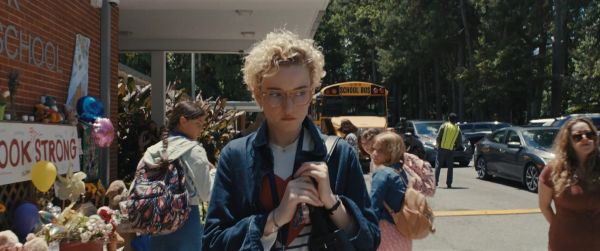
With an original screenplay by Cregger, the movie lays its cards on the table right away with a premise that works instantly on both visceral and emotional levels: In Maybrook, Pennsylvania, a painful and inexplicable event has shaken the community. One night, at 2:17 a.m., 17 children leave their homes, running away without explanation until they vanish completely. The only thing they share in common is being in the same classroom, taught by Justine Gandy (Julia Garner). The day after their disappearance, she finds the classroom completely empty—except for a single student, Alex (Cary Christopher).
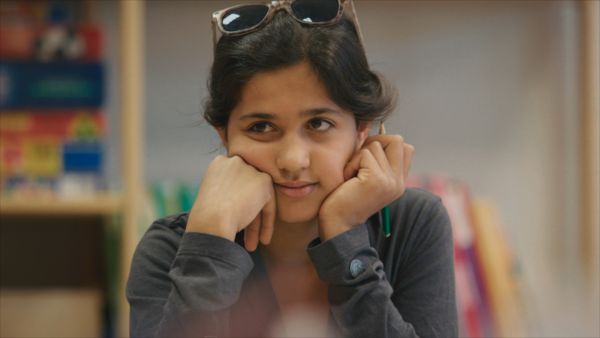
The ensuing investigation and interrogations lead nowhere, and the school reopens soon after, while those directly affected by the incident naturally find themselves unable to resume life as if nothing had happened. Archer Graff (Josh Brolin), the father of one of the missing children, frequently visits the police station in search of new leads and is adamant that Justine knows more than she admits. The story is narrated in voice-over by a girl (Scarlett Scher) who claims to belong to the town, though her role in the events is indirect—more like a witness recounting a macabre fairy tale.
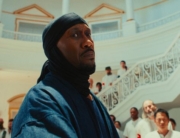
As for the central mystery, Weapons is best approached with as little prior knowledge as possible. Sooner than expected, it matters less what happened and more how it happened. In any case, none of its surprises should be spoiled. What can be said is that the story’s structure is enticing, divided into chapters told from the perspective of different characters. In addition to Justine, Alex, and Archer, there’s Paul (Alden Ehrenreich), a police officer in the midst of personal and professional crises; James (Austin Abrams), a good-for-nothing junkie always on the run for his next fix; and Marcus (Benedict Wong), the principal of the school where the children vanished. Each perspective expands the puzzle of the central mystery, but Cregger’s aim isn’t to present contradictory viewpoints—it’s to keep the balance of twists and revelations finely tuned, revealing just enough at the right moment.
As an ensemble piece, the film boasts one of the year’s best casts, which also includes veteran actress Amy Madigan in a nearly omnipresent role that, while not getting its own chapter, leaves a lasting mark on the story. Praising her performance in detail would stray into spoiler territory, but omitting her entirely would be unjust.
Like Peele, Cregger’s career as a director has roots in comedy and television before pivoting toward horror. (He was a member of the TV series The Whitest Kids U’ Know.) Both Barbarian and Weapons contain an important element of comedy—not designed to make us laugh outright, but to play in complicity with the viewer’s recognition of something shockingly absurd or unhinged. This time, however, Cregger’s approach is more measured and cohesive, especially because he tells an original story from multiple perspectives, each belonging to characters whose fates we genuinely care about.
The film also carries a disturbing and alluring symbolism that doesn’t beg to be deciphered, but instead invites us to plunge into its intensity with the reward of a good story in return. Children running with their arms stretched out like arrows, a rifle suspended in the sky as part of a nightmare, and the constant presence of a jester-like figure all keep us on edge. Those expecting something as extreme as Barbarian may be disappointed, but those who found that earlier film deliberately incoherent and “shock for shock’s sake” will likely admire Weapons as a more confident, satisfying work in its resolution.
Terrifying, sometimes heartbreaking, and more than occasionally funny, even in its final moments (which feature one of the year’s best endings), Weapons succeeds precisely because it refuses to be on the nose about anything beyond the story it tells. Like the old-school fairy tales—dark and bittersweet in their original form—it takes seriously the random presence of evil and the havoc it can wreak, without trying to explain it away, offer relief, or convince us that certain things happen for a reason. That fear, irrational yet honest, that evil lurks without regard for who or why, is perhaps what many other horror storytellers, and audiences, need to remember.





Leave A Comment